Applications
Researchers develop 3D printed human heart model for surgical planning
At Carnegie Mellon University in Pittsburgh, a team of researchers has developed a printing method called FRESH (Freeform Reversible Embedding of Suspended Hydrogel), which is able to produce a human heart model to help surgeons in their operations. Using alginate…
- 3 min read
- Applications
- Six more stories
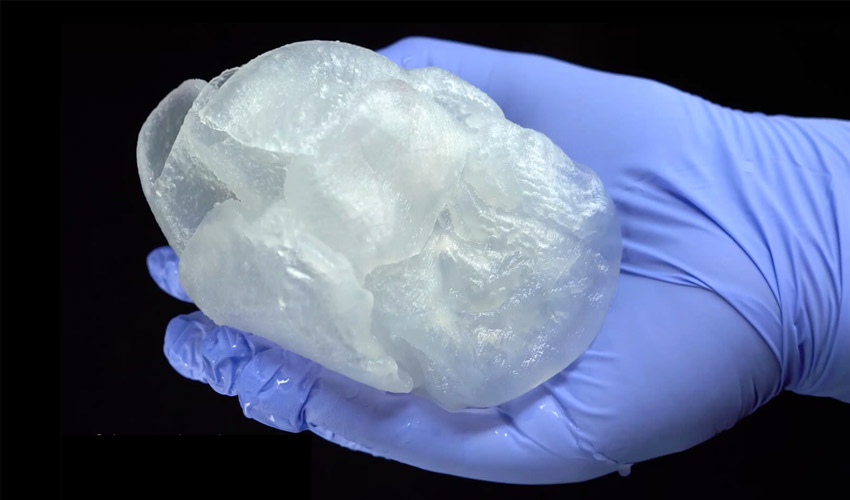
At Carnegie Mellon University in Pittsburgh, a team of researchers has developed a printing method called FRESH (Freeform Reversible Embedding of Suspended Hydrogel), which is able to produce a human heart model to help surgeons in their operations. Using alginate as the material, this process allows to reproduce the soft and elastic aspect of organ tissues: when pressed or squeezed, the heart deforms, just like a real human heart. Therefore, this technique makes the model a much more realistic medical tool, allowing surgeons to practise, for example, stitching, which would be impossible on impenetrable plastic models.
Recent progress made in the bioprinting sector is increasingly impressive: today, many players use additive manufacturing techniques to extrude cells and design living tissue, gradually moving towards the creation of fully functional human organs. Even if there is still a lot of progress to be made before a bioprinted organ is implanted in a patient, recent projects are encouraging. On the other hand, 3D printing has become a perfect method to make custom anatomical models, helping healthcare professionals to better prepare for an operation, or to better understand how the human anatomy works. Essentially, it allows to recreate a patient’s organ using data from an MRI. Some 3D printing technologies are so precise that they can reproduce vascularization, and other complex parts.
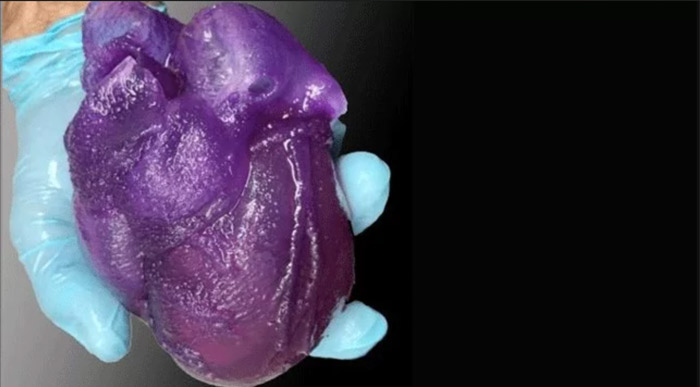
The 3D printed heart model
Reproducing the elasticity of human heart tissue
Carnegie Mellon University wanted to develop a method to mimic the very texture of the human heart, i.e. the soft and elastic aspect of its tissues. The researchers explained that they used alginate, a soft material derived from marine algae, which also proved to be very accessible cost wise. They used a FDM 3D printer, but instead of extruding the model onto an open air build plate, they deposited the material layer by layer in a gelatin container.
More from the desk
Six other notes from the rest of the bench.
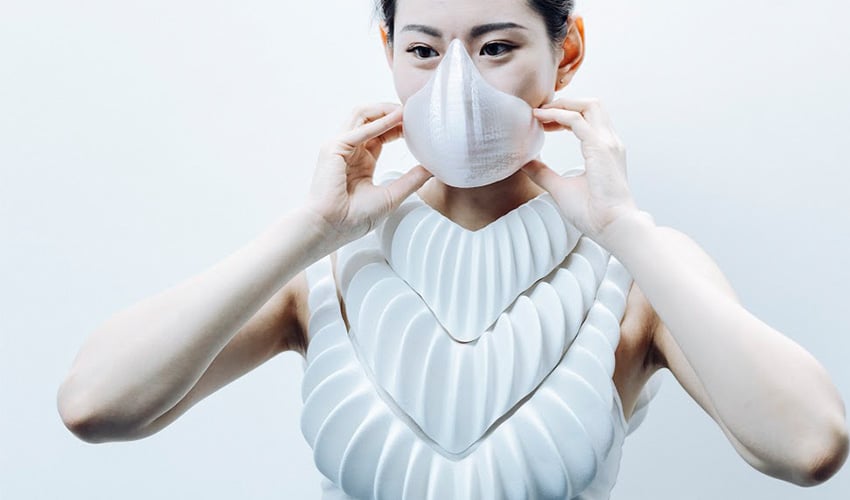 NewsAmphibio; the 3D printed gills that will allow us to breathe under waterJun Kamei is a Japanese designer specialising in biomimic design and materials. A few months ago he presented Amphibio, his final project for the Art Royal College in London, with three 3D printed “gills” for our future underwater. Will this make is possible…
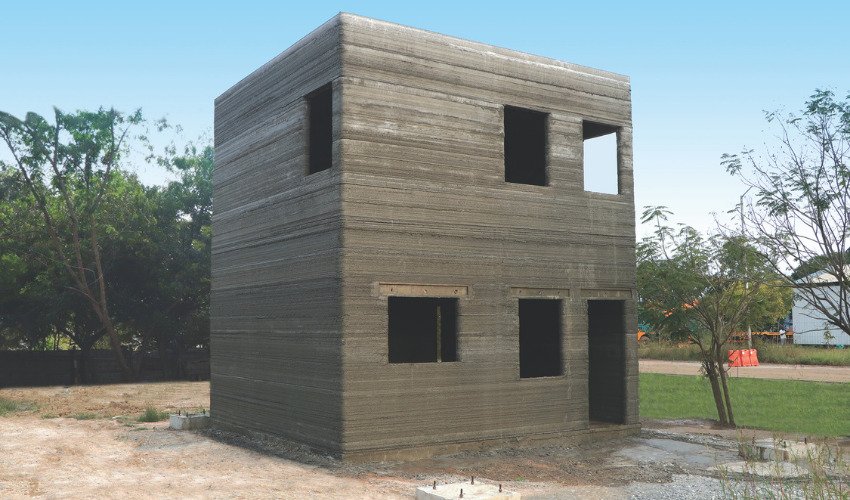 NewsCOBOD printer used for India’s first 2-Story 3D printed buildingL&T Construction has announced that it has developed India’s first 3D printed two-story building. The building was created using a COBOD printer and is the second Indian 3D printed house, the first was a single storey house also built by…
 NewsWhat do we know about the deal between the US Air Force and Essentium?Founded in 2013, Essentium provides industrial 3D printing solutions aiming to disrupt conventional manufacturing. Recently, the Texas-based company has announced that they signed a multi-year contract with the United States Air Force. The government agency has been interested in
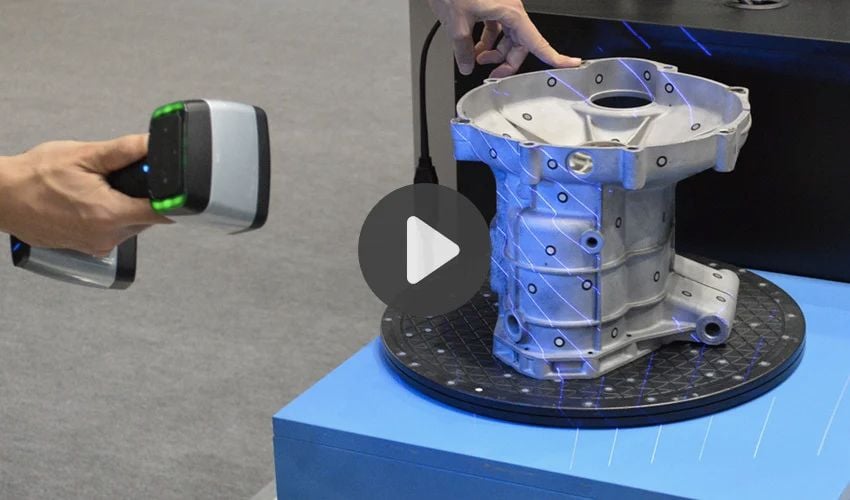 NewsSHINING 3D Offers High Precision Inspection With 3D ScanningSHINING 3D is a manufacturer of 3D digital technologies. Its ecosystem of solutions covers the entire digital manufacturing workflow, from 3D scanning to 3D printing, design and inspection, in a wide range of applications and industries. At Formnext this year…
 ApplicationsThe Aether Concept Car Pushes the Boundaries of Automotive Design With 3D PrintingThe automotive industry is increasingly moving towards sustainable solutions, with 3D printing playing a key role in this transition. The Aether concept car was created with this in mind. This next-generation electric vehicle incorporates advanced technologies, such as digital mo
 NewsNew Multi-Ingredient Process for Food 3D Printing Allows for More Personalized ChoicesFood 3D printing is an emerging technology that uses 3D printers to create customized, nutritious and creative foods. It offers advantages such as reduced food waste, sustainability and the ability to create food for specific dietary needs. However, it also…