Materials
United States Army Working with UCF to Optimize 3D Printing Processes
Once again, the American military has shown its interest in using 3D printing. This time, United States Army researchers have collaborated with academic partners from the University of Central Florida (UCF) to work to optimize the additive manufacturing process. The…
- 3 min read
- Materials
- Six more stories
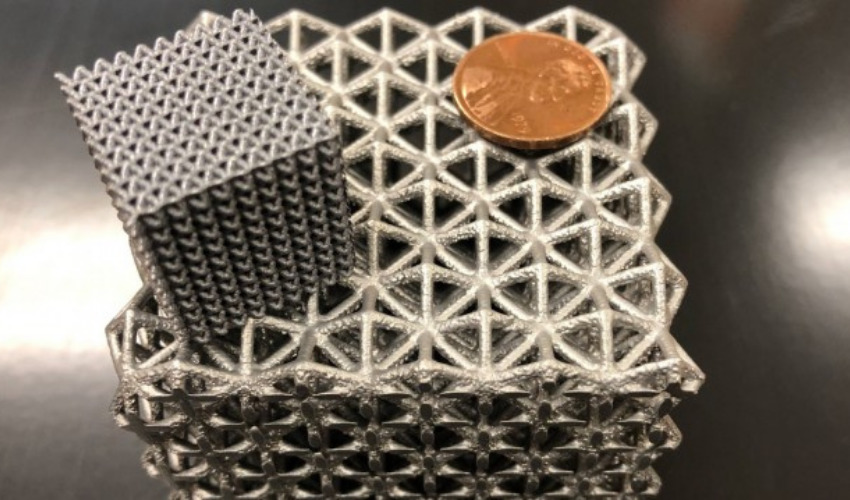
Once again, the American military has shown its interest in using 3D printing. This time, United States Army researchers have collaborated with academic partners from the University of Central Florida (UCF) to work to optimize the additive manufacturing process. The researchers worked to successfully print and optimize a magnesium alloy, WE43, optimizing it to allow for higher density in micro-lattice structures. This is expected to potentially allow the army to deliver extreme lightweight components to future soldiers.
One of the many known advantages of 3D printing is its ability to produce parts that are lighter than those created using traditional methods. This is the main driver behind this particular research. American soldiers are expected to carry extremely heavy packs, for example, standard combat gear can weigh 43 pounds on its own, and that is not counting any specialized equipment soldiers may also carry. For this reason, research into how to literally lighten that load is of great concern. Or at least, that is how Dr. Brandon McWilliams, the lead research for 3D printing metals at the United States Army Combat Capabilities Development Command (DEVCOM) Army Research Laboratory, explains the reasoning behind the project: “Current systems are too heavy, which increases burden to the Soldier, reduces fuel efficiency and degrades mission effectiveness, It is my goal as an Army researcher to conduct research, which has the maximum chance of success of transition from basic and applied research stage to practical application in order to enable transformational overmatch.”
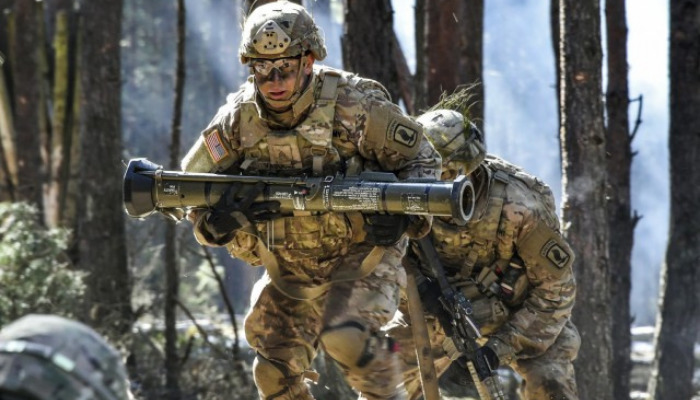
U.S. Soldiers are expected to carry heavy equipment with them on uncertain terrain. For this reason, increasingly the Army has looked into ways to lighten packs through technology like 3D printing (photo credits: .S. Army DEVCOM Army Research Laboratory)
The United States Army Research Project with UCF
Of course, this can be easier said than done, hence the research project with UCF which came from the United State. Army’s Open Campus initiative. The project sought to optimize the printing process for 3D printing a high-strength magnesium alloy and fabricating micro-lattice structures. A significant part of the research revolved around 3D printing with magnesium alloy. McWilliams noted “We used a magnesium alloy known as WE43, which has only been successfully 3D printed by a handful of researchers, in this work, we optimized the process to achieve higher density than previously reported and used that to produce and characterize lattice structures made up of WE43.”
More from the desk
Six other notes from the rest of the bench.
 ApplicationsResearchers 3D Print Hydrogels to Protect Astronauts from RadiationSpace is an extreme environment where dangers abound, and radiation is one of them. During space missions, astronauts and their equipment are exposed to much higher radiation than on Earth. Without appropriate protection, the equipment could malfunction. As for astronauts,&hellip
 MaterialsCreating illusory materials with multi-material 3D printingInnovation is second nature to the additive manufacturing sector, and one recent project that illustrates exactly this is Illusory Material. Conceived by industrial designer Jiani Zeng and computational designer Honghao Deng during their time at MIT, the aim of this…
 NewsCourt Orders Nano Dimension to Comply With Desktop Metal AcquisitionWe all heard the story. Back in July 2, 2024, Nano Dimension reached an agreement to acquire Desktop Metal, and Nano Dimension’s CEO at the time, Yoav Stern, emphasized that the acquisition was key to advancing additive manufacturing. Both companies…
 NewsSML and Palari to Join Forces To Make 3D Printed, Sustainable Neighborhoods in CaliforniaTo combat housing shortages and to help the construction industry become more environmentally friendly, additive manufacturing is increasingly seeming to be a viable option. And it is mainly for these reasons that more and more companies in the sector have…
 ApplicationsDental 3D Printing: how are 3D technologies revolutionising this sector?Additive manufacturing has reached a significant number of sectors and industries, subsequently offering important advantages in terms of productivity, costs, customisation and lead times. In the field of dentistry the technology creates solutions adapted to the needs of each pat
 News3D Printer ‘FingerPrint’, ThermoTag, Can Trace Illegal 3D Printed Items3D printing has encouraged rapid and significant development across several sectors. As a key component of industry 4.0, the technology has had an irreversible impact not only on how manufacturing is enacted but also on how it is conceptualized. Thanks…