News
UMaine Uses Giant 3D Printer to Speed Nuclear Reactor Build
The University of Maine is proving that large-scale 3D printing is rapidly becoming one of the most transformative tools in modern infrastructure development. When California-based Kairos Power set out to build its experimental Hermes nuclear reactor in Tennessee, the company&hel
- 3 min read
- News
- Six more stories
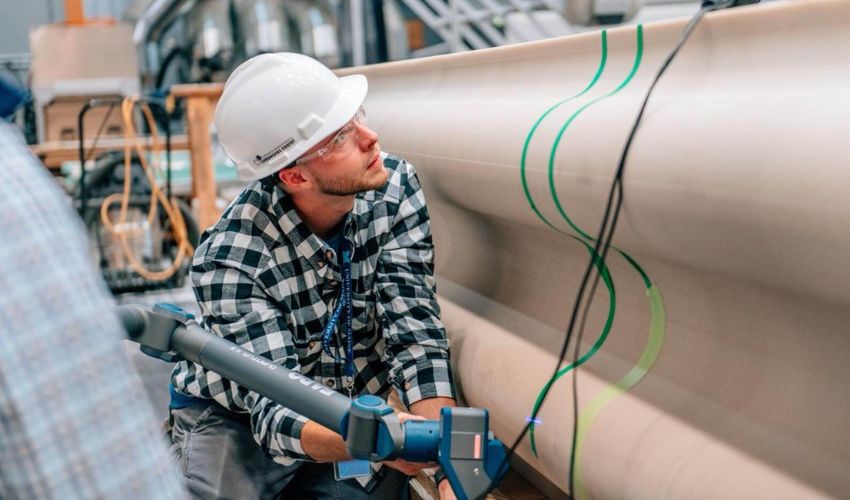
The University of Maine is proving that large-scale 3D printing is rapidly becoming one of the most transformative tools in modern infrastructure development. When California-based Kairos Power set out to build its experimental Hermes nuclear reactor in Tennessee, the company faced a familiar challenge in nuclear construction: traditional methods were too slow, too rigid, and too expensive to meet its timeline. The solution came from UMaine’s Advanced Structures and Composites Center, home to one of the largest polymer 3D printers in the world.
The reactor’s design required enormous concrete form liners that followed a precise sinusoidal curve. Each wall section is three feet thick and twenty seven feet tall, demanding millimeter accuracy. Past approaches would have required complex machining and lengthy fabrication cycles. Instead, UMaine researchers used their super-sized polymer 3D printer to fabricate the longest forms the center has ever produced, custom printed from digital models and shaped for exact alignment with Kairos Power’s reactor geometry.
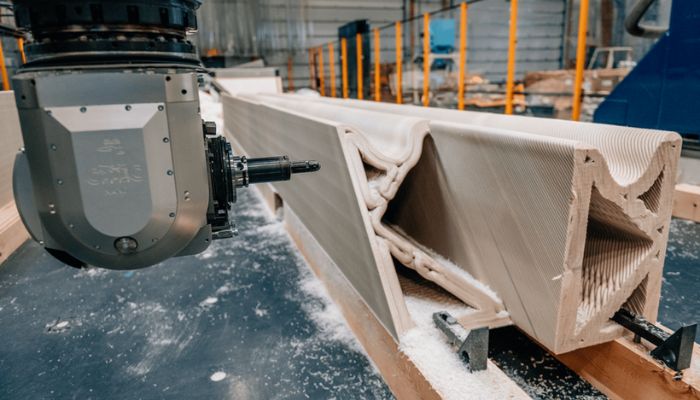
Once printed, the structures were precision-machined and inspected by UMaine’s metrology specialists. Every curve and angled surface was scanned and compared to the digital blueprint. According to ASCC chief sustainable materials officer Susan MacKay, the project left no room for deviations. She noted that the team achieved commercial-grade accuracy on a rapid schedule, calling it a milestone for an academic center operating at the pace of industry.
More from the desk
Six other notes from the rest of the bench.
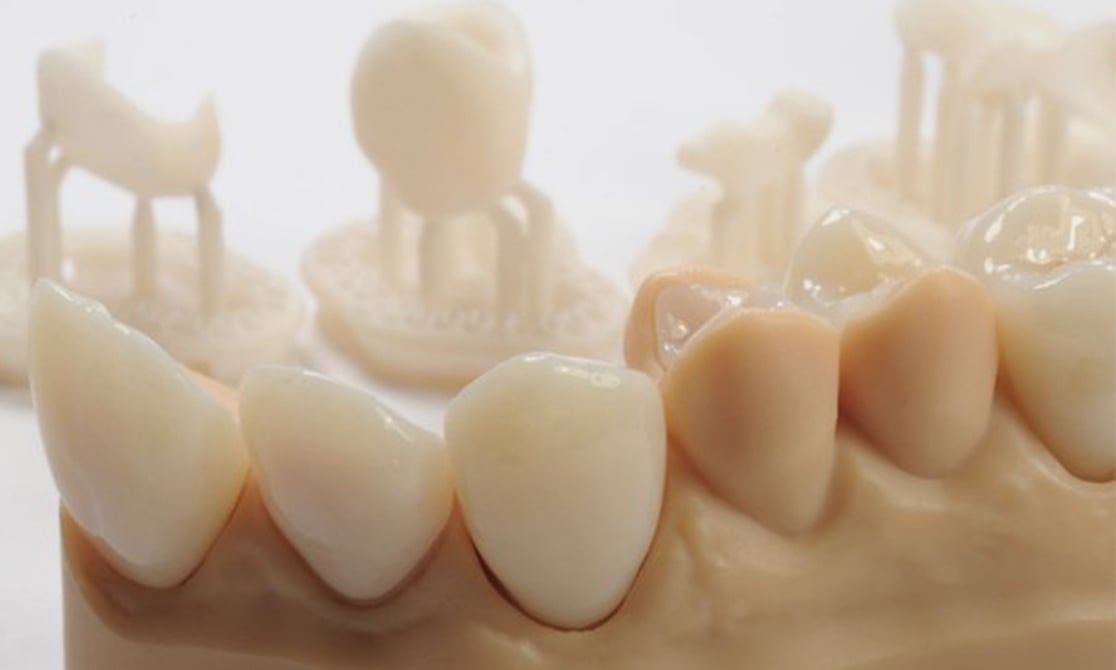 NewsRecent Study Highlights the Technical Advantages of 3D Printing for DentistryMuch has been made of the uses of 3D printing in dentistry, but a recent study has provided quantifiable evidence of its benefits compared to traditional methods. Scientists at the Tohoku University Graduate School of Dentistry in Japan compared the…
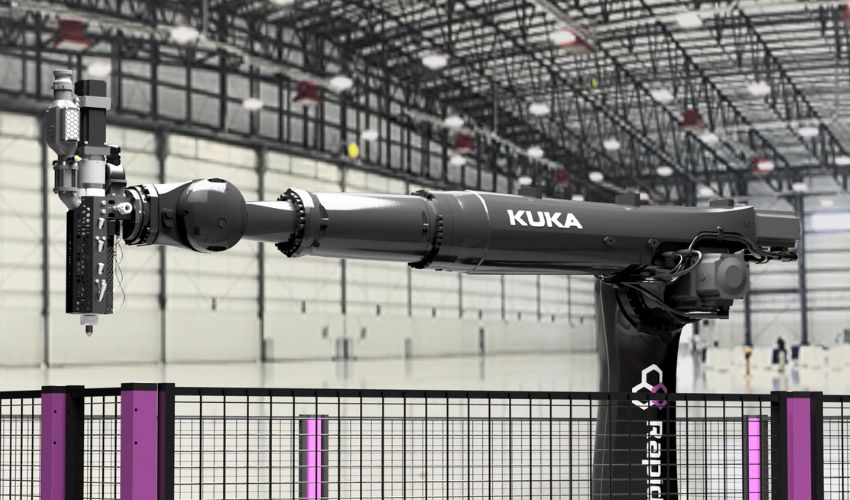 MaterialsRapid Fusion Talks Using Pellets for Large-Format Additive ManufacturingIf asked which two trends have been dominating the polymer 3D printing sector, the answer would be obvious: pellets and large-format additive manufacturing (LFAM). In recent years, we have seen machines getting larger for even more applications in sectors like…
 PrintersThe Most Impressive 3D Printers at Formnext 2023Formnext 2023 is nearly over. One of the biggest additive manufacturing events of the year will be coming to a close at the end of tomorrow and this year has been packed with great talks, innovations and more. But what…
 Guides#TALK3D: Interview with Benny Buller, CEO of VELO3DFounded in 2014, VELO3D aims to offer a new level of design freedom in metal additive manufacturing. Over the years, the company has been enabling engineers to produce parts that were previously considered impossible to manufacture using traditional methods. To…
 MaterialsWhat Technical Ceramics Are Compatible With Additive Manufacturing?Though the first thing that comes to mind for many when you mention ceramics is pottery or porcelain, technical ceramics are actually some of the strongest and toughest materials on Earth. Broken into two categories, oxides and non-oxides, the main…
 ApplicationsSURGE Aims to Predict Life of Critical Military Parts During ProductionThe Defense Advanced Research Projects Agency (DARPA) works to advance technology for United States national security. Created in 1958 in response to the Soviet Union’s 1957 launch of Sputnik, the agency positions itself as the nation’s commitment “to never agai