Applications
Uganda Launches Satellite for 3D Bioprinting In Space
Did you know 3D printing is present in space?! In the next step for microgravity bioprinting, Uganda has launched a satellite, named the PearlAfricaSat-1, which includes a facility for 3D bioprinting in space. This will allow the country to take…
- 3 min read
- Applications
- Six more stories
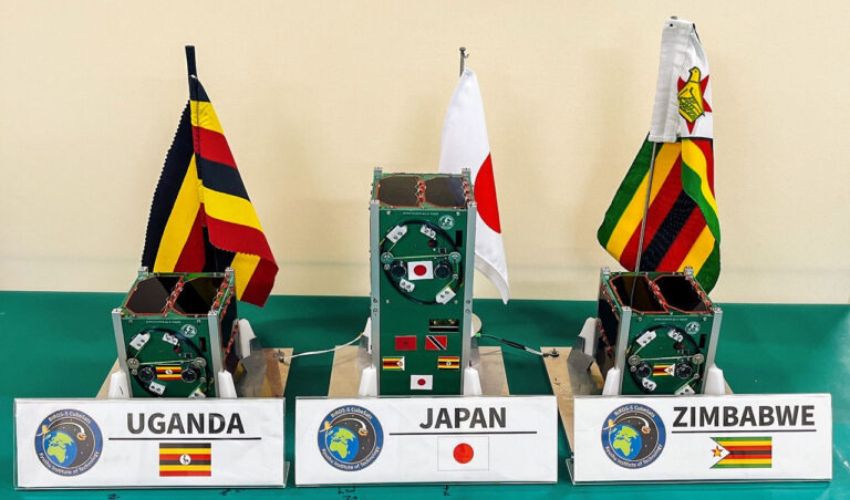
Did you know 3D printing is present in space?! In the next step for microgravity bioprinting, Uganda has launched a satellite, named the PearlAfricaSat-1, which includes a facility for 3D bioprinting in space. This will allow the country to take advantage of microgravity (the state of being close to weightlessness) to print human tissues, something which is challenging on Earth due to the risk that the complex scaffolding (such as blood vessels) required to create tissue structures can collapse under to their own weight; in space, this does not occur. Now, Uganda can join other countries both in having a space presence and in using 3D printing.
The launch of the satellite has been facilitated by a partnership between Uganda and the Kyushu Institute of Technology (Kyutech). Three engineers from the latter undertook the design, build, test and launch of the satellite. In terms of the onboard technology, the BioFabrication Facility (BFF) is the bioprinter which will be used. John Vellinger of Redwire, the company developing the technology, describes it as ‘game-changing’ and emphasizes the potentially ‘significant implications for the future of human health and patient care on Earth’.

The PearlAfricaSat-1 launch (NASA).
The satellite has now landed on the International Space Station and will aid with the printing of ovary tissue to test how function is affected by weightlessness, as well as a number of investigations unrelated to 3D printing, such as weather forecasting and disaster prevention. At the same time as the release of the PearlAfricaSat-1, Zimbabwe has also released a satellite, named Zimsat-1; both are part of the Birds Satellite project. This latest is an international project supported by Japan which allows non-space faring countries to participate in activities such as this one.
More from the desk
Six other notes from the rest of the bench.
 NewsThe Best Generative Design Software for 3D Printing in 2023Designing is the first step in any 3D printing process and plays a critical role in ensuring that the final part will come out correctly. However, this stage can be difficult even for those accustomed to design for additive manufacturing…
 PrintersUsing 3D Scanning to Repair and Customize the Famous Ford GT40The Ford GT40 is a sports car designed in only 126 examples in the 1960s, with a history well known to car enthusiasts but also amateurs, the rivalry between Henry Ford II and Enzo Ferrari has inspired more than one…
 NewsHow to 3D print high-performance materials (PAEK, PEI…): Experts give their advice!The additive manufacturing sector has seen an expansion in high-performance materials research in recent years, particularly for polymers. These include high-performance thermoplastics, better known by their acronyms, PEEK, PEKK and PEI (ULTEM). We are also seeing the development
 News#TOP5 videos: 3D Printed Skaterbot and much more!We found the TOP 5 videos of the week about 3D printing and the way additive manufacturing is shaping and changing our society. 3D printed skaterbot, micro structures, biomedical implants, metallic dental parts and more! If you enjoy these, you can…
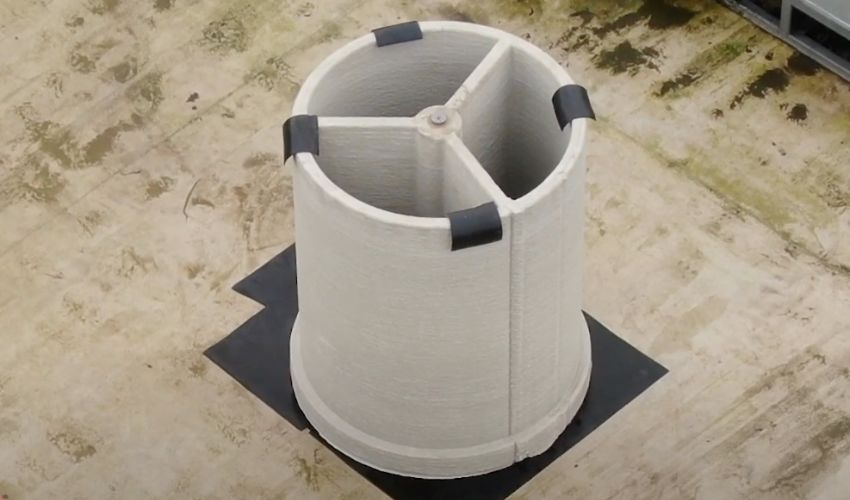 NewsFirst 3D Printed Water Chamber Created in The UKRecently, British water supply company United Utilities and 3D printing service ChangeMaker 3D successfully demonstrated the use and benefits of 3D printed components in the UK water industry. The discovery, which is the result of a twelve-month-long collaborative work between&he
 SoftwareSPREAD on Its Mission to Streamline EngineeringThe world of engineering and manufacturing is rapidly evolving, driven by advancements in technologies like 3D printing. In this interview, we sit down with Robert Göbel, co-founder of SPREAD GmbH, a pioneering force in simplifying access to product information through…