News
Top 5 Videos: A 3D Printed Saxophone
Another week has come to an end and like every Sunday, we have collected our top 5 videos of the week from the exciting world of 3D printing! Our first video is an interesting interview with an AM manufacturer of…
- 3 min read
- News
- Six more stories
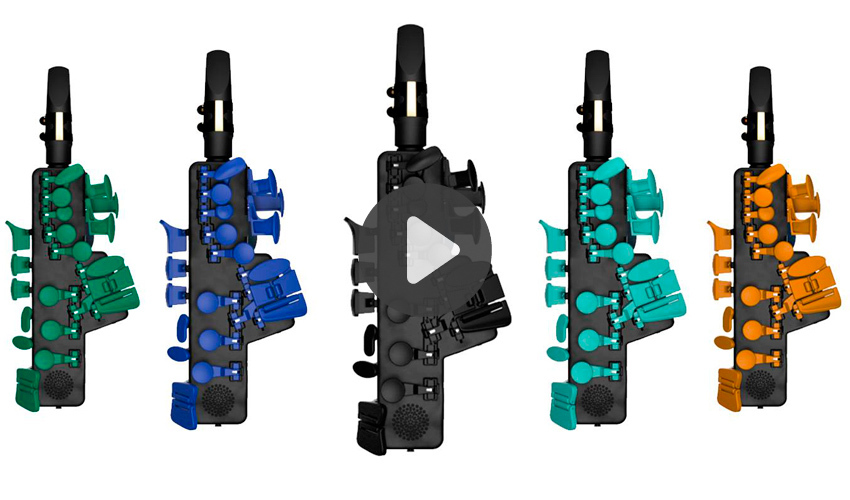
Another week has come to an end and like every Sunday, we have collected our top 5 videos of the week from the exciting world of 3D printing! Our first video is an interesting interview with an AM manufacturer of electric saxophones. We then introduce you to a company that has succeeded in creating a special foam by using additive manufacturing. After that, we have another great interview for you, this time on the use of artificial intelligence and machine learning in additive manufacturing. Next, we introduce you to Oerlikon AM Europe, a small but impressive 3D printing company in East Germany. In today’s last video, you’ll be able to get an insight into the so-called Wire Arc Additive Manufacturing. In any case, we hope you all are having a great Sunday!
Top 1: 3D Printed Electric Saxophone
Barcelona-based Odisei Music is a 3D printing startup that uses AM technologies to develop the Travel Sax, an electric saxophone that is lighter and quieter than any traditional saxophone. Don’t miss this new episode of our 3D interviews, where we talk to Ramón Mañas, CEO and founder of Odisei Music.
Top 2: Special 3D Printed Foam
Desktop Metal has developed a revolutionary 3D printable resin, which is suitable for volume production of foam parts by using DLP 3D printing technology. The material introduces a new family of photopolymer resins with heat-activated foaming agents that are 3D printed using Digital Light Processing (DLP). After printing, the FreeFoam parts are briefly placed in an oven, where the foaming agent forms closed cells inside the material in a tightly controlled process. The material can thus be programmed to expand by 2 to 7 times the original printed size. This allows FreeFoam parts to be shipped in compact form and expanded as needed in an oven near the final point of use or assembly, saving shipping and storage costs. FreeFoam not only eliminates the need for expensive tooling and the waste associated with standard foam production, but also enables new design freedom and offers a high strength-to-weight ratio that produces lightweight, high-performance parts that can reduce transportation costs and improve the efficiency of cars and other products.
More from the desk
Six other notes from the rest of the bench.
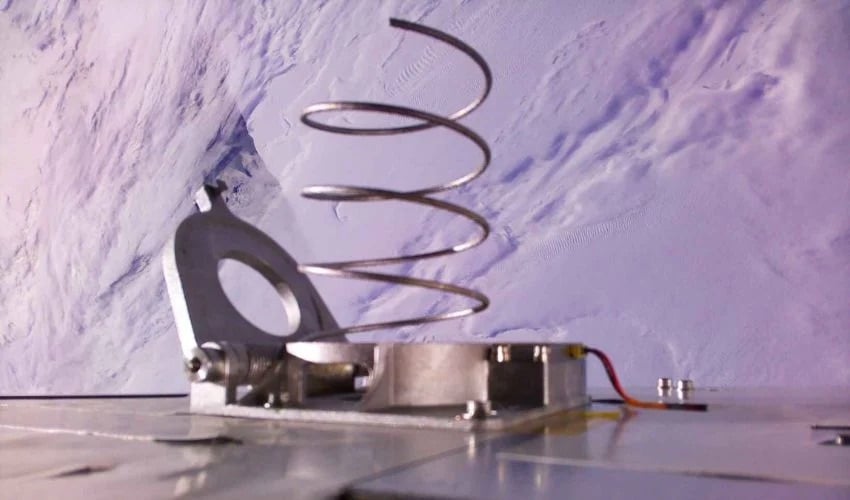 ApplicationsNASA Deploys 3D-Printed Titanium Spring in OrbitOn February 3, as the Mercury One satellite passed over Earth, a small box released a titanium spring with a simple yet disruptive movement. This was the JPL Additive Compliant Canister (JACC), a technology demonstration developed by NASA’s Jet Propulsion…
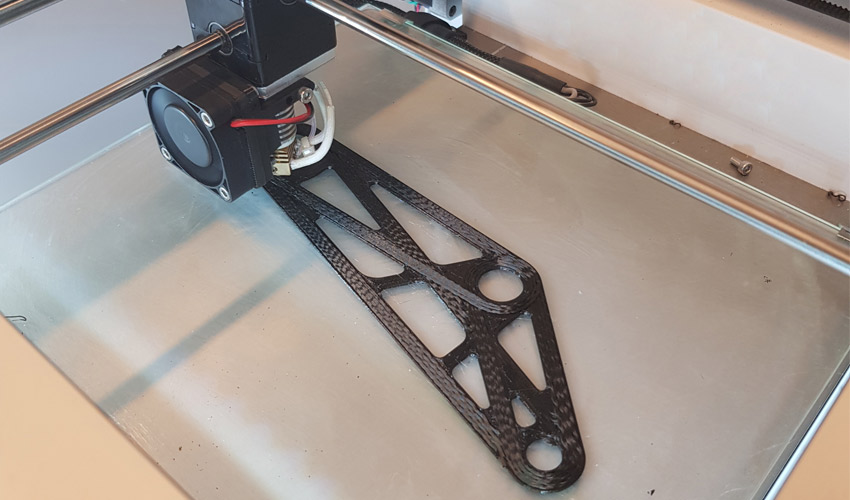 Materials9T Labs: 3D printing industrial grade carbon composites9T Labs is a young Swiss startup that has developed a 3D printing method to create structures with carbon composites. From the design of the part to its post-treatment, they optimize the entire process to allow professionals to obtain industrial…
 NewsIs the 3D Printing Market Consolidating?Over 2021, we saw a flurry of mergers and acquisitions throughout the additive manufacturing industry. It seemed that the industry was maturing and consolidation would continue, especially into 2022. However, a recent report from IDTechEx suggests this might not actually…
 SoftwareThe Top Free 3D Modeling Software ProgramsNowadays, if you want to get started with the critical step of 3D modeling, there is no longer a need to invest significant money in software! Free solutions exist on the market to get started with modeling your objects or…
 NewsWhat Were the 3D Printing Trends in 2023?As 2023 comes to a close, it is once again time to reflect upon the 3D printing trends that have dominated since January. In general, this year was a turbulent and exciting one, not just in additive manufacturing but around…
 NewsEssentium secured $22 million investment from BASF and MaterialiseEssentium is the developer of the High Speed Extrusion (HSE) FDM 3D printing platform. They have just secured $22.2 million investment in a series A round led by BASF and Materialise. Their aim is to continue the development of their…