Guides
#3Dstartup: Azul 3D and its ultra-fast large format resin 3D printer
Resin 3D printing processes are now among the most widely used in the additive manufacturing market, offering high precision and resolution. One of the challenges this process still faces, however, is the limited size of the build plate and printing…
- 3 min read
- Guides
- Six more stories
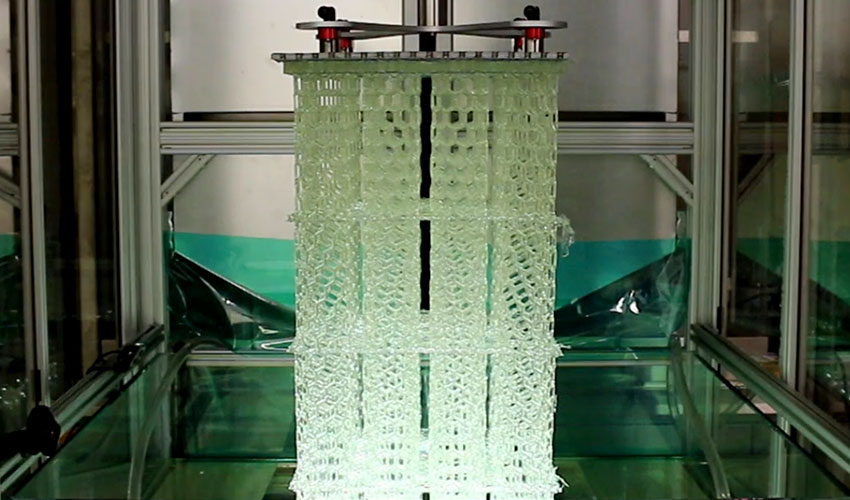
Resin 3D printing processes are now among the most widely used in the additive manufacturing market, offering high precision and resolution. One of the challenges this process still faces, however, is the limited size of the build plate and printing speed. The build process is rather slow and the machines do not allow for the design of large parts or volume production. However, some companies are innovating and developing promising methods, such as the American startup Azul 3D, which developed the HARP process. It has developed a machine based on photopolymerization capable of creating adult-sized parts in just 2 hours! We wanted to meet the team to learn more about this unique 3D printer that could well impact the resin 3D printing market!
3DN: Can you present yourself and tell us about your relationship with 3D printing technologies?

Dr. James Hedrick
I am Dr. James Hedrick, CEO and co-founder of Azul 3D which is commercializing the first 3D printing technology capable of competing with the speed, strength, and economy of scale of injection molding. I started my first company at the age of 16. The profits paid for my college tuition at MIT, where I was also a student-athlete. I went on to receive my Ph.D. at Northwestern University with Professor Mirkin, during which I was part of the team that developed seminal technology, HARP, at the core of Azul 3D. This HARP technology was my first approach to 3D printing that was first applied to nano 3D printing. We quickly pivoted to macro 3D printing in the months following.
3DN: How did you come up with the idea of creating Azul 3D?
I was doing my Ph.D. under the supervision of Professor Chad Mirkin. While working alongside a post-doc in the lab, Dr. David Walker, we started to develop a new nano 3D printer. Early on, we had a breakthrough with the technology but in the process realized we could print large structures with some modification to the technique in addition to printing tiny structures. We recognized immediately that with HARP, we had the ability to transform manufacturing. We transitioned our focus from nano to macro, and the three of us founded Azul 3D to transition the technology from the lab to the factory.
More from the desk
Six other notes from the rest of the bench.
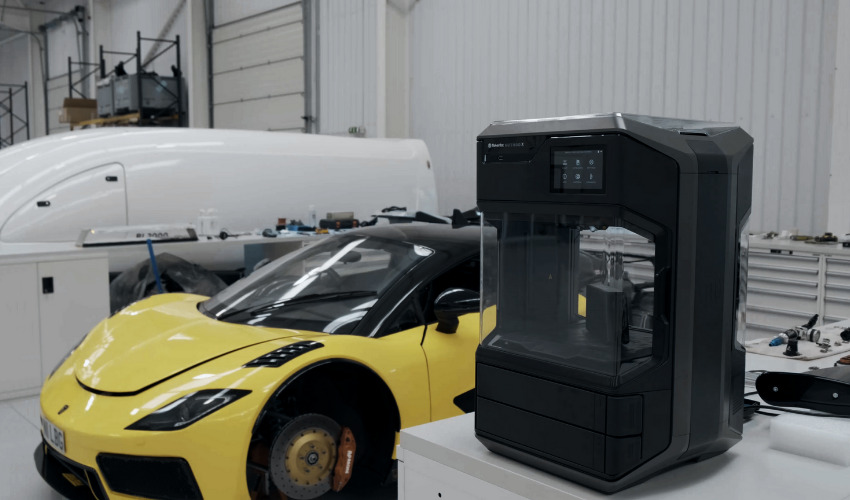 MaterialsBespoke Car Manufacturer Arash Uses MakerBot & Carbon Fiber For Electric HypercarUK-based hypercar manufacturer Arash Motor Company is leveraging the efficiencies of 3D printing in its car factories in order to accelerate car production. While Arash has been using MakerBot 3D printers for numerous years, the company has just recently introduced…
 Printers3Dnatives report: The most popular 3D printersThe 3Dnatives Comparator lists hundreds of 3D printers that range from Desktop and RepRap/kit printers to professional and industrial ones. Our Comparator includes a range of models that are based on various processes such as filament filtration and powder sintering,…
 NewsPrintParts Partners with MakerGirl to Bridge STEM Gender GapEven with the advances made in recent years, women continue to be disproportionately unrepresented across STEM (science, technology, engineering, and math) industries, and in leadership positions in the technology sector. In 1970, women made up a mere 8% of STEM…
 NewsWEBINAR: Low-Volume Rapid Injection Molding with 3D Printed MoldsInjection molding is a manufacturing process that allows for the design of large volumes of parts. The majority of plastic components that exist today are made using this technique. However, the production of a mold – most often metal –…
 NewsTop 5 Videos: The 3Dnatives Tour of 3DEXPERIENCE World 2023Hello everyone and welcome back to our top 5 3D printing videos of the week! As always, we have an exciting selection for you, starting with a 3Dnatives original from 3DEXPERIENCE World! Our team had a wander round to find…
 NewsOsaka University Researchers Discover Ultrasonic Quality Control MethodAs additive manufacturing companies embrace the design freedom of 3D printing products and parts, they also have to overcome the obstacle of maintaining quality control. Researchers from Osaka University in Japan have uncovered a solution that will help companies achieve…