Applications
The World’s First 3D Printed Composite E-Scooter
E-scooters have been a controversial topic since their introduction in larger cities. Opinions are divided, especially when it comes to sustainability . Indeed, e-scooters can be environmentally friendly – especially if they replace car journeys or other forms of public tra
- 3 min read
- Applications
- Six more stories
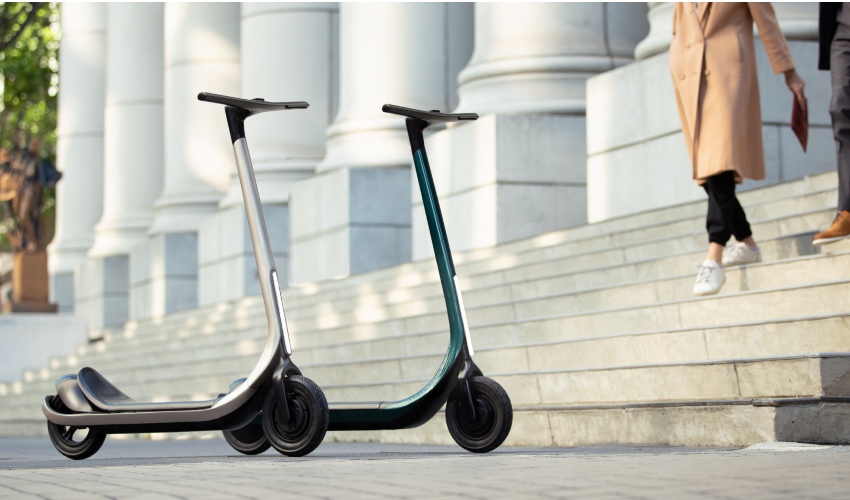
E-scooters have been a controversial topic since their introduction in larger cities. Opinions are divided, especially when it comes to sustainability . Indeed, e-scooters can be environmentally friendly – especially if they replace car journeys or other forms of public transport. A study by the Federal Environment Agency shows, however, that electric scooters are mostly used as a replacement for bicycles or for walking, which in turn worsens the environmental balance. For all those who are not big fans of e-scooters – be it because of the ongoing controversy, the metropolitan system or other inconveniences – there is now a reason to reconsider their attitude: the first 3D-printed e-scooter.
Yesterday, Scotsman, a scooter brand from Silicon Valley, unveiled the world’s first 3D-printed electric scooter made entirely from thermoplastic carbon fiber composites . In fact, the unibody construction is produced in just a single 3D printing process, eliminating the need for glued parts or joints, which in turn leads to greater stability. To be precise, the new e-scooter actually comes in three different models: the Scotsman 500, the Scotsman 1000 and the Scotsman 2000. These differ in terms of top speed, power output and price, but they are the same special properties that set them apart from normal high-end scooters.

Scotsman’s 3D printed e-scooters are available in 5 different colors. (Image credit: Scotsman)
Properties of the 3D printed e-scooters
One of the biggest differences to conventional e-scooters is of course the production. Scotsman’s standing scooters are made of 3D printed thermoplastic materials, which gives them a perfect mix of durability and agility: They are 61 times stronger than steel and at the same time very light. This makes them perfect for commuters who need a robust and shock-resistant means of transport in road traffic that should be easy to transport or carry. Josh Morenstein, designer, award winner and driving creative force behind Scotsman confirms this: “With the Scotsman, we wanted to address commuters in cities as well as electromobility enthusiasts and provide them with the e-scooter as a high-performance alternative in commuter traffic and everyday life. Thanks to 3D printing from continuous carbon fiber composite material, we are able to implement designs that would not have been possible with other materials and manufacturing techniques. “
More from the desk
Six other notes from the rest of the bench.
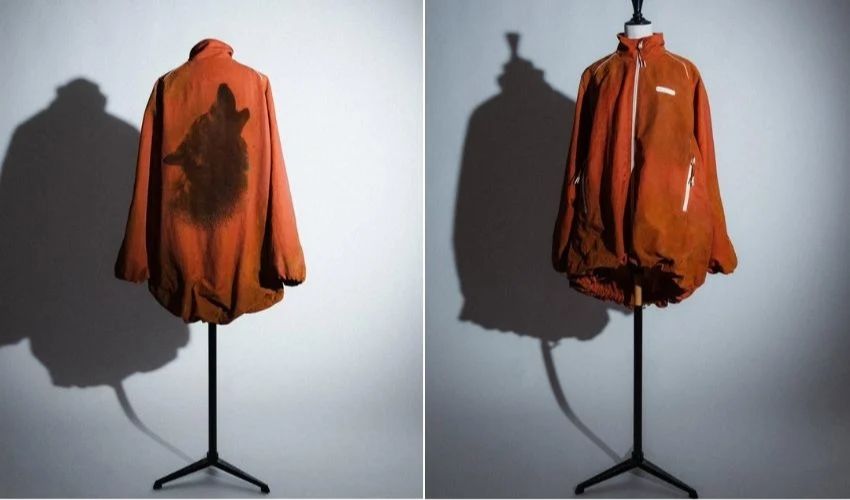 NewsNovak Djokovic’s Jacket at The French Open: A 3D-Printed Wolf and Real ClayThe 2026 Roland-Garros Tournament kicked off last week, and we can’t pass up the chance to highlight Novak Djokovic’s entrance. The Serbian player arrived wearing a jacket featuring a 3D-printed wolf and real clay from the legendary Parisian court. The…
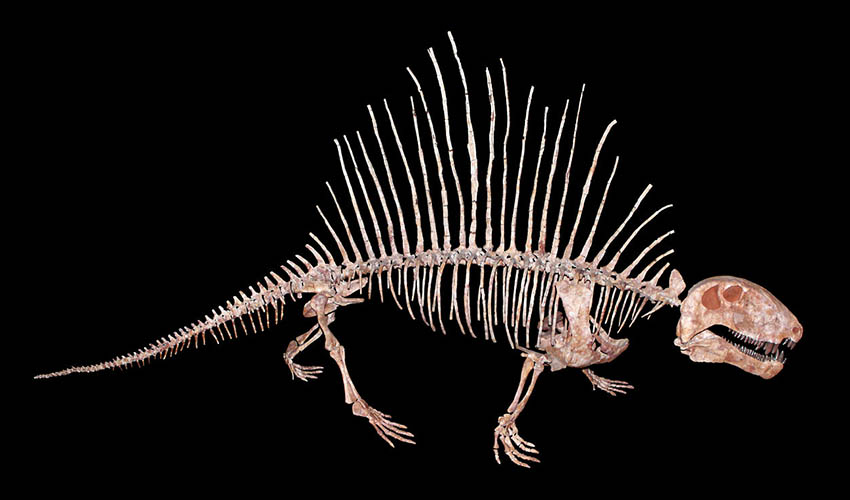 PrintersReplicating rare prehistoric fossils through 3D scanningAt the Texas Through Time museum, the fossilized skeleton of a Dimetrodon limbatus was 3D scanned by NVision, specialized in 3D scanning solutions. This will enable to 3D print an exact replica of the fossil skeleton. Usually, in order to…
 NewsTop 5 Videos: See How Lattice Medical 3D Prints ImplantsThis week, we have five more videos about innovations in 3D printing. First up, we bring you an exclusive interview with the French company Lattice Medical, which 3D prints implants for tissue regeneration. Then, we have a video on how…
 GuidesThe Personalities Who Shaped the Additive Manufacturing Market in 2023As we approach the end of the year, it’s time for us to take a look back at the market, and at the personalities who have shaped the 3D printing sector in 2023. Whether they work in major corporations, startups…
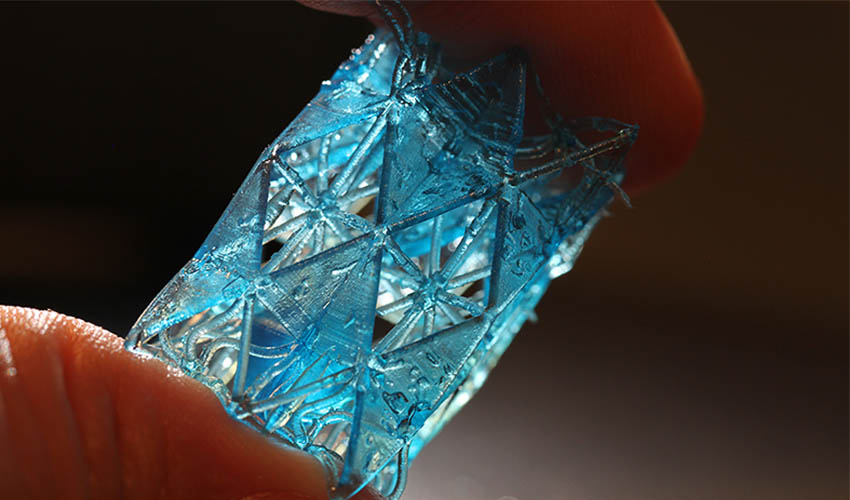 NewsStudying the structure of bone to make stronger 3D printed buildingsScientists from Cornell University, Purdue University, and Case Western Reserve University have taken inspiration from bone to create more durable 3D printed structures. These structures could prove beneficial to the construction industry to support heavy loads, the same way our&
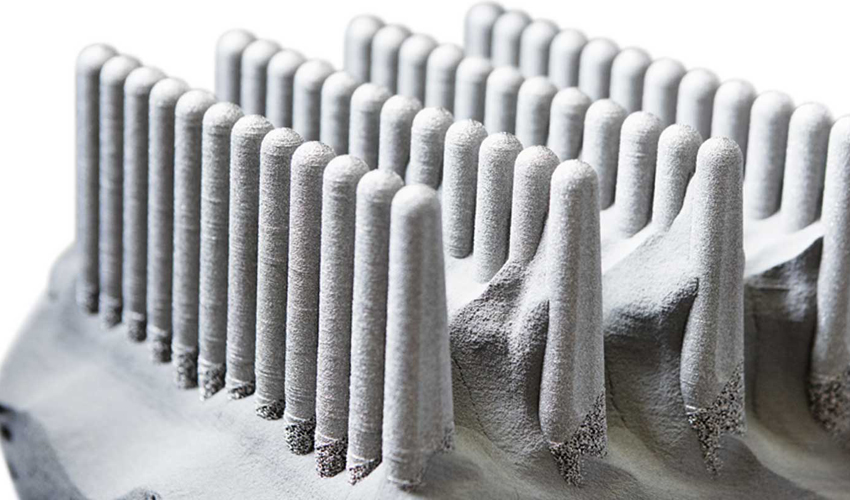 NewsThe Complete Guide to Electron Beam Melting (EBM) in 3D PrintingElectron Beam Melting (EBM) is part of the powder bed fusion family. Unlike Laser Powder Bed Fusion (LPBF), it uses, as its name suggests, an electron beam to fuse metal particles and create, layer by layer, the desired part. Marketed…