News
Studying the structure of bone to make stronger 3D printed buildings
Scientists from Cornell University, Purdue University, and Case Western Reserve University have taken inspiration from bone to create more durable 3D printed structures. These structures could prove beneficial to the construction industry to support heavy loads, the same way our&
- 3 min read
- News
- Six more stories
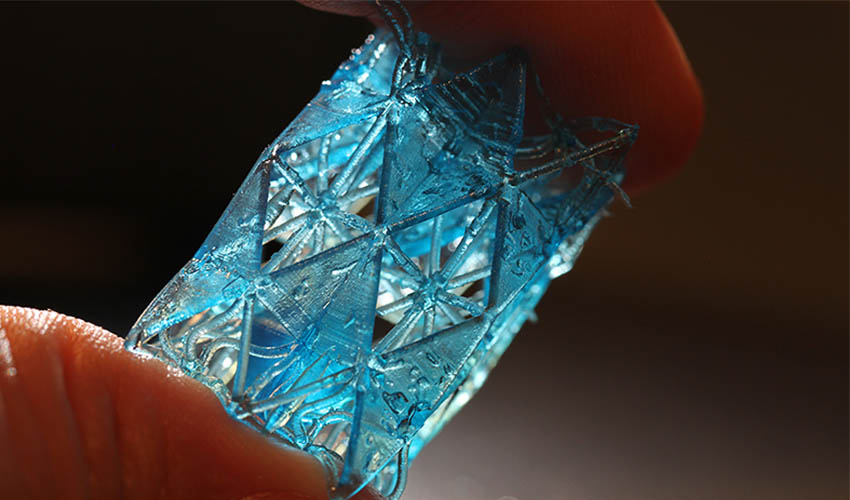
Scientists from Cornell University, Purdue University, and Case Western Reserve University have taken inspiration from bone to create more durable 3D printed structures. These structures could prove beneficial to the construction industry to support heavy loads, the same way our bones resist constant stress during a lifetime without breaking. 3D printing in this sector is actually in its early developments, early adopters are only just beginning to investigate the capabilities of the technology. While there are a lot of R&D initiatives and pilot projects, actual real-life case studies are few and far between – nevertheless, 3D applications in the construction industry are promising!
The researchers from the three universities focused on studying how a ‘beam’ in human bone material handles a lifetime’s worth of wear and tear. Pablo Zavattieri, a professor in Purdue’s Lyles School of Civil Engineering explains: “Bone is a building. It has these columns that carry most of the load and beams connecting the columns. We can learn from these materials to create more robust 3D printed materials for buildings and other structures.” By running tests, the researchers discovered that when they mimicked this beam and made it about 30% thicker, the artificial material could last up to 100 times longer.
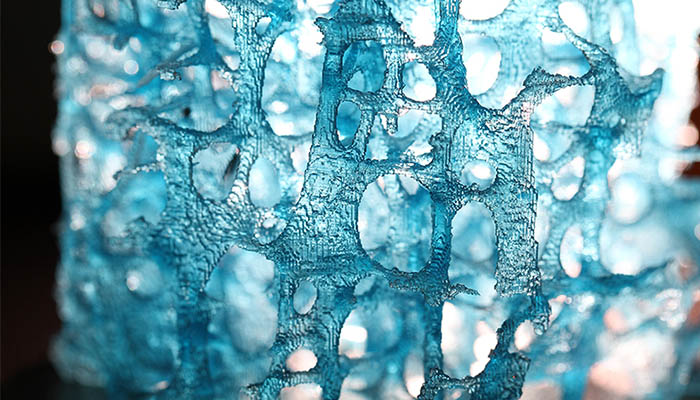
The researchers discovered that when they mimicked this beam and made it about 30% thicker, the artificial material could last up to 100 times longer | Credits: Purdue University photo/Pablo Zavattieri
The structure of bone could make stronger 3D printed buildings
The scientists explain that bones get their durability from a spongy structure called the trabeculae. This structure can be compared to a network of interconnected vertical plate-like struts and horizontal rod-like struts acting as columns and beams. In fact, the denser the trabeculae, the more resistant the bone will be, something which changes as humans get older. What the scientists call the horizontal rod-like struts are what significantly increase the bone’s resistance. Hernandez, professor of mechanical, aerospace and biomedical engineering at Cornell comments: “When people age, they lose these horizontal struts first, increasing the likelihood that the bone will break from multiple cyclic loads.”
More from the desk
Six other notes from the rest of the bench.
 News3DSimo’s 7-in-1 Multipro device for artists, hobbyists & makersIn recent years, 3D pens have allowed hobbyists, makers, artists and children to reach a new level of creativity. One of the players of this market is the European manufacturer, 3Dsimo. The company entered the market back in 2014, and…
 MaterialsMarble 3D printing filament is ideal for making sculpturesThe use of polymers in additive manufacturing has grown tremendously in the past decade. Today, there is a wide range of thermoplastics available on the market – each appealing to different types of users of 3D printing. The 3D printing…
 GuidesHenkel discusses 3D printing material development, and moreFounded in 1876, Henkel is a multinational company active both in the consumer and industrial sectors. While the company is headquartered in Düsseldorf, Germany, more than 80 percent of its employees work outside of Germany. In 2016 the company entered the…
 Guides#Working3D: Six Questions for a University Professor Working on 3D Microstructures in the Biomedical FieldAdvances in 3D printing and bioprinting in the field of medical research are increasingly promising. One of the uses of the technology is the development of 3D microstructures and nanostructures that can be used to understand how cells function in…
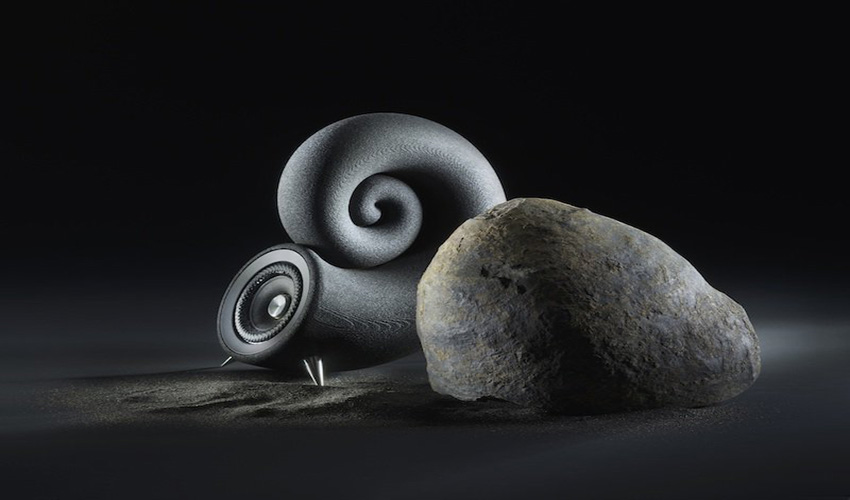 NewsWorld’s first 3D printed speakers from sandDEEPTIME Limited is a relatively new speakers’ manufacturer based in the Czech Republic. They previously revealed the world’s first speakers 3D printed from wooden composite. Still innovating in terms of design and technology, they have just revealed their new audio…
 NewsUsed cooking oil from McDonald’s is transformed into 3D printing resinAt the University of Toronto, a team of researchers has recovered used cooking oil from a local McDonald’s and turned it into a high-resolution biodegradable 3D printing resin. For one litre of used oil, they obtained 420 mL (14 oz)…