Applications
The National University of Colombia Is Using 3D Printing To Reduce Radiation Therapy Damage
Radiation therapy is a process that some people undergo to cure or relieve symptoms caused by cancer. In the past, radiation therapy significantly damaged parts of the body by focusing radiation exposure on the targeted area of the cancer. Today…
- 3 min read
- Applications
- Six more stories
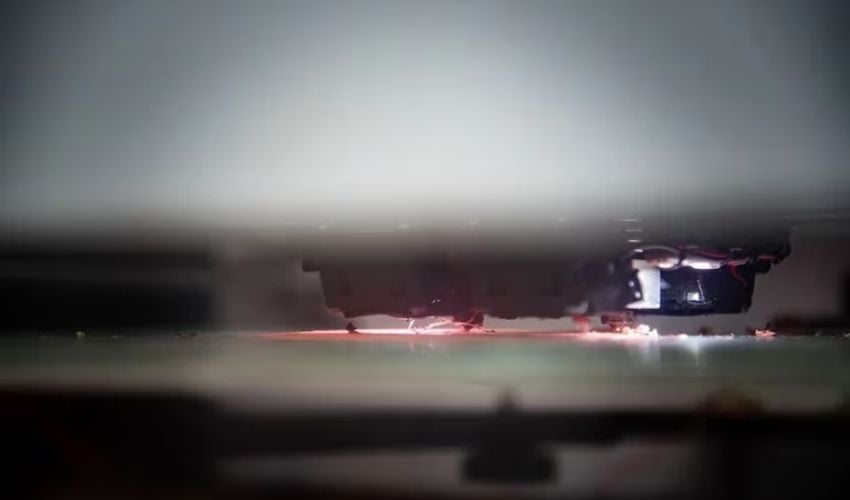
Radiation therapy is a process that some people undergo to cure or relieve symptoms caused by cancer. In the past, radiation therapy significantly damaged parts of the body by focusing radiation exposure on the targeted area of the cancer. Today there is a material called a bolus, equivalent to tissue, which is used to reduce the depth of the maximum dose of the rays. It is a flexible material since it has to adapt to the curvatures of the body. Different types of boluses are used in radiotherapy, depending on factors such as the location of the tumor, the depth of the radiation or the characteristics of the patient themselves. Some examples of materials used are plastics or silicone. However, a new development from the National University of Columbia has introduced a possibly more effective bolus made from 3D printed material.
The most common boluses are made of kerosene, which is a petroleum derivative, explains the National University of Colombia (UNAL). They also point out that these petroleum-derived materials do not adapt well to the patient’s body, generating air pockets, thus affecting dosimetry; the dose of radiation absorbed by the patient’s tissues during the application of the treatment. Although Formlabs and Frontiers in Oncology have experimented with 3D bolus printing in recent years, they have thus far not obtained optimal results. However, Karen Marcela Carrillo Chacón, with a master’s degree in Medical Physics from UNAL, has managed to optimize bolus 3D printing with surprising results.
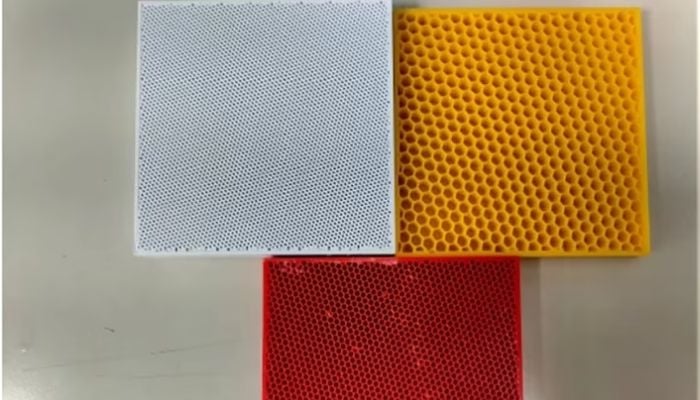
3D printed boluses for radiotherapy treatments
Testing The 3D Printed Bolus: Function and Material
3D bolus printing has made it possible to create customized materials for different patients. These materials adapt to the patient’s body in a way that improves the distribution of radiation, reducing the damage caused to the organs and tissue surrounding the area where the tumor is located. Karen worked on this technology in conjunction with the National Cancer Institute of Colombia (INC). The results obtained were so promising thanks to the materials used, which in this case were ABS and PLA. The National University of Colombia explains that “hundreds of sheets” were printed and tested in a linear accelerator, the device responsible for applying radiation to the patient’s cancer cells.
More from the desk
Six other notes from the rest of the bench.
 NewsTop 5 Videos: Celebrate 3D Printing Day!Happy 3D Printing Day! Yes, you heard right! Coined back in 2013 by GE with the catchy line “going 3D on D3,” the third day of December has become a time to reflect on the additive manufacturing industry and marvel…
 Guides#3DStartup: One Click Metal Wants to Make Metal Additive Manufacturing Accessible to AllWe first met German startup One Click Metal at Formnext 2019. Its goal is clear: it wants to democratize access to metal additive manufacturing by offering a printing solution that is easier to use, a powder system that is less…
 ApplicationsUS Navy Uses SPEE3D Technologies for Its MaintenX ExerciseSPEE3D, an Australian metal 3D printing company, recently announced that it was chosen by the US Navy to play an important role in their MaintenX exercise which aims to give a better understanding of the operational challenges faced by soldiers…
 GuidesThe Most Innovative 3D Printed Glasses on the MarketWhen you think of 3D printing especially in the medical sector, one of the most important benefits of the technology is the fact that it can make fully-customizable parts. It probably comes as no surprise then that one of the…
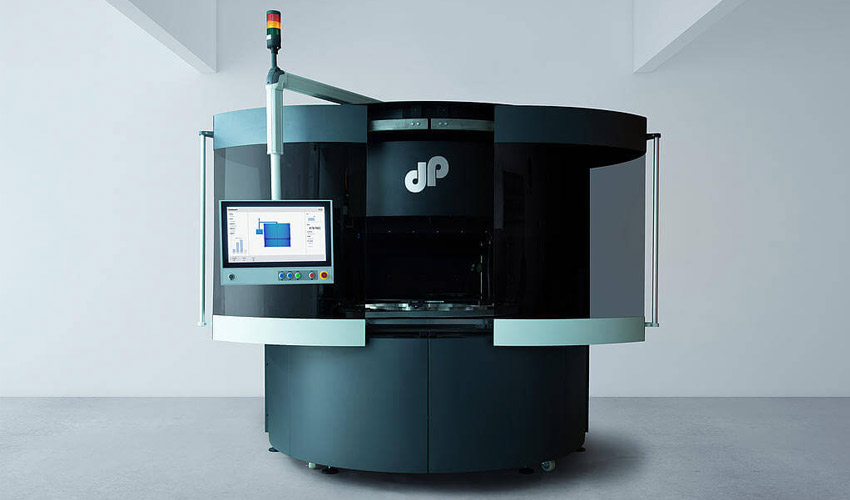 Guides#3Dstartup: dp polar develops AM system with continuously rotating platformBased in Germany, our startup for June is dp polar! The company has developed the first industrial 3D printer with a rotating printing build plate. Instead of having a print head that moves to deposit the material layer by layer,…
 News14Trees Plans to Make 52 3D Printed Houses in KenyaAccording to many estimates, the world will face a significant housing shortage by 2030. With a growing global population, increasingly difficult to acquire building permits and necessary environmental standards, many countries are looking for solutions to this worldwide problem.