News
Curling in 3D Printing: What It Is and How to Fix It
As you probably know by now, the term additive manufacturing encompasses a number of innovative technologies that enable parts to be manufactured faster and with fewer materials than subtractive manufacturing methods. However, it is not infallible. Indeed, for each printed&hellip
- 3 min read
- News
- Six more stories
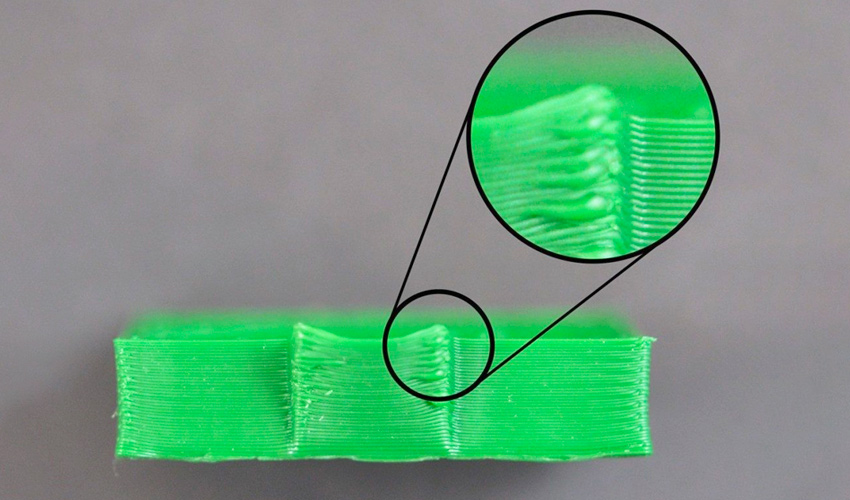
As you probably know by now, the term additive manufacturing encompasses a number of innovative technologies that enable parts to be manufactured faster and with fewer materials than subtractive manufacturing methods. However, it is not infallible. Indeed, for each printed part, numerous parameters must be taken into account to avoid printing errors. One common problem in 3D printing is curling. Though similar to another well-known phenomenon, warping, they are not exactly the same. But what do these two closely related but distinct notions mean?
Curling, also known as rough corners or overextension on corners, is a deformation of the upper layers of the 3D-printed object, particularly visible at the edges, which can cause the part to become defective. Warping is a similar phenomenon, but affects the lower layers of the part, causing it to detach from the printing plate. Another term, delamination, on the other hand, is characterized by the separation of the various printed layers, the same phenomenon taken to extremes. Let’s take a closer look at the causes of these anomalies, and the solutions to be implemented to avoid them.
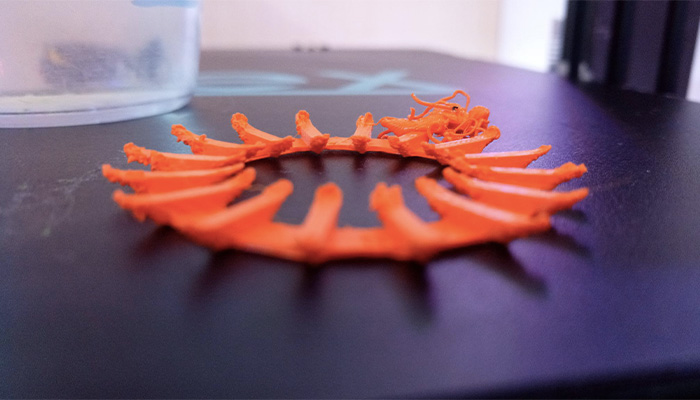
The curling phenomenon leads to deformation of the part
Essentially, curling in 3D printing (along with the other phenomena) is caused by too great a temperature difference between the material at the time of extrusion and the surrounding air (as soon as the filament leaves the nozzle, it is suddenly cooled to room temperature). This is why this problem often arises during FDM 3D printing.
More from the desk
Six other notes from the rest of the bench.
 ApplicationsNew Bioprinting Technique Prints Tissue 10 Times FasterIn the medical field, in addition to applications such as the creation of prostheses or the optimization of surgical procedures, 3D printing is also opening up new perspectives for research. For example, it can be used to design replicas of…
 NewsLiquid Additive Manufacturing: A New Process for 3D Printing Silicone Seals and MoreSeals play a vital role in many fields. Notably, seals are used to prevent or reduce the leakage or ingress of liquids, gases or solid substances such as dust. To be effective, they need to be plastic and elastically malleable,…
 NewsWhat Is the Takeaway From ADDITIV Metals World?It’s been just over a week since ADDITIV Metals World, and the energy from the event is still fresh in our minds. The event was a great reminder of how quickly the additive manufacturing landscape evolves, especially in the field…
 NewsWEBINAR: How to choose your AM engineering grade material and 3D printer?There are many things to consider when choosing material for 3D printing projects, and the questions to be answered just become more daunting when materials need to be engineering-grade, meaning they should be able to stand up to more rigorous…
 NewsTop 5: Could Recycled Filament Be the Future of 3D Printing?It is once again Sunday and with the end of the weekend also comes our weekly top 5 3D printing videos of the week! To start you off, check out Enable 3D’s interview with Reflow to learn more about recycled…
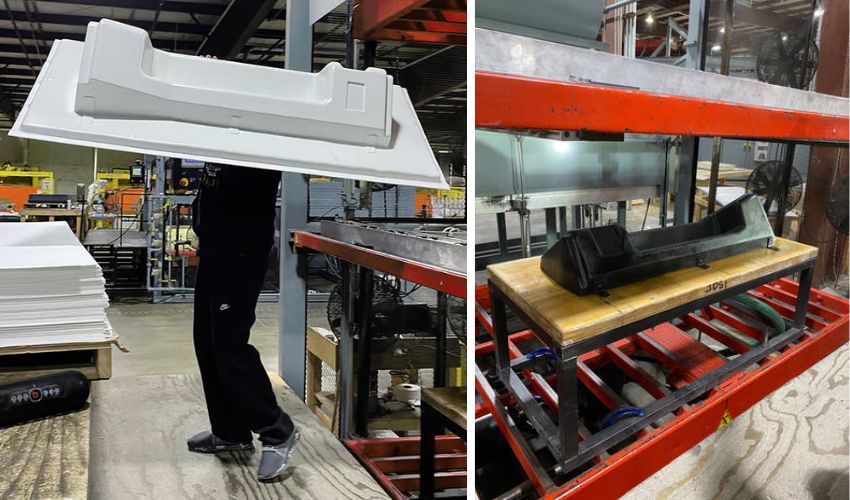 NewsReducing Costs And Lead Times For Large Thermoforming Molds With Pellet 3D PrintersOver the past few years, we have seen a number of growing supply chain pressures. Starting of course with the COVID-19 pandemic wherein suddenly not only were crucial products running out quickly due to increased demand, but there were also…