News
The Complete Guide to WAAM in Metal 3D Printing
Wire Arc Additive Manufacturing (WAAM) falls under the umbrella of Directed Energy Deposition (DED) 3D printing. DED technology is a metal 3D printing technique that involves depositing a metal material in powder or wire form by means of a nozzle…
- 3 min read
- News
- Six more stories
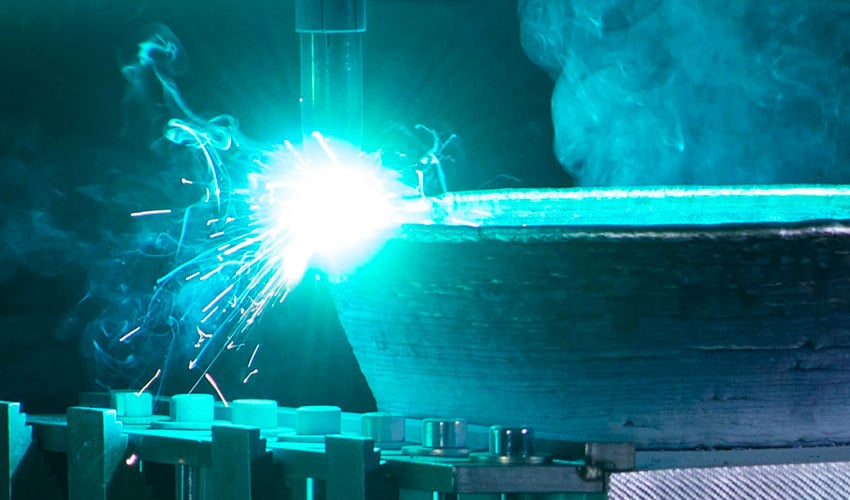
Wire Arc Additive Manufacturing (WAAM) falls under the umbrella of Directed Energy Deposition (DED) 3D printing. DED technology is a metal 3D printing technique that involves depositing a metal material in powder or wire form by means of a nozzle mounted on a multi-axis arm. A focused energy source, i.e. a laser or electron beam or plasma, is used to melt the material as it is used to build the part layer by layer. In the case of the WAAM, an electric arc is used as the heat source, inspired by arc-welding.
WAAM technology is based on the principle of various automated welding techniques using robotic systems: metal-inert gas (MIG) or metal-active gas (MAG), tungsten-inert gas (TIG) or plasma arc-wire (PAW). There’s also the Cold Metal Transfer (CMT) welding process, derived from MIG and created by Fronius in 2004. Various metals are compatible with WAAM. These include titanium, aluminum, nickel and steel alloys, among others.
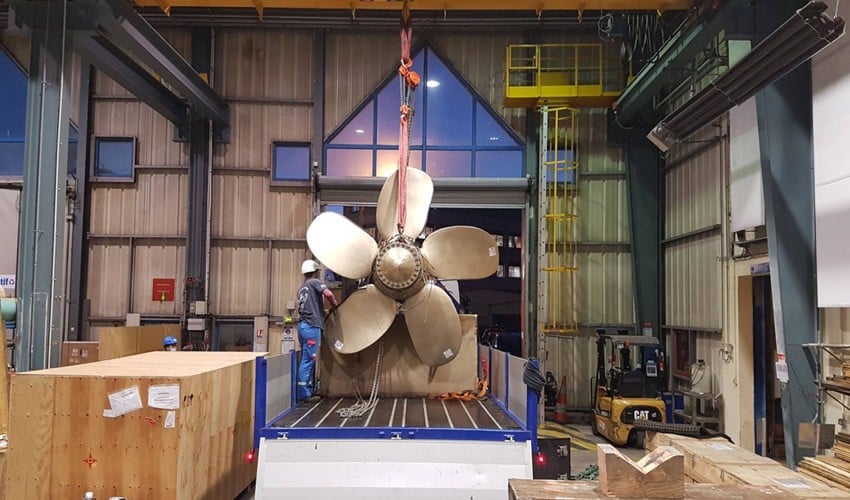
The 3D-printed propeller by Naval Group (photo credits: Naval Group)
Applications for WAAM 3D Printing
Like with other DED processes, WAAM is often used to repair equipment and reproduce parts that are no longer manufactured, in order to maintain older machines. However, the technology can also be used to manufacture complete parts. WAAM is used in particular in the aeronautics, aerospace, automotive, energy and defense sectors. It is used to manufacture prototypes, molds, single parts and small series. Its use for mass production is still under review, however, though it is particularly well-suited to the creation of large, metal parts.
More from the desk
Six other notes from the rest of the bench.
 MaterialsUNSW Scientists use new bioink to create 3D printed boneScientists from the University of New South Wales (UNSW Sydney), a leading research and teaching university in Australia, have developed a ceramic-based ink that could allow surgeons to create 3D printed bone parts with actual living cells. We’ve seen recently…
 NewsTop 5 Videos: Public library makes 3D printed face shieldsThis week we found the top 5 videos about 3D printing and the way additive manufacturing is changing production. The technology has infiltrated many sectors, from medical to automotive – check our selection of the week to keep up with the innovations! If you enjoy these, you&hell
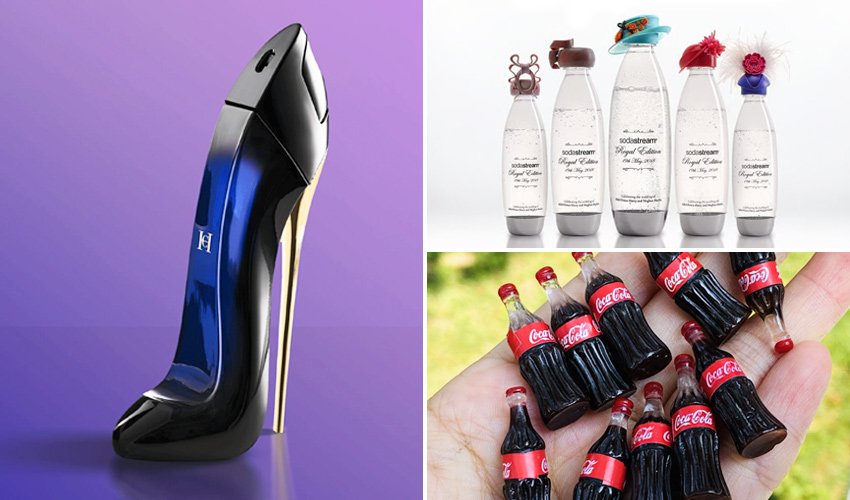 Guides3D Printing Projects for AdvertisingWe all have advertisements that have made a lasting impression on us: that music that sticks in our head, that slogan that caught our attention, those characters we associate with a brand. In short, advertising can be very powerful, and…
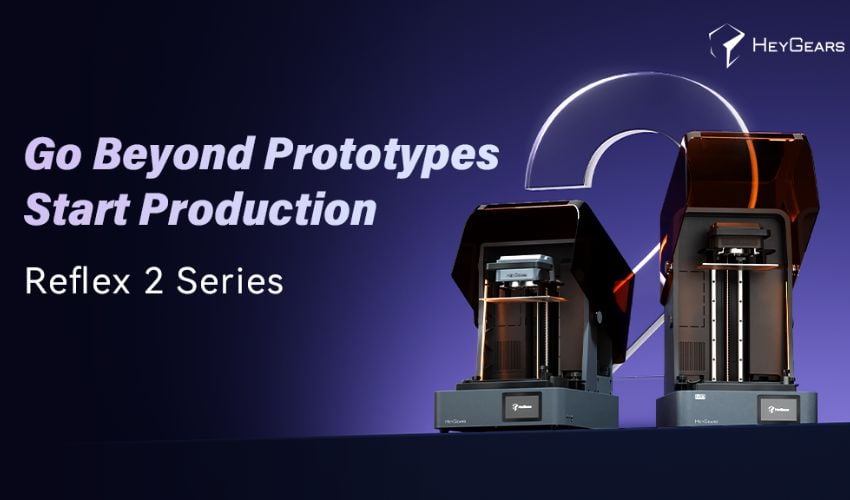 PrintersFrom Prototyping to Production: HeyGears Launches the New Generation Reflex 2 Series 3D PrintersThe Chinese manufacturer HeyGears has announced the launch of its new Reflex 2 Series resin 3D printers. These additions expand the company’s long-standing portfolio and ecosystem dedicated to resin 3D printing technologies. The range includes two models, the Reflex 2…
 ApplicationsZENOS, the open-source 3D printed arm prosthesis for cyclistsIndustrial designer Chan Lee, based in New York, has developed ‘ZENOS’, the 3D printed arm prosthesis for mountain bike riding and cycling. The project was developed for amputees who require a prosthesis for sports activities such as mountain biking and…
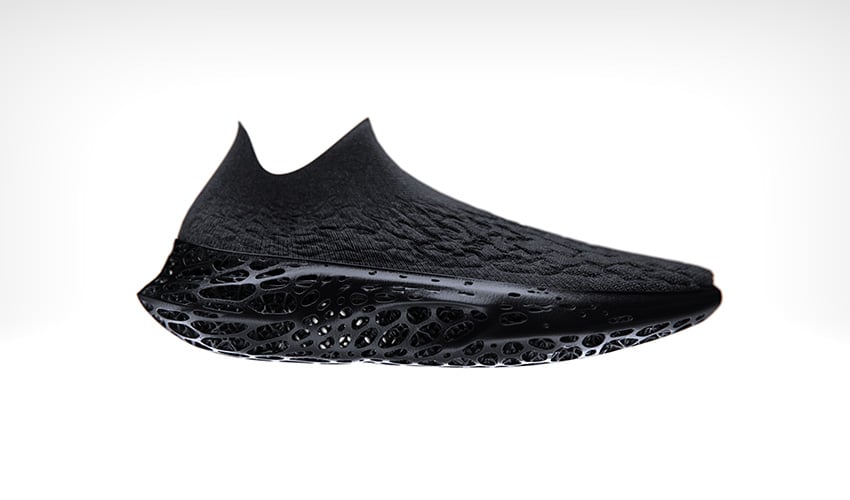 NewsDecathlon Unveils New Sports Shoe in Collaboration with HP and LonatiDecathlon, in collaboration with HP and the Lonati Group, has introduced a groundbreaking sports shoe created through 3D printing technology. This partnership combines HP’s Multi Jet Fusion technology with Lonati’s knitting machinery to design a pair of shoes that rev