Materials
UNSW Scientists use new bioink to create 3D printed bone
Scientists from the University of New South Wales (UNSW Sydney), a leading research and teaching university in Australia, have developed a ceramic-based ink that could allow surgeons to create 3D printed bone parts with actual living cells. We’ve seen recently…
- 3 min read
- Materials
- Six more stories
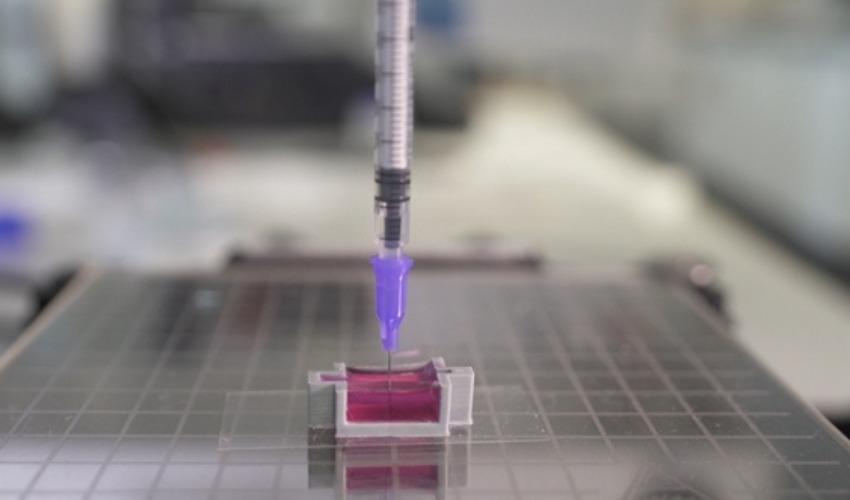
Scientists from the University of New South Wales (UNSW Sydney), a leading research and teaching university in Australia, have developed a ceramic-based ink that could allow surgeons to create 3D printed bone parts with actual living cells. We’ve seen recently that 3D printing is becoming increasingly popular in the medical field, with implants notably earning the most attention as 3D printing allows doctors and scientists to create more personalised biomedical devices for patients. The ink itself would be a huge advancement due to the presence of living cells, ultimately hopefully allowing surgeons to include implants in the operating room.
How it works
The project could be classified as bioprinting, a method enabling cellular structures to be made from bioinks loaded with stem cells. Essentially, it works similarly to many additive manufacturing methods, where cells and biomaterials are combined and then deposited layer by layer with the ultimate goal being to create biomedical models with the same properties as living tissues. Over the past few years there have been huge advancements in the field. Already, laboratories have started bioprinting human livers, kidneys and hearts. It’s not even the first time that we have seen 3D printing being used for implants in the medical field, with numerous examples in bone implants alone. However, the ability to add living cells to a 3D printed structure already would make this a huge step forward for the technology.
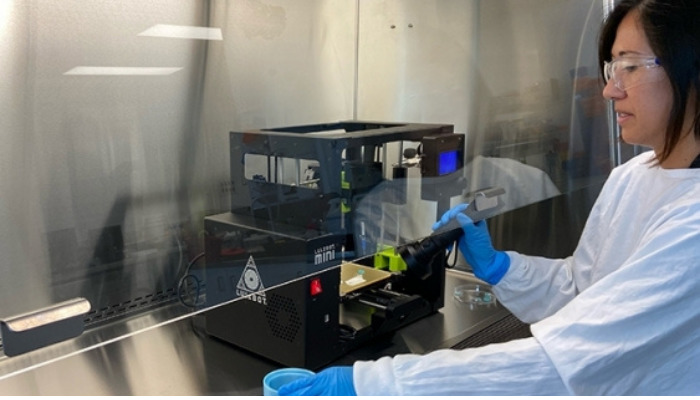
A scientist from the project prepares to 3D-print a piece of bone using the COBICS technique. (photo credits: UNSW)
Dr. Iman Roohani from UNSW’s School of Chemistry, one of the scientists working on this project commented “This is a unique technology that can produce structures that closely mimic bone tissues. It could be used in clinical applications where there is a large demand for in situ repair of bone defences such as those caused by trauma, cancer, or where a big chunk of tissues is resected.” This is the first time that 3D printed bone-mimicking structures can be created at room temperature and complete with living cells without using harsh chemicals according to Roohani. The scientists used a special ink made out of calcium phosphate, a compound used in supplements as a way to help treat calcium deficiencies. This ink was used in a 3D printer using a special technique that they developed named ceramic omnidirectional bioprinting in cell-suspensions (COBICS), enabling them to make bone-like structures that hardened when placed in water.
More from the desk
Six other notes from the rest of the bench.
 ApplicationsGravity Industries, The Company That Lets You Fly With 3D printing!It is possible to fly… no, really! We have always heard that in the future it would be possible to fly and the future has arrived, it is today. This has been made possible thanks to today’s featured company: Gravity…
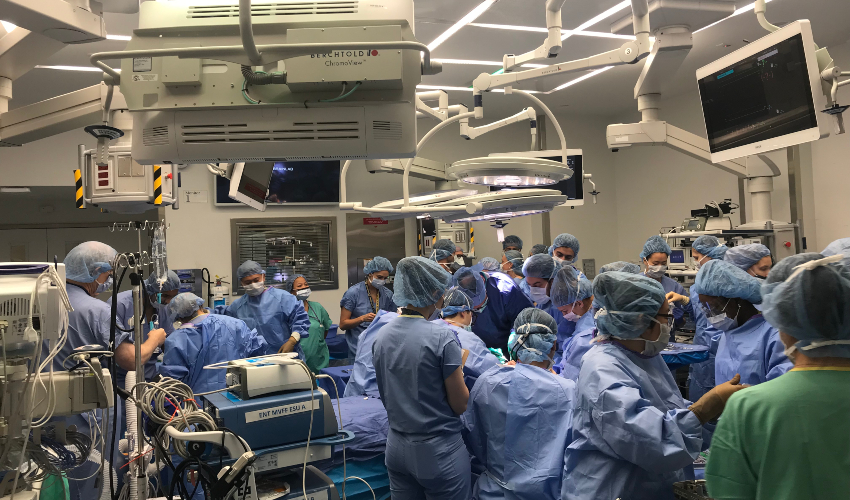 ApplicationsWorld’s First Double Hand and Face Transplant achieved with Materialise 3D Printing TechnologyEarlier this week, a team of Materialise clinical engineers and NYU Langone surgeons made history with the world’s first double hand and face transplant. The success of this transplant largely owes to 3D printed personalized tools that are becoming increasingly…
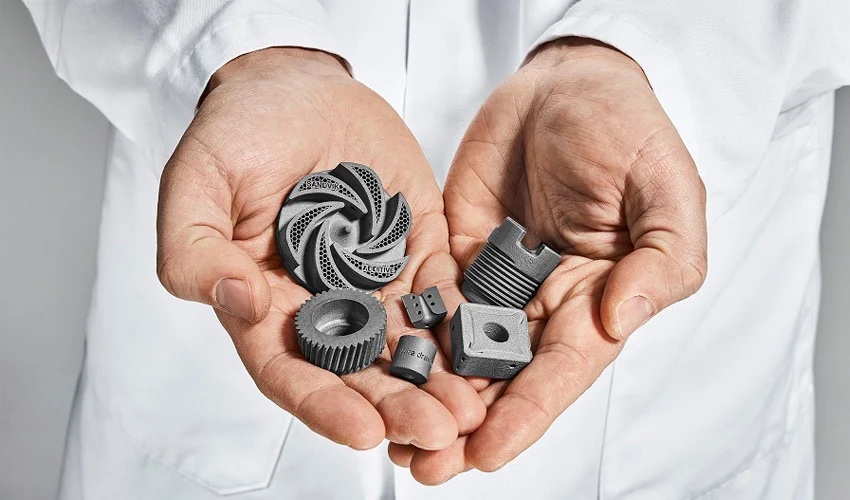 NewsSandvik Has Developed 3D Printable Cemented CarbideSwedish materials manufacturer Sandvik has been developing cemented carbide for the manufacturing industry for several years now. Recently, the company announced that it has been working on a range designed for additive manufacturing. Manufacturers can then 3D print parts that&he
 NewsTop 5 Videos: Building a 3D Printed Community In GeorgetownSunday has arrived, and with it comes a fresh batch of five captivating videos from the realm of additive manufacturing. Get ready for an assortment of colorful highlights, including insights into how additive manufacturing is transforming aviation, household applications and&hel
 PrintersCould Wi-Fi Be Used to Detect Human Locations?One of the technologies which has been become increasingly sensitive over the years has been 3D scanning technologies, notably LiDAR, or Light Detection and Ranging. From its origins of just barely being able to detect a shape and certainly nothing…
 Guides3D Printing Applications in the Fight Against Breast CancerBeing a woman is the biggest risk factor for developing breast cancer. Even though men are not immune to this type of cancer and around 1% are diagnosed with it every year, breast cancer was the most common cancer in…