News
University of Chapingo Student Boosts Honey Production With 3D Printed Hives
The changes that ecosystems undergo as a result of human action or natural causes directly affect the species that live there. Bees, in particular, have felt the repercussions of human actions, facing challenges such as habitat loss and pesticide exposure…
- 3 min read
- News
- Six more stories
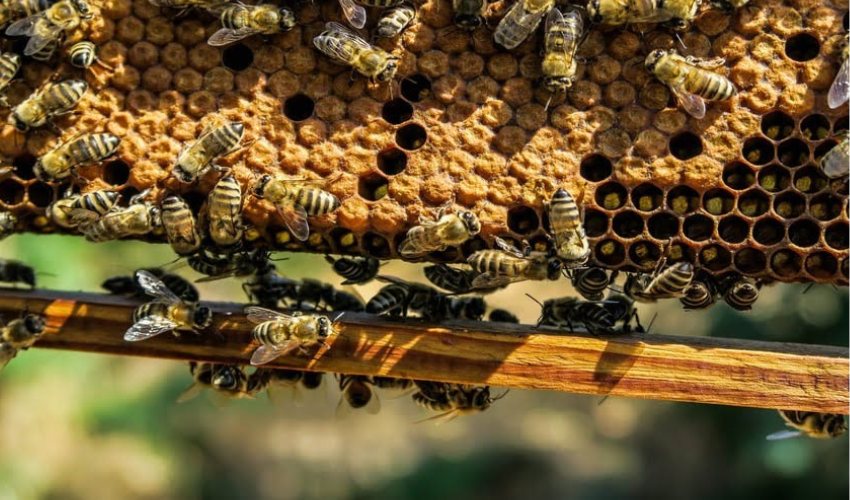
The changes that ecosystems undergo as a result of human action or natural causes directly affect the species that live there. Bees, in particular, have felt the repercussions of human actions, facing challenges such as habitat loss and pesticide exposure in agricultural areas. Recognizing the crucial role bees play in global food security, concerted efforts have been underway to address these issues. Embracing innovative solutions like 3D printing, as seen in projects such as HIIVE and LACRIMA, has become pivotal in this endeavor. Adding to this progress, a student from the Autonomous University of Chapingo in Texcoco, Mexico, has developed 3D printed hives aimed at improving bee habitats and enhancing their well-being.
The intricate construction of hives by bees involves the use of wax and other natural secretions to form their habitat, a process essential for their survival. In parallel, beekeepers craft hive boxes designed to attract bees and facilitate honey production. However, with the global decline in bee populations, there’s a pressing need for innovative approaches to enhance bee habitats. In this pursuit, 3D printing has emerged as a promising avenue, as the technology introduces a novel solution: 3D printed hives. But what sets these apart from traditional hives, and how can 3D printing revolutionize hive production?
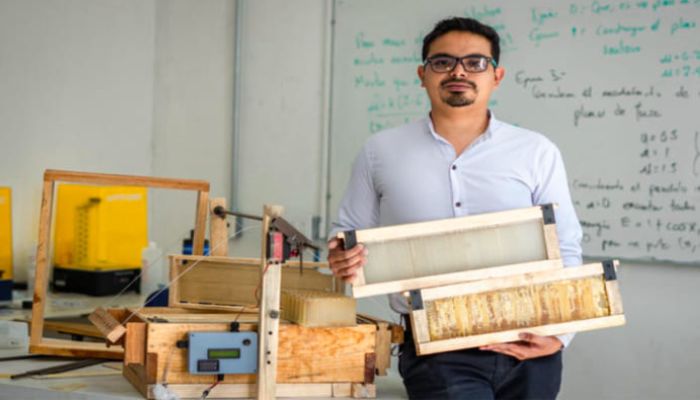
The resin 3D printer used is of the Anycubic brand.
Systematic 3D Printed Hives
Crafted by José Francisco Arteaga Alarcón, a master’s student at the University of Chapingo in Mexico, the 3D hive aims to revolutionize honey production. Leveraging resin 3D printing technology, Arteaga Alarcón precisely replicated the hexagonal structures of hives, alleviating bees from the laborious task of constructing their habitat. With this innovative approach, bees can focus solely on honey production, potentially reducing stress, enhancing proliferation, and fostering the reproduction of vital plant species.
More from the desk
Six other notes from the rest of the bench.
 ApplicationsResearchers Develop Revolutionary 3D Printed Coral-Inspired Bone GraftA team of researchers at Swansea University have 3D printed a coral-inspired bone graft. What’s remarkable? Their study found that the new material not only dissolves naturally in the body after the repair is complete but that it also promotes…
 ApplicationsCopper3D uses 3D printing to combat HIV transmission during breastfeedingUsing 3D printing, Chilean manufacturer Copper3D has just introduced a brand new device to combat HIV transmission during breastfeeding. The invention is a 3D printed breast pump nozzle made from an antibacterial material. The young startup is the originator of…
 NewsUTA Researchers Print 2D Materials Able to Morph into Complex 3D ShapesResearchers from the University of Texas at Arlington (UTA) have found a way to create synthetic 2D materials that are able to transform into complex 3D shapes. These materials have the ability to mimic the way that living organisms expand…
 MaterialsBluesint PA12, the New 100% Recyclable PolymerAs it’s March 18, we are celebrating World Recycling Day. To day is meant to raise global awareness of issues related to recycling. As such we are taking this opportunity to talk about the latest machine from Sindoh, a South…
 Guides#Working3D: Six Questions for Manager of 3D at Children’s Hospital3D printing has had a profound impact on the medical community, and one area where the technology is really showing its usefulness is in pediatrics. Children have more variable anatomy than adults because their bodies are still developing, so when…
 News3D Printed Smart Buoys for Monitoring Marine EnvironmentsAs today is official world water day, we are taking the opportunity to tell you about the seawater battery-based, additively manufactured, smart buoy designed to monitor and collect data on the marine environment. These were developed as part of the…