Applications
Supernova Awarded Contract to 3D Print Military-Grade Energetic Materials for DoD
American firm Supernova has been selected to receive a $2 million subcontracting contract awarded by the American Center for Manufacturing & Innovation (ACMI). The goal of this agreement is to enable Supernova to advance 3D printing of military-grade energetic materials&helli
- 3 min read
- Applications
- Six more stories

American firm Supernova has been selected to receive a $2 million subcontracting contract awarded by the American Center for Manufacturing & Innovation (ACMI). The goal of this agreement is to enable Supernova to advance 3D printing of military-grade energetic materials for the defense sector. This contract is part of ACMI’s Critical Chemicals pilot program, which is conducted under a U.S. Department of Defense (DoD) initiative. It is intended to expand the military industry’s advanced manufacturing capabilities and prioritize investment in new technologies.
This program is aimed at strengthening the resilience of the U.S. defense industrial base by adapting commercial solutions for use in military applications. Supernova CEO Roger Antunez expressed his pride in contributing to this effort, noting that the company’s technology has the potential to overcome the limitations of traditional manufacturing methods. “Our technology has the potential to overcome the design constraints of conventional manufacturing methods to produce the next generation of military-grade energetic material components, including solid rocket motors (SRMs), explosives, and pyrotechnics,” Antunez explained. These energetic materials are key to the operation of defense systems, and Supernova hopes to advance them with its 3D printing technology.
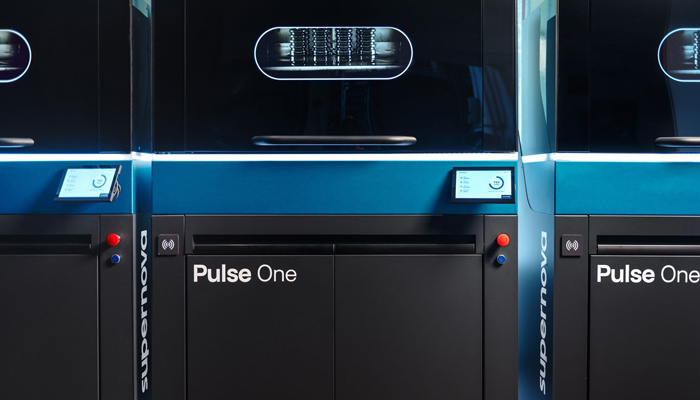
Supernova’s manufacturing solutions.
Supernova 3D Prints Energetic Materials
Supernova’s patented technology, called Viscous Lithography Manufacturing (VLM), is an additive manufacturing process based on the principle of lithography. This method allows high-viscosity materials to be transferred onto a build platform, where they are cured with light to create 3D parts. What distinguishes the VLM process from conventional methods is its ability to work with materials of unlimited viscosity. This opens the door to new formulations, such as those used in the energy field, where very high solid loads are required. Supernova has already been successful in 3D printing simulated energetic materials and is now developing the fabrication of real energetic formulations.
More from the desk
Six other notes from the rest of the bench.
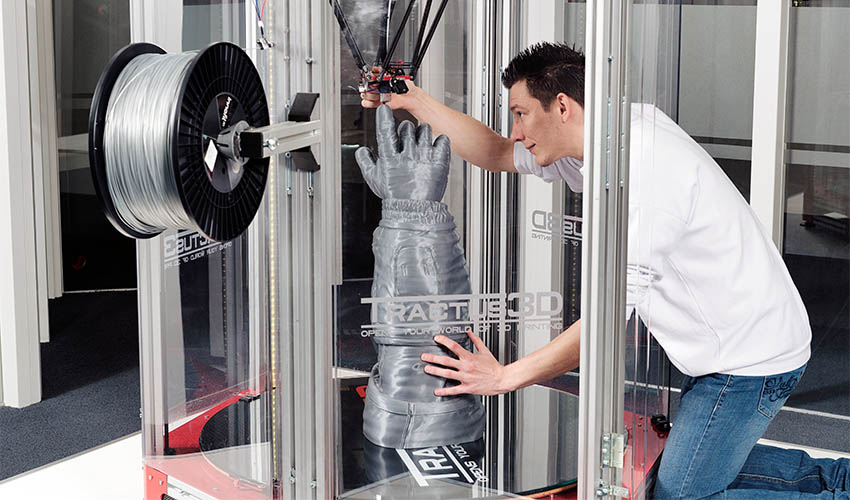 PrintersTractus3D offers solutions for large-scale high-temperature polymer productionDemand for advanced thermoplastic polymers such as PEEK, PEKK or PEI, compatible with 3D printing has been growing for some time now. Tractus3D was one of the first companies to identify the need for a large-scale 3D printer that could work…
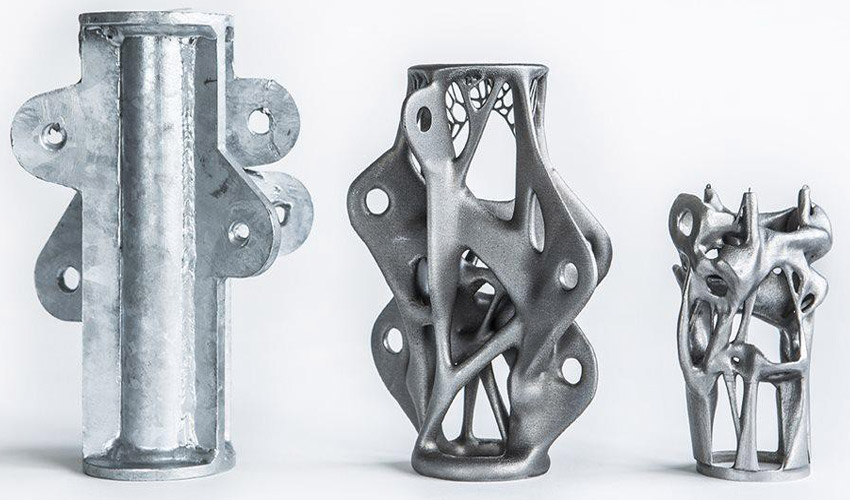 SoftwareTOffeeAM: an intelligent design solution for additive manufacturingWhen it comes to creating parts via additive manufacturing, the design of the 3D model is crucial: modelling methods will directly impact the final result, i.e. the appearance of the part, its quality, its resistance, but also the success rate,…
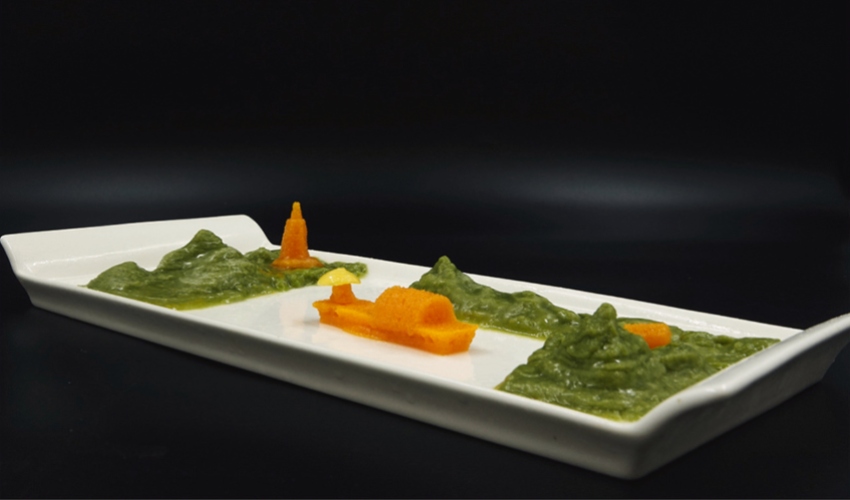 NewsResearchers Develop More Nutritional and Appetising Method of 3D Printing VegetablesSingaporean researchers have developed a novel method of 3D printing vegetables using food hydrocolloids. Previous three-dimensional food printing (3DFP) methods have largely relied on freeze-dried vegetable powders. This method, however, is centred around the use of fresh and fr
 NewsInfraredTags, Invisible Barcodes Embedded in 3D Printed ObjectsAt MIT, a fourth-year doctoral student in the Department of Electrical Engineering and Computer Science has developed a method to “lock” information into a physical object. Using 3D printing and a camera that uses the infrared (IR) range, he can…
 NewsThe #3DStartup of 2018!Throughout 2018 we have had the pleasure of being introduced to 12 original 3D printing startups with whom we discussed products, services and innovations. We wanted to reward the most inventive one by organising a competition: we gave you the…
 Printers3Dnatives Lab: Testing the Dagoma Magis 3D PrinterLast year, in March 2018 to be exact, the French manufacturer Dagoma presented the Magis 3D printer to the light of day. Thus succeeding its Neva model and its DiscoEasy 200, a model widely acclaimed by the 3D community. Characterised by its…