News
Researchers Create a Superior Titanium Alloy Using Laser Powder Bed Fusion
Scientists from the City University of Hong Kong (CityU) have made a breakthrough in the design of a titanium alloy. Thanks to additive manufacturing (AM), they were able to successfully create an alloy with superior mechanical qualities. The project arose…
- 3 min read
- News
- Six more stories
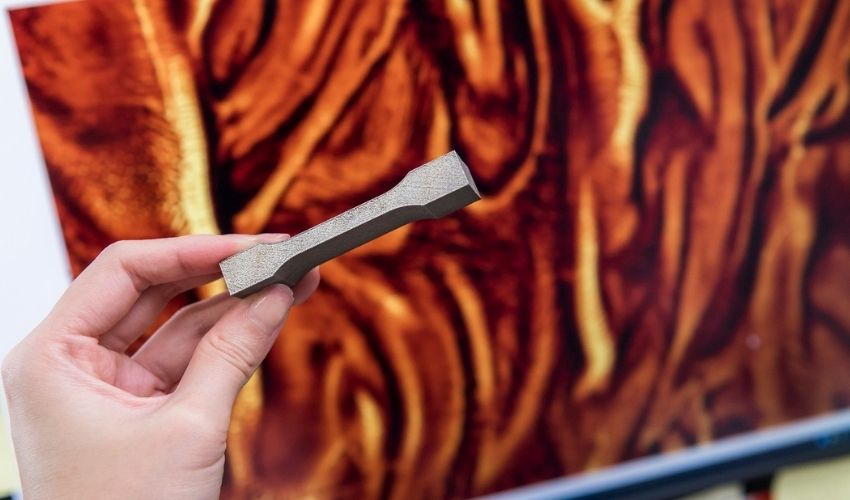
Scientists from the City University of Hong Kong (CityU) have made a breakthrough in the design of a titanium alloy. Thanks to additive manufacturing (AM), they were able to successfully create an alloy with superior mechanical qualities. The project arose from modeling showing that though it is generally thought that increased uniformity in alloy components is ideal in order to prevent brittleness, in fact a certain degree of heterogeneity (diversity) could actually create unique microstructures that enhance the alloy’s properties. Based on this idea and using laser powder bed fusion along with stainless steel and titanium alloy powders, the scientists managed to create an alloy that was both stronger and lighter.
The research team, lead by Professor Chain-Tsuan Lieu of CityU’s Hong Kong Institute for Advanced Study (HKIAS), published a paper in the journal Science “In situ design of advanced titanium alloy with concentration modulations by additive manufacturing” wherein they outlined their findings. Namely, that though AM is most often considered for its advantages when it comes to geometric possibilities for design of parts, in this case the team explored how it could be used to not just use materials but also design them with better properties.
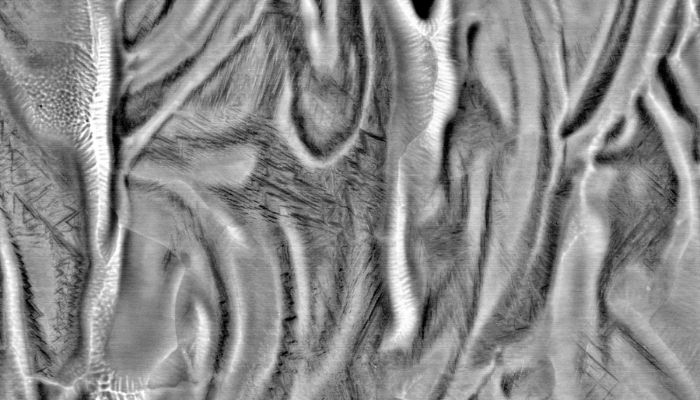
The Lava-like microstructure in the 3D-printed titanium alloy (Photo Credits: Credit: Dr Zhang Tianlong /DOI number: 10.1126/science.abj3770)
Or as Dr. Tianlong Zhang, a postdoc in the Department of Materials Science and Engineering (MSE) at CityU and one of the authors of the paper, explained, “The unique features of additive manufacturing provide us with a greater freedom in designing microstructures. Specifically, we have developed a partial homogenisation method to produce alloys with micrometer-scale concentration gradients with the aid of 3D printing, which is unachievable by any conventional methods of material manufacturing.”
More from the desk
Six other notes from the rest of the bench.
 NewsAre 3D printed helmets becoming the norm?In the world of sports, additive manufacturing technologies can offer many benefits to athletes. Sporting equipment can be custom-made, geometrically more complex and made from smarter materials. Over time, manufacturers have understood the benefits of integrating 3D printing pie
 NewsFormnext 2024, Moving Towards a More Stagnant Market?Yet another Formnext closed its doors last Friday at Messe Frankfurt. For four days, the entire additive manufacturing community gathered in the show’s four halls, in search of the latest innovations, trends and applications. Naturally, the 3Dnatives teams were on…
 GuidesVelettrica Uses 3D Printing for More Sustainable Maritime TransportAdditive manufacturing can create parts with advanced materials that guarantee effective and cost-efficient solutions even in the most extreme environments, from the sky to space and the depths of the ocean. A prime example of this technological revolution is Velettrica,…
 PrintersStratasys unveils its new SLA 3D printer, the V650 Flex and its F120 industrial FDM machineAMUG 2019 (Additive Manufacturing Users Group) opened its doors in Chicago yesterday and as expected, many additive manufacturing players have chosen this opportunity to present their new products to the industry. As a matter of fact, the giant Stratasys unveiled…
 ApplicationsRAMLAB continuous forward in their creation of a 3D printed boat propellerIn the port of Rotterdam, the biggest port in Europe, a 3D printing lab was set up some time ago to test additive manufacturing in the shipbuilding sector: RAMLAB propellers for boats. Last May you may remember that we presented…
 NewsNASA develops a new metal additive manufacturing methodEngineers at NASA’s Marshall Space Flight Center in Huntsville, Alabama have reportedly developed and tested a new metal additive manufacturing method called Laser Wire Direct Closeout (LWDC). A process that could be used to make nozzles more quickly for rocket…