News
Strengthening Metal Through Oxidation – A Radical Research Approach With Great Potential?
Metal 3D printing is used in numerous fields and possibilities for expanding its potential are constantly being discussed in the aerospace, automotive and shipbuilding industries. Large-format parts are now being produced from metals using 3D processes and the technologies are&he
- 3 min read
- News
- Six more stories
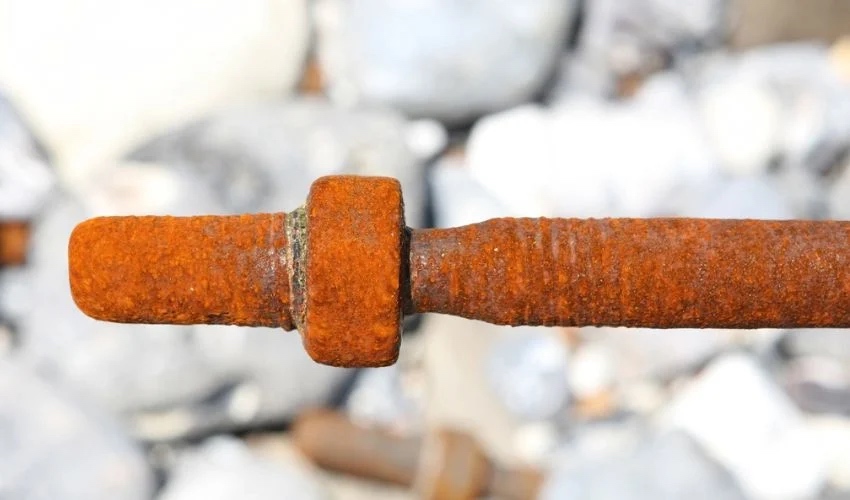
Metal 3D printing is used in numerous fields and possibilities for expanding its potential are constantly being discussed in the aerospace, automotive and shipbuilding industries. Large-format parts are now being produced from metals using 3D processes and the technologies are being tested in increasingly extreme environments, including in space. Despite the numerous advances in this field, the engineers involved face constant challenges in terms of technology and materials: Porosity, isotropy and corrosion are just some of the difficulties that need to be overcome to ensure the durability and efficiency of manufactured parts. But what if these challenges could be turned into an advantage? Could the supposed disadvantages of the materials perhaps turn out to be advantages after all?
This speculation led Professor Changhong Ke to a radical research assumption. The lecturer in the Department of Mechanical Engineering at Binghamton University’s Thomas J. Watson College of Engineering and Applied Science wants to find out whether there is a way to make metal stronger through oxidation. With the help of nanotubes, which he embeds in metal for additive manufacturing, he wants to find out whether the annoying corrosion can also be put to positive use.

Professor Changhong Ke incorporates nanotubes into additively manufactured aluminum to study the effects of corrosion (photo credits: Jonathan Cohen)
This bold assumption is based on the properties of boron nitride, which could potentially be used profitably in combination with metals. Boron nitride is a compound that is already used in cosmetics, pencil leads and in the dental sector. Professor Changhong Ke believes that microscopic structures made of boron nitride could strengthen metals so that they react less strongly to humid environments such as seawater and could even give them strengthening properties. “You can’t avoid oxidation, so we are trying to take advantage of it by turning it into a new, reinforcing mechanism to make the material stronger,” Ke said.
More from the desk
Six other notes from the rest of the bench.
 MaterialsMontana Mixers Brings VROM Technology to RAPID + TCTAt RAPID + TCT 2026 this year, Montana Mixers is drawing attention to a part of additive manufacturing that often goes overlooked: how materials are processed before they ever reach the printer. Its VROM technology (Vertical Resonant Oscillatory Mixing) oscillates…
 NewsUCF and UT win research award for their 3D printed Photon FunnelsThere is nothing that makes one prouder than viewing their alma mater in the news, especially for new innovations in 3D printing. Last month, the University of Central Florida (UCF) and the University of Texas at El Paso (UT) made…
 MaterialsAll You Need to Know About PLA for 3D PrintingPLA (polylactic acid) is one of the most widely used plastics in the additive manufacturing sector. Invented in 1930 by chemist Wallace Carothers, also the developer of nylon and neoprene, this material can be used in filament or pellet form…
 ApplicationsDubai Starts Trial Operation of 3D Printed AbraNever let it be said that the United Arab Emirates is a stranger to innovative technologies. In Dubai, the country’s most populous city, especially, we have seen a number of projects using 3D printing in recent years. And now there…
 GuidesPlantish Offers Plant-Based Fish Thanks To 3D PrintingPlantish, an Israeli startup, wants to revolutionize the food sector and more specifically the way we consume fish. According to a report published by the United Nations Food and Agriculture Organization (FAO), global fish consumption is expected to increase from…
 PrintersAnisoprint and its 3D printing solution for continuous fiber compositesAnisoprint is a Russian 3D printer manufacturer that has developed a 3D printing solution for continuous fiber composites. Based on the principle of melt deposition, its Composer machine makes it possible to reinforce any 3D printing plastic with composite fibres…