Guides
#3DStartup: Phase3D and its Real-Time Inspection Solution for 3D Printing
A key issue in the additive manufacturing industry is the quality of the final parts. Depending on the 3D printing technology used and the intended application, this could be more or less affordable. Furthermore, when it comes to powder bed-based…
- 3 min read
- Guides
- Six more stories
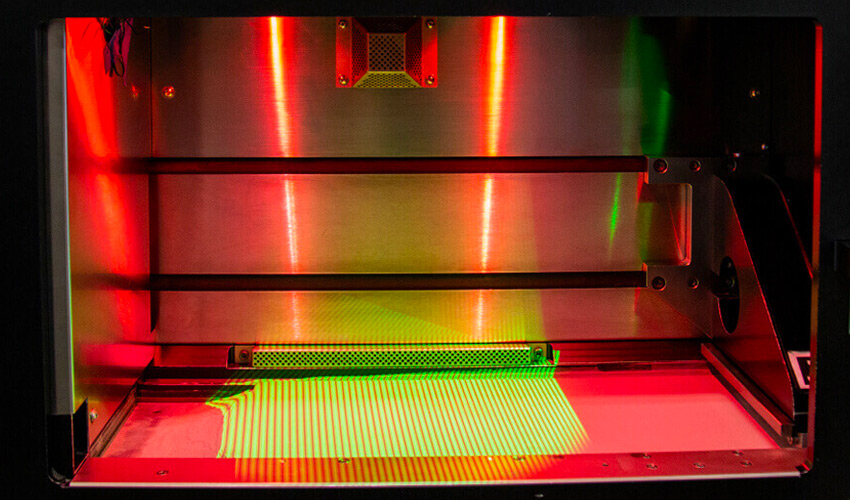
A key issue in the additive manufacturing industry is the quality of the final parts. Depending on the 3D printing technology used and the intended application, this could be more or less affordable. Furthermore, when it comes to powder bed-based systems, it is essential to have a broad understanding of the technology. This goes from the design of the models to the procurement of the final parts, in order to minimize errors. In this context, Chicago-based startup Phase3D has developed a solution for real-time inspection of the manufacturing process. This system is compatible with Powder Bed Fusion technologies, as well as with binder jetting. We spoke with the CEO to learn more about this solution and how it can detect anomalies during additive manufacturing to obtain the best quality.
3DN: Could you introduce yourself and your connection to 3D printing?
My name is Niall O’Dowd and I am the CEO and founder of Phase3D. I have been fascinated by 3D printing since 2010 when I first had access to the technology. My preoccupation with 3D printing since then has been twofold — both as a hobby and as an industrial manufacturing tool. Growing up I was obsessed with CAD and seeing my first sculpture design come to life using a desktop 3D printer (MakerBot Cupcake) for my high school art show was incredible. I designed a multi-piece assembly (pictured below) and it took several design and print iterations to get the fit right. I did not realize it at the time, but this experience of going from imagination to reality so quickly and fluidly proved to be the start of my journey with additive technologies.
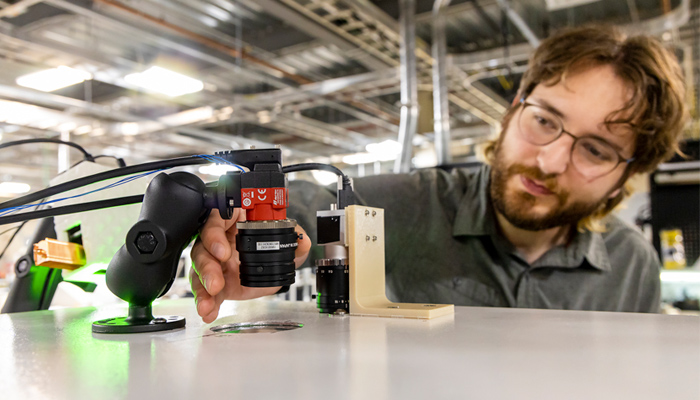
Niall O’Dowd, CEO of Phase3D.
My passion for designing sculptures turned into a love for engineering, leading me into a B.Sc. in mechanical engineering. During my undergraduate degree, additive technologies advanced rapidly in nature and scope across a range of industrial applications. Additive Manufacturing (AM) processes proved to be an invaluable resource for my robotics classes at Rochester Institute of Technology.
More from the desk
Six other notes from the rest of the bench.
 ApplicationsA 3D Bioprinter on Board the ISS: The Future of Space Medicine?Astronauts must be prepared for a variety of health problems in space, because they have no direct access to comprehensive medical care in their isolated environment. Although medical equipment and medicines are available on board space stations, and astronauts can…
 ApplicationsLockheed Martin Announces Partnership With Sintavia For Metal Additive ManufacturingMetal additive manufacturing finds its place in aerospace and defense in the creation of spare parts and prototypes in a short time, which can be useful for the management of supply chains. Companies all over the world are recognizing the…
 NewsMatterHackers Awarded $5M Navy Contract for 3D PrintersMatterHackers, the largest US-based retailer of desktop 3D printers and materials, has announced that the company was awarded a 5 year NAVAIR (Naval Air Systems Command) Tier 1 Additive Manufacturing System Contract by the US Navy. Over the course of…
 MaterialsPolymer 3D Printing Is Being Driven by Material and Technological InnovationsThe first 3D printing process invented was stereolithography, a method wherein a photosensitive polymer is hardened via a laser, putting plastics at the forefront of the market since the very beginning. Something that has continued to this day. Indeed, according…
 GuidesArris Composites on unlocking mass production of high-performance compositesArris Composites, one of the pioneers of next-generation composites, announced at the end of May that it had secured $48.5M in series B funding to expand its proprietary composite manufacturing capabilities and open new facilities in the U.S. and Taiwan.…
 MaterialsWEBINAR: How can a 3D printing service bureau address Polypropylene needs?On the 10th of December, 3Dnatives hoted a webinar with Prodways, Sculpteo and BASF Forward AM to talk about Polypropylene (PP) applications in Additive Manufacturing. Widely used in the plastic injection industry, Polypropylene offers interesting characteristics for industrial a