Guides
#3DStartup: Craft Health Is Personalizing Medicines With 3D Printing
According to a report from the International Federation of Pharmaceutical Manufacturers and Associations (IFPMA), in 2022 combined “direct, indirect and induced effects” of the global biopharmaceutical industry led to a contribution of $1.838 trillion to the worldR
- 3 min read
- Guides
- Six more stories
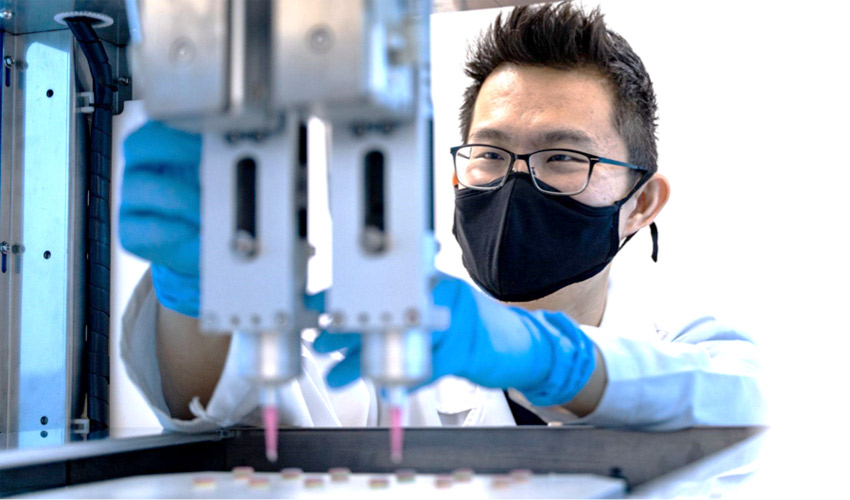
According to a report from the International Federation of Pharmaceutical Manufacturers and Associations (IFPMA), in 2022 combined “direct, indirect and induced effects” of the global biopharmaceutical industry led to a contribution of $1.838 trillion to the world’s GDP with spending on R&D playing a particularly important role. Indeed, annual spending on research for the industry is 8.1 times greater than that of the aerospace and defense industry. This shows that it is a constantly evolving industry, in which innovation is a key driver. And one of the factors driving this innovation is additive manufacturing. As you know, 3D technologies have long been used in the medical sector, and the pharmaceutical industry also benefits from their advantages. In fact, they are increasingly used to design tailor-made medicines that better meet patients’ needs. Additive manufacturing also makes it possible to combine several treatments in a single tablet, making it considerably easier to take medication. Among the players who have made this reality their specialty is Singapore-based start-up Craft Health. It has developed a 3D printing solution to produce personalized medicines and more controlled pharmaceutical products. We caught up with one of its founders to find out more!
3DN: Could you introduce yourself and your connection to 3D printing? How did Craft Health come about?
My name is Wei Jiang GOH, and I am a pharmacist by training and practiced as a pharmacist in a Singapore hospital. Subsequently, I was awarded the PhD-MBA double degree scholarship at the National University of Singapore (NUS) where I uncovered my passion for the convergence between technology and commercialization. In my final year of my PhD, I spoke to my now co-founder, Dr. Seng Han LIM, on working together to solve a problem that resonates with both of us. Our backgrounds were largely similar as we were both practicing pharmacists in a hospital setting before.
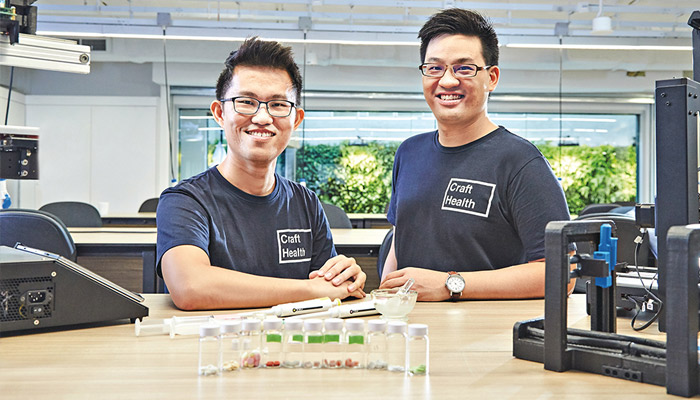
Dr. Lim Seng Han (left) and Dr. Wei Jiang Goh (right), the co-founders of Craft Health
We thought that polypharmacy, or having too many medicines, was a big issue. Especially since we saw patients going home with bags full of pills on a daily basis when we were pharmacists. Polypharmacy is typically associated with poor patient outcomes, especially since patients become confused from taking some many different pills, or suffer from pill taking fatigue. We brainstormed for different solutions, and eventually realized what my co-founder, Dr Lim, was working on for his PhD thesis could be the solution.
More from the desk
Six other notes from the rest of the bench.
 NewsMorphSensor, 3D design environment developed by MITToday, it is possible to 3D print a wide variety of objects from the comfort of your home: owning a desktop 3D printer allows virtually anyone to manufacture a robot dog or an anti-Covid necklace, for example. However, oftentimes, the…
 NewsTCT Asia 2025: Experience the Next Era of Additive Manufacturing at the Event!Industry events play a crucial role in advancing additive manufacturing by connecting innovators, showcasing breakthroughs, and fostering collaboration. As one of Asia’s leading AM exhibitions, TCT Asia 2025 will bring together experts, businesses, and cutting-edge technologies t
 NewsiFactory3D Wins Best 3D Startup of 2020!2021 having just begun, it is the perfect time to look back on the most important innovations of the last 12 months. In the manufacturing sector, many companies have chosen to launch their projects in order to bring change or…
 Guides#Working3D: Six Questions for a Pharmaceutical 3D Printing ResearcherAdditive manufacturing in the medical sector is continuously improving and progressing. Innovations and applications are flourishing, demonstrating the potential of 3D technologies to improve the daily lives of many patients. The pharmaceutical field is no exception, and the grad
 MaterialsWebinar: How to produce engineering-grade parts on material extrusion platformsMaterial extrusion, also known as Fused Filament Fabrication (FFF) technology is still the most widely used technology in the AM market. In recent years, this segment of AM has undergone many changes: in particular, there has been an increase in…
 NewsTop 5 Videos of the Week: how to choose your 3D printing technology…This week we found the top 5 videos about 3D printing and the way additive manufacturing is shaping our society. The technology has infiltrated many sectors, from medical to automotive! Check out our selection of the week to keep up with the innovations! This week we…