Materials
SPEE3D Uses Its Patented Technology to Print Metal Rocket Engines
In the aerospace industry, additive manufacturing is increasingly prevalent. Many companies are now using metal 3D printing to create rocket components, as well as rocket engines. Companies, such as Relativity, for instance, have notably developed additive manufacturing centers e
- 3 min read
- Materials
- Six more stories

In the aerospace industry, additive manufacturing is increasingly prevalent. Many companies are now using metal 3D printing to create rocket components, as well as rocket engines. Companies, such as Relativity, for instance, have notably developed additive manufacturing centers entirely dedicated to the construction of rockets. In Australia, 3D printer maker SPEE3D received an AUD $1.5 million grant from the Australian government to develop the SPAC3D project. Through this initiative, SPEE3D aims to use its patented cold spray technology to print rocket engines using metal material.
Thanks to the advantages offered by additive manufacturing, the SPAC3D project plans to manufacture high-quality parts that are also comparatively inexpensive. According to the manufacturer, their patented process will print metal parts 100 times faster than other metal 3D printing technologies, and will therefore be more efficient in engine design. “SPEE3D has developed a new way to manufacture rocket engines quickly with our advanced manufacturing process,” explains Steven Camilleri, CTO of SPEE3D. “The MMI grant will allow us to work with other partners in Australia to manufacture and test flight-ready engines for the emerging industrial space market“, Camilleri continued.
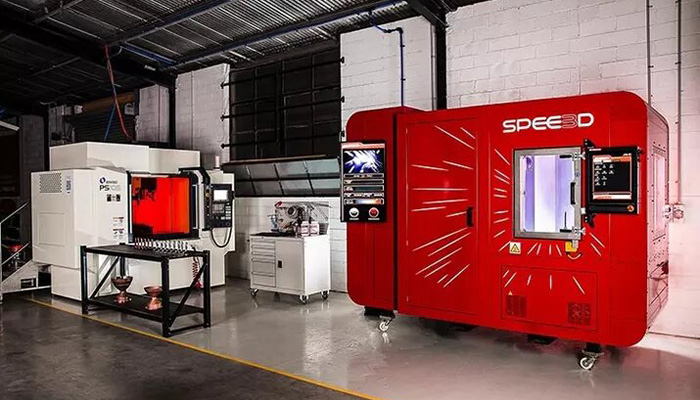
The Warp SPEE3D 3D printer from the Australian manufacturer. (Photo Credit: SPEE3D)
Making Rocket Engines With 3D Printers
Manufacturers in the aerospace industry often turn to 3D printing primarily because the technology makes it possible to create efficiencies by reducing manufacturing costs and creating parts more quickly. Thanks to SPEE3D’s cold spraying process, which harnesses kinetic energy to spray metal powder onto a substrate, the company believes it will be able to produce high-quality components in a fraction of the time usually required through traditional manufacturing. For example, the Australian manufacturer explained that they were able to print a 17.9 kg piece in metal in just three hours—the Warp SPEE3D printer, which is based on the cold projection process, would be able to print metal parts weighing 40 kg, at a printing speed of 100 grams per minute.
More from the desk
Six other notes from the rest of the bench.
 ApplicationsResearchers develop 3D printed microrobots to deliver medicationAt ETH Zurich, researchers have developed 3D printed microrobots that are capable of delivering drug payloads via blood vessels in the human body. These microrobots were created with a 3D printing technique that involves interlocking multiple materials in a complex…
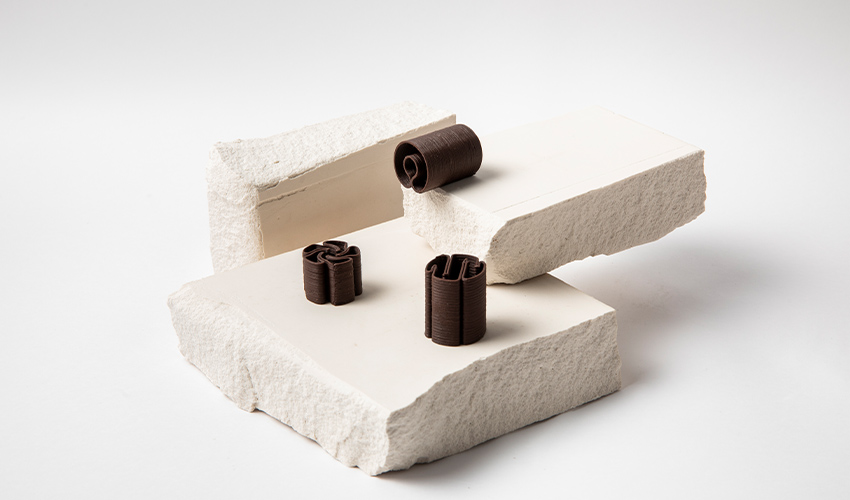 GuidesMore Than Shape 3D Prints Chocolate to Offer New Taste ExperiencesLately, more and more projects combining 3D printing and food are emerging. Earlier this year, we told you about the startup Revo Foods, which 3D prints salmon fillets from pea proteins, citrus fibers, vegetable oils and seaweed extracts, of course…
 MaterialsAn Organic 3D Printed Shoe CollectionThe ORGANIC shoe collection is a collaboration between Lucie Trejtnarová, a postgraduate student at Tomas Bata University in Zlin, Czech Republic, materials manufacturer, Fillamentum and the design studio, Malai Design & Materials. As its name suggests, this shoe collection i
 ApplicationsWEBINAR: Making Your First Steps Into 3D Printing at Point-of-CareOne of the sectors where we have seen the most significant growth in use of additive manufacturing is undoubtedly medical. Indeed, it has gotten so popular that we have even seen a rise in the use of 3D printing in…
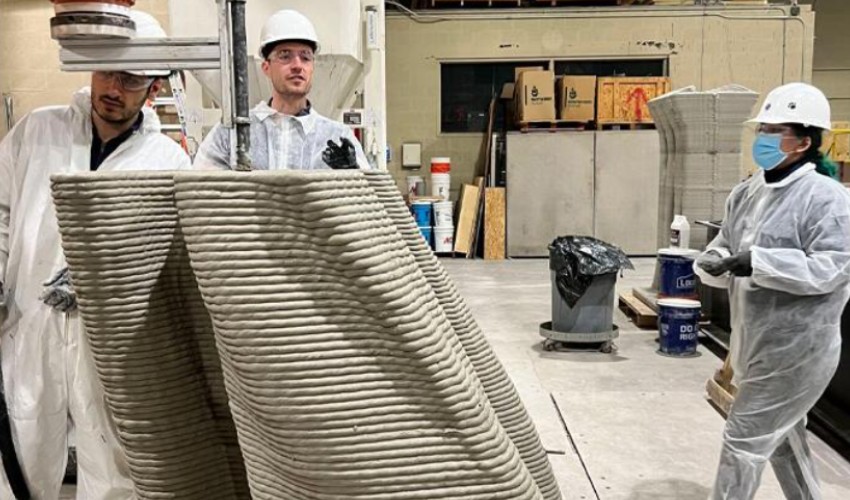 NewsPenn State Tackles Alaska’s Housing Shortage with 3D Printed Homes InitiativeIn Alaska, where rugged landscapes and harsh winters have exacerbated the housing crisis , researchers at Penn State have developed a promising solution to alleviate the state’s housing shortage. Led by Professor José Pinto Duarte, Stuckeman Chair in Design Innovation&helli
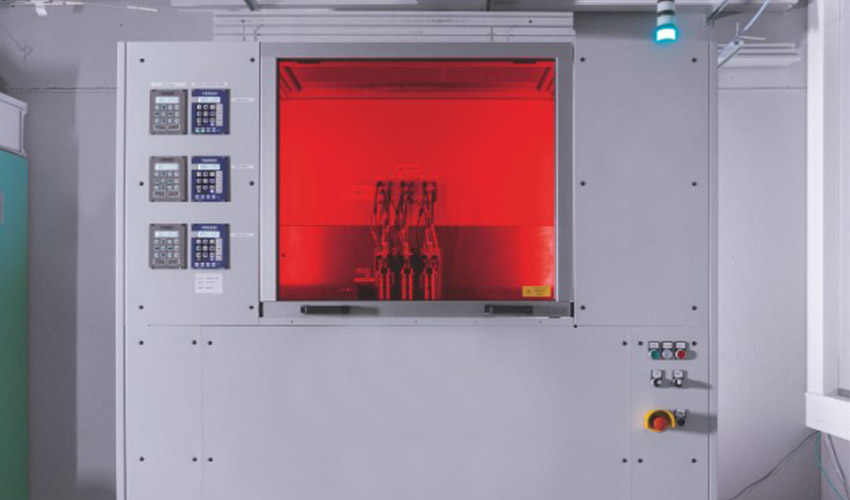 MaterialsMulti Material Jetting system combines different materials into a single AM partAt the Fraunhofer Institute for Ceramic Technologies and Systems (IKTS) in Germany, researchers have developed a Multi Material Jetting system that is capable of additively manufacturing parts that integrate multiple materials, including high-performance materials such as ceramic