Materials
Soy, a new 3D printing material?
At the University of Louisville (UofL) Conn Center for Renewable Energy Research and Department of Mechanical Engineering, a team of researchers claims to have transformed soybean shells into functional 3D printing material. Using waste from soy processing, they were able…
- 3 min read
- Materials
- Six more stories

At the University of Louisville (UofL) Conn Center for Renewable Energy Research and Department of Mechanical Engineering, a team of researchers claims to have transformed soybean shells into functional 3D printing material. Using waste from soy processing, they were able to recover the natural fibers from the hulls and develop a composite printing material for a variety of industries. This research project, which received $350,000 in funding from the United Soybean Board, would thus valorize one of the world’s most cultivated seeds, particularly in the United States.
The soybean market is mainly dominated by the United States, Brazil and Argentina. Together, these three countries produce almost 80% of the world’s soybeans, i.e. more than 215 million tons per year. Of course, soybeans are processed into different products, which inevitably produces some waste. In the United States alone, 8 million soybeans are thrown away every year. That’s where our team of researchers at the University of Louisville comes in. They have come up with a way to reuse these hulls, thereby recovering waste and promoting the concept of circular economy. The circular economy is becoming increasingly popular in 3D printing as more and more companies look into finding more ways to improve the sustainability of the field, already known for producing less waste.
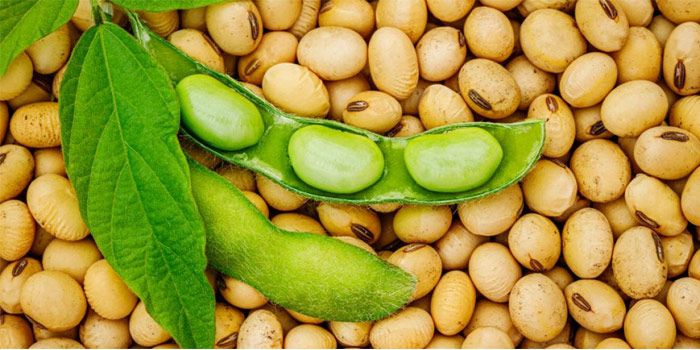
The research team wants to recycle the waste from soybean processing
In concrete terms, scientists will first transform the biomass of the soybean hull into xylose, a low-calorie sugar suitable for diabetics. Once this substance is extracted, they explain that they will be able to recover natural fibers that will be used in the development of a 3D composite printing material. These fibers would represent about 80% of the initial biomass. Mahendra Sunkara, director of the Conn Center, explains: “Agriculture and agricultural processing are keys to economic development and employment in the US. Xylose separation and the use of soy hull fibers for natural fiber composites are potent opportunities for addressing worldwide farming economics, nutrition issues, and material needs from a renewable source.”
More from the desk
Six other notes from the rest of the bench.
 NewsAMBOTS is our 3D startup of 2019!The first few days of the year are an opportunity for us to look back on the highlights of the past year, including major innovations in the additive manufacturing sector, driven by international startups. We launched a competition to reward…
 GuidesCytosurge, 3D metal printing on a microscaleDirect 3D printing of metals with submicron resolution is a promising additive manufacturing technique for a wide range of sectors. The FluidFM µ3Dprinter from Cytosurge is the world’s first 3D printer capable of delivering such resolution in direct metal printing, while…
 NewsTop 5 Videos of the Week: 3D printed eyewear…This week we found the top 5 videos about 3D printing and the way additive manufacturing is shaping our society. The technology has infiltrated many sectors, from medical to automotive! Check out our selection of the week to keep up with the innovations! This week we…
 ApplicationsFord Uses On-Site 3D Printing to Boost Mustang GTD PerformanceFord has taken a major step forward in automotive performance with the launch of the 2025 Mustang GTD. The track-focused supercar, equipped with a supercharged 5.2L V8 and advanced carbon fiber bodywork, achieved a stunning 6:52.072 lap at Germany’s Nürburgring,…
 NewsWhat Is Over-Extrusion and How Can It Be Avoided?Additive manufacturing enables the creation of intricate and detailed structures, offering unparalleled design freedom to users. According to the latest Hubs Report for 2023, FDM printing technology, also known as fusion layering, stands out as the most popular 3D printing&hellip
 NewsMaterialise 3D Prints 2,000 Parts for the Latest Bike From PinarelloOnce again, 3D printing is making its mark on the field of cycling! Like Canadian start-up Kupol, which 3D printed modular bicycle helmets, many companies are using additive manufacturing to design sports equipment. And it is clear these initiatives are…