Materials
Is PLA filament actually biodegradable?
There is a reason why the most popular and widely used 3D printing material for FDM printers is PLA. It’s a very easy to print plastic compared to other materials, which makes it the ideal filament for amateurs. Also, there…
- 3 min read
- Materials
- Six more stories

There is a reason why the most popular and widely used 3D printing material for FDM printers is PLA. It’s a very easy to print plastic compared to other materials, which makes it the ideal filament for amateurs. Also, there is a common belief that PLA filament is more sustainable and safer than other materials, giving it that advantage too. Where does this assumption come from? And how sustainable is PLA really? To find an answer to our questions, we spoke with experts and sought their opinions on this subject.
Our experts include Florent Port, the president of Francofil. The company develops and produces a large number of 3D printing filaments in Normandy, France. Nicolas Roux is the CEO of Zimple 3D, he founded the company two years ago now. The solutions offered by Zimple 3D seek to simplify the use of 3D printers with air filter devices for example. Last but not least, we spoke to Jan-Peter Willie, the co-founder of 3D4Makers, a Dutch filament manufacturer with many years of experience in plastic production.
Naturally, our first question was to ask our experts what are the biggest misunderstandings about PLA filament. Our three experts agreed on the biggest misconception, Florent Port explains in simple terms, “It is biodegradable, which implies that it doesn’t matter if you throw it in nature or not.” Nicolas Roux added, “PLA does not emit toxic emissions.” So is PLA truly sustainable? In order to learn more about this material, we focus on its biodegradability, emissions, production and other issues such as recyclability.
More from the desk
Six other notes from the rest of the bench.
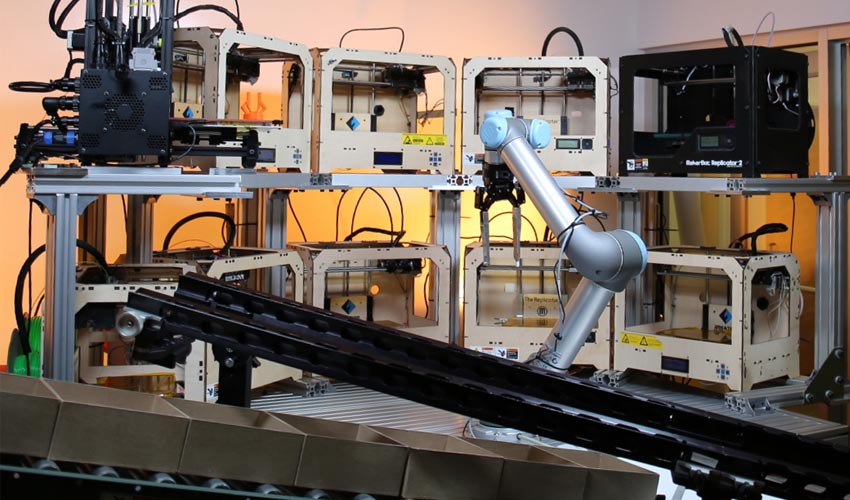 News3D Printing Automation: $11.2bn Market by 2027In the last two years, many major industrial companies have studied additive manufacturing closely to see how they can integrate it into their production chain. They hope to automate the process and make it a mass-produceable. This is one of…
 ApplicationsCopper3D uses 3D printing to combat HIV transmission during breastfeedingUsing 3D printing, Chilean manufacturer Copper3D has just introduced a brand new device to combat HIV transmission during breastfeeding. The invention is a 3D printed breast pump nozzle made from an antibacterial material. The young startup is the originator of…
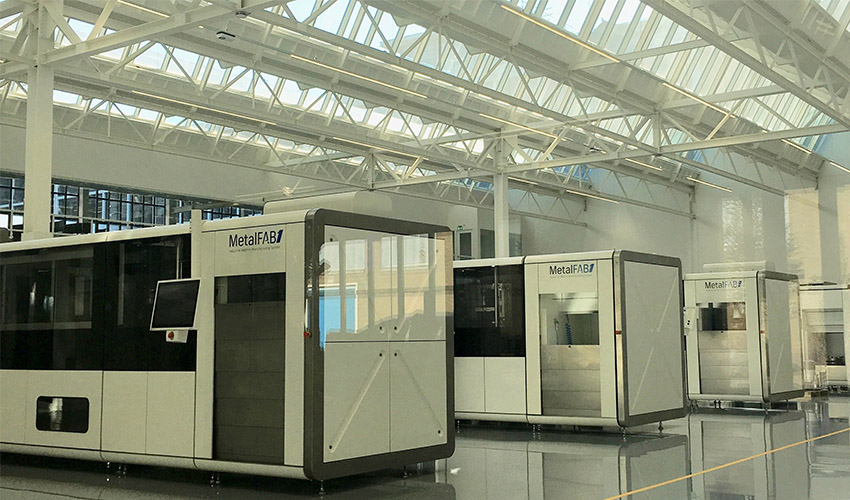 NewsAdditive Industries is accelerating adoption of its MetalFAB1 systemAdditive Industries, based in the Netherlands is accelerating industrial additive manufacturing of metal parts by offering a modular, end-to-end laser powder bed fusion system, the MetalFAB1 system. This system is seamlessly integrated with the manufacturer’s information platform
 News3DEXPERIENCE World 2020: shaping the world of designToday, 3DEXPERIENCE World 2020, organized by Dassault Systèmes, is coming to a close. Previously known as SOLIDWORKS World, the event was renamed to mirror the ecosystem formed by the whole family of solutions from Dassault Systèmes. Taking place in Nashville,…
 NewsTop 5 Videos: 3D printing against COVID-19This week we found the top 5 videos about 3D printing and the way additive manufacturing is changing production. The technology has infiltrated many sectors, from medical to automotive – check our selection of the week to keep up with the innovations! If you enjoy these, you&hell
 NewsBANYAN ECO WALL, fully 3D printed self-watering wallThe BANYAN ECO WALL is a fully 3D printed irrigated green wall, featuring an embedded drainage system, which also showcases bionic design. It is the work of NOWLAB using BigRep’s large-format 3D printers. This prototype is a perfect example of…