Guides
#3DStartup: sallea Prints Edible Scaffolding for Cultured Meat and Fish Products
Our western eating habits, with meat and fish regularly on our plates, have far-reaching ecological consequences. Monocultures, overfishing and factory farming are just some of them. To counteract this, we have seen some innovative approaches in the last decade, such…
- 3 min read
- Guides
- Six more stories
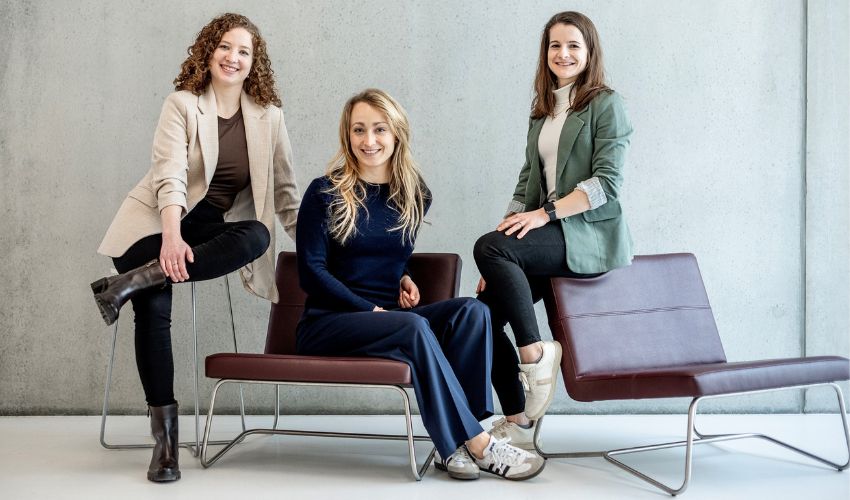
Our western eating habits, with meat and fish regularly on our plates, have far-reaching ecological consequences. Monocultures, overfishing and factory farming are just some of them. To counteract this, we have seen some innovative approaches in the last decade, such as cultured meat, increasingly from 3D printers. Cellular agriculture is an alternative to livestock farming and can reduce emissions by 90% compared to beef production. The trend towards this type of agriculture is increasing and the popularity of cultured meat and fish products is also growing steadily. Enter sallea, whose aim is to support producers of this type of food in their production. Founded in November 2023, the startup has developed innovative 3D-printed scaffolds that form the basis for cultivating meat and fish products of any shape and with a specific nutritional profile. In this way, sustainable products can be created without animal suffering. We spoke to Nicole Kleger, CTO and co-founder of sallea, to find out more about the startup’s beginnings, the innovative technology and its goals.
3DN: Could you introduce yourself and your connection to 3D printing?
My name is Nicole Kleger, and I am the co-founder and CTO of sallea, a spin-off of ETH Zurich. I originally studied materials science at ETH Zurich and then also completed a doctorate at ETH. At sallea, I am responsible for everything that has to do with technology. This includes the further development of our products, project management internally and with external collaborators, scouting for new technologies, IP strategy, as well as developing the strategy for sallea’s further technological milestones.

Dr. Nicole Kleger, CTO and co-founder of sallea (photo credits: sallea AG)
I came to 3D printing because I’ve always liked having tangible products in my research. In other words, something you can see with your eyes. I was therefore fascinated by 3D printing early on in my studies because not only can it quickly produce something tangible, but it can also produce very aesthetic products. During my studies, I also became aware of the outstanding technical advantages of 3D printing, provided it is used in the right setting. I was then able to carry out my first project work with Professor André Studart during my Master’s degree and was able to really ‘play’ with a 3D printer for the first time.
More from the desk
Six other notes from the rest of the bench.
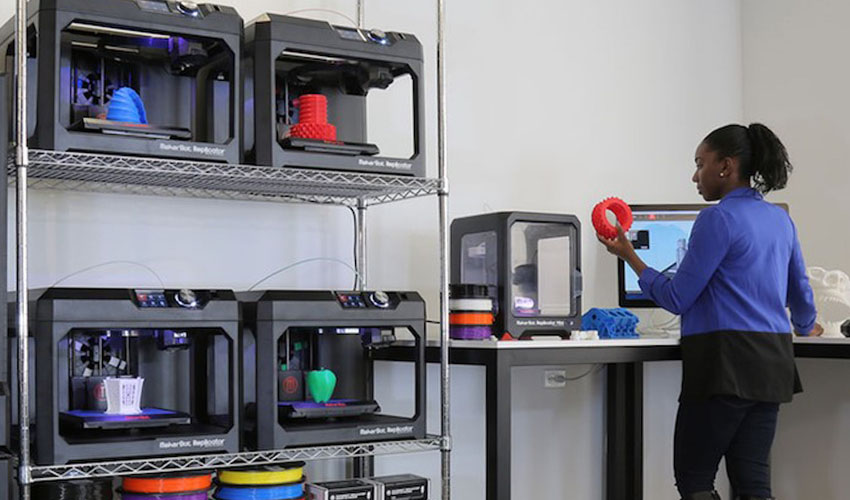 GuidesRAM Peripherals, the UK disc duplicator supplier turned 3D printing expertThe company RAM Peripherals has understood the importance of focusing on new technologies, particularly 3D printing. They supply customers with 3D printers, but also 3D scanning services, training & workshops and support with anything they need. Operations Director, Lingan Ra
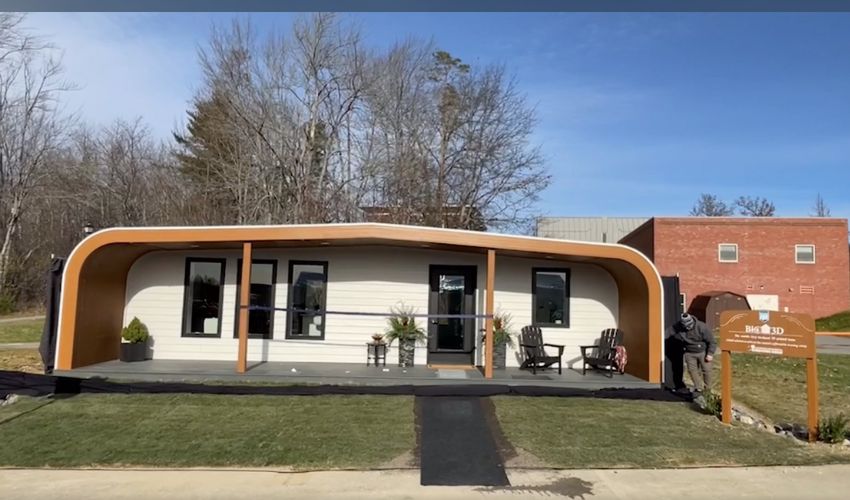 NewsResearchers Build World’s First 100% Biosourced 3D Printed Home3D printed houses is a hot topic at the moment, as researchers look to improve the current housing situation in a sustainable and reproducible way. Researchers at the University of Maine have built the first ever 3D printed house of…
 Applications#3DExpress: Dubai’s First Fully 3D Printed BoatThis week, we’re taking you on a boat tour, and not just any boat! It’s a boat entirely 3D printed by a Dubai-based company. Thanks to 3D technologies, the company is able to drastically reduce manufacturing lead times, thereby boosting…
 PrintersCES 2018: 3D Printing Innovations Round-UpThis year, CES ran from the 9th-12th January 2018 and the world’s most innovative companies flew out to show their new products. These new inventions included various 3D printing companies who came to Vegas to show the world why their…
 News3D-Printed Ceramic Monoliths Can Purify Water By Removing ‘Forever Chemicals’Worldwide, 2.2 billion people do not have access to a safe drinking water supply and a further 3.5 billion people do not have adequate sanitation facilities. This data, published in the latest United Nations World Water Development Report, confirms the…
 NewsUpNano introduces new micro-scale 3D printing technologyUpNano is a young company based in Vienna that has recently developed a high-resolution micro-scale 3D printing technology. Based on a 2-photon polymerization process (2PP), the new technique is capable of producing plastic parts with a volume ranging from 100…