News
Single Atom Catalysts Can Be Made With 3D Printing
Research has been carried out with 3D printing which could change the way we tackle climate change and lead to the development of novel techniques for the benefit of society. A team led by Prof Shizhang Qiao, an Australian Laureate…
- 3 min read
- News
- Six more stories

Research has been carried out with 3D printing which could change the way we tackle climate change and lead to the development of novel techniques for the benefit of society. A team led by Prof Shizhang Qiao, an Australian Laureate Fellow at the University of Adelaide, has developed a method to 3D print single atom metal catalysts which could do away with previous costly methods.
The team used 3D printing to develop single atom catalysts (SAC), which were sent to the Australian Synchrotron, a world-class research institute based near Melbourne, which uses accelerator technology to produce powerful beams of light which test the properties of materials . The Synchrotron performed materials characterization with X-ray absorption spectroscopy (XAS) beamline. From this, they found that the 3D printed catalysts had unique properties to cause efficient reactions with high catalytic activity and with 100% atom economy.
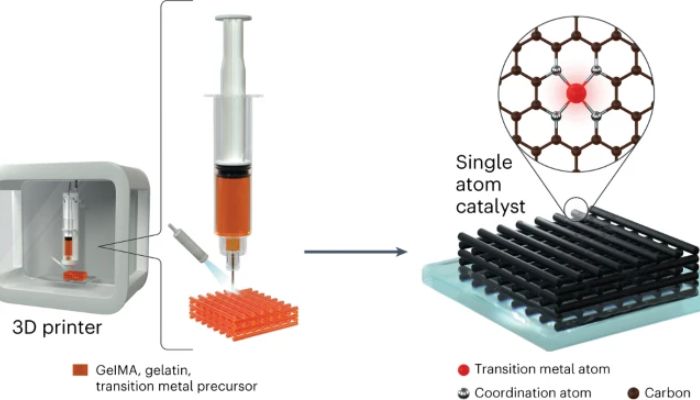
The method of the experiment involved the extrusion of the catalyst from the 3D printer; each individual atom then formed the center of four coordination atoms with a structure of carbon atoms. (Photo credits: A General Approach to 3D-printed Single-Atom Catalysts)
Catalysts speed up chemical reactions while remaining unchanged at the end of the process. Not all catalysts, however, are created equal. The efficiency of the catalyst varies dramatically according to the surface area: a higher surface area means more active sites, which are the locations on the catalyst on which the particles bond and undergo a chemical reaction. Single atom catalysts (SAC) are catalysts which consist of a single atom as opposed to, for example, a cluster. They have the highest possible surface area, therefore are very efficient catalysts. However, the current methods for production of SACs are costly, impractical and complex, and this is where 3D printing comes in. The method allowed them to produce catalysts in a cost-effective manner, customizing geometric designs ranging in size from millimeters to meters.
More from the desk
Six other notes from the rest of the bench.
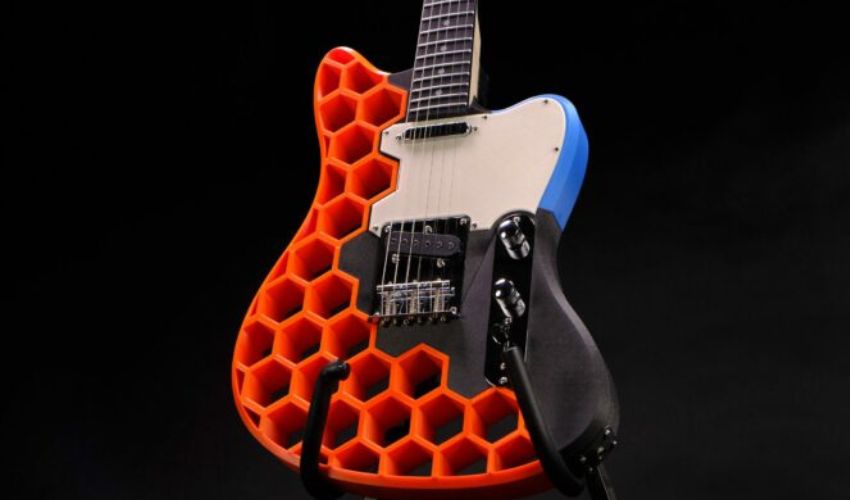 NewsPrusacaster, The 3D Printed Guitar you Can Make Yourself3D printing has become an invaluable tool in creating musical instruments and has revolutionized production and access. Using customized materials and unique designs, instruments can now be made with specific sonic and physical characteristics previously impossible with tradition
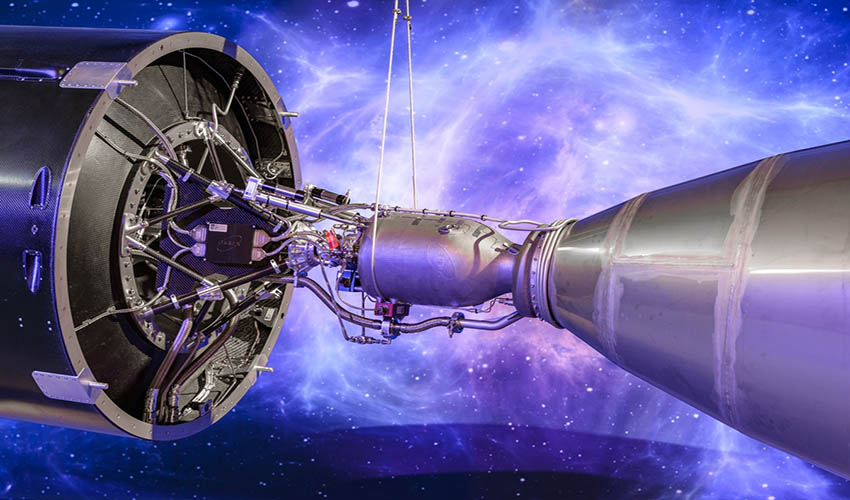 NewsOrbex unveiled largest 3D printed rocket engine in the worldThe British aerospace company Orbex regularly launches small, micro and nano satellites into accurate low Earth orbits. Until now, the company had not drawn much attention to its additive manufacturing activities or developments. However, they recently revealed that they have&hel
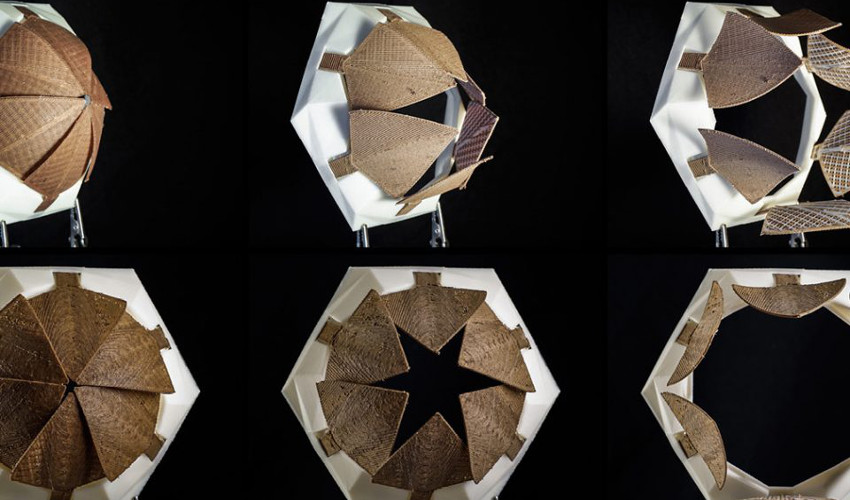 Materials4D printing reconfigurable materials for use in aerospace, medical and robotics fields4D printing is an upcoming form of additive manufacturing with effects that continue beyond the print. It is similar to 3D printing in the sense that an object is also built layer by layer. However, the object can then change…
 MaterialsScientists manage to 3D print transparent glass for the first timeResearchers at the Lawrence Livermore National Laboratory have successfully 3D-printed transparent glass. What’s more, this test was successfully conducted at room temperature. Reports from the test claim glass structures with composition gradients can also be produced with
 NewsUniversity of Bristol Tests 3D Concrete Printing for Earthquake SafetyIn recent years, 3D concrete printing has increasingly established itself as a legitimate technology in the construction industry. It can be used to produce buildings faster and more cost-effectively, so experts see great potential in 3D concrete printing to address…
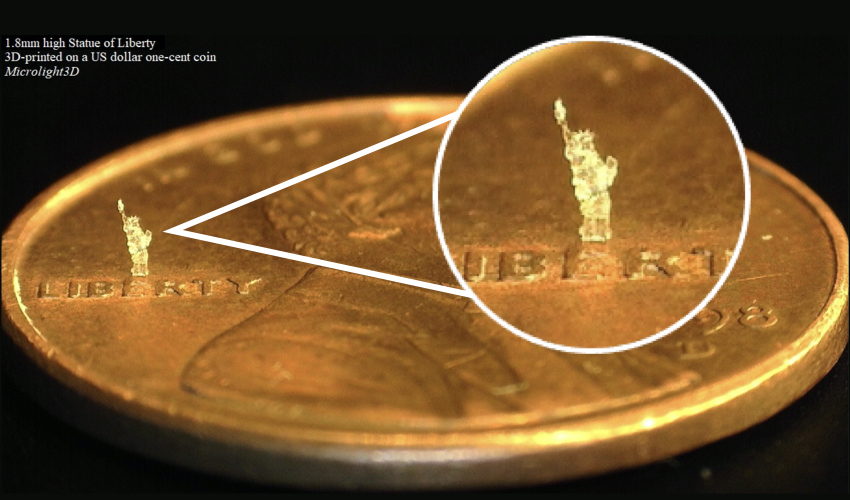 NewsMicrolight3D Shatter Limitations of Microfabrication 3D PrintingMicrolight3D have 3D printed the world’s smallest replica of the statue of liberty to commemorate inauguration day in the USA (the swearing in of the President of the United States took place on January 20th) and show off their new…