Materials
Second Nature: giving marine plastic a second life thanks to 3D printing
Second Nature is a new project from The New Raw that aims to raise awareness of the environmental issues of plastic pollution and the corresponding challenges of wildlife preservation caused by abandoned fishing nets. Once again, The New Raw is…
- 3 min read
- Materials
- Six more stories
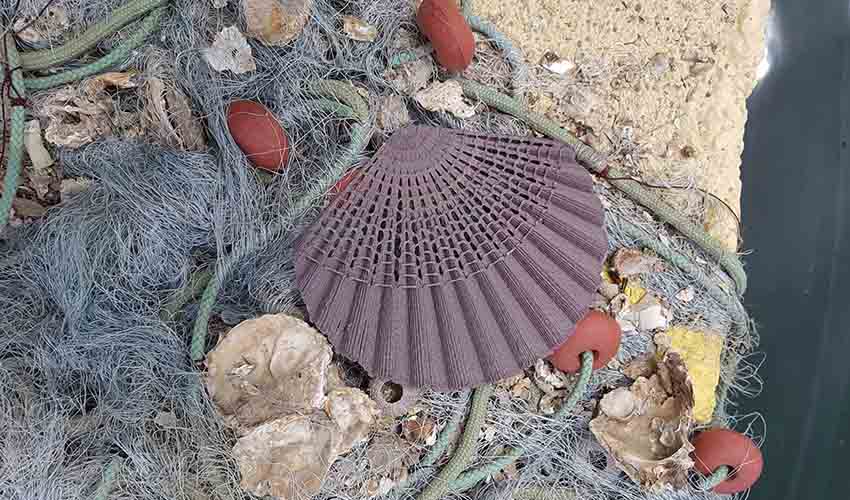
Second Nature is a new project from The New Raw that aims to raise awareness of the environmental issues of plastic pollution and the corresponding challenges of wildlife preservation caused by abandoned fishing nets. Once again, The New Raw is combining 3D printing technologies with environmental initiatives – the research and design studio has always been focused on recycling plastic waste with the use of additive manufacturing as it has demonstrated with previous projects such as: Print Your City, Zero Waste Lab, etc. This time around, Second Nature focuses on transforming ghost nets into a series of digitally crafted seashells and various other objects.
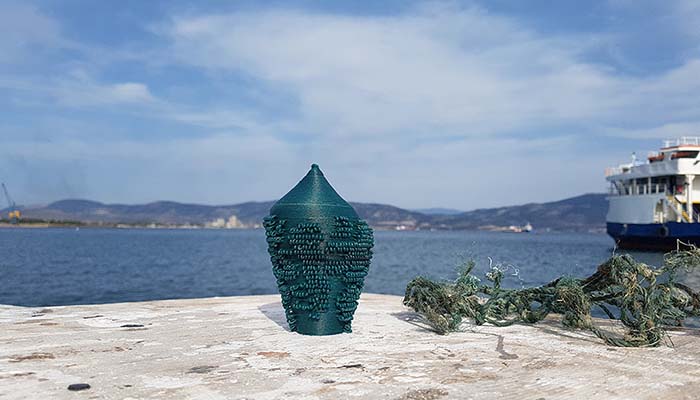
Photography: Marily Konstantinopoulou, Javier Sirvent | The New Raw
Panos Sakkas and Foteini Setaki, the two founders of The New Raw commented, “Plastic is a major contributor to the pollution of the seas. However, living in urban regions, we tend to forget about our dependence on the sea, which is crucial to our food and oxygen supply. With Second Nature, we want to give plastic a second life.” In fact, the project debuted in Greece with the local fishermen and divers of the area – they would go diving to collect the discarded synthetic fishing nets at the bottom of the sea. These nets, also known as ghost nets, are very deadly as they trap fish and other living creatures as long as they remain on the seabed.
The use of 3D printing
In the small Greek village of Galaxidi, The New Raw set up their mobile 3D printing and recycling lab to transform marine plastic into a raw material for a new circular economy. In order to do this, the designers classified the ghost nets according to different material types: nets, ropes, floaters and weights. Following this, the different material types were processed in the grinder and extruded into colourful and textured filaments for 3D printing.
More from the desk
Six other notes from the rest of the bench.
 NewsRevo Foods and their 3D Printed SeafoodLast July, we presented a crazy concept from Legendary Vish, founded by a group of students who came up with a way to 3D print fish. A few months later, the project was structured and a startup was born: Revo…
 GuidesHILOS and its 100% Recyclable 3D Printed ShoesIf you’re curious about the different applications of 3D printing, you are probably aware that several companies have been producing footwear using additive manufacturing. Adidas, Reebok, and New Balance are some of the largest companies to use 3D printing to…
 Materials#3DStartup: ING3D and its Mineral 3D Printing SolutionsBased in Germany, our startup of the month is ING3D which has developed a mineral 3D printing process inspired by powder sintering, called Mineral Direct Laser Sintering (MDLS). Thanks to this unique process, it is possible to design very light…
 GuidesNicole Hone and her “Hydrophytes”, 4D printed aquatic plantsHydrophytes is a project that seeks to show what plants of the future might look like. Created through 4D printing, their intelligent manufacturing materials allow them to develop movements very similar to real aquatic plants. The creator of this project is Nicole Hone,…
 NewsTop 5 Videos: 3D printing turbines and much more!This week we found the top 5 videos about 3D printing and the way additive manufacturing is changing production. The technology has infiltrated many sectors, from medical to automotive – check our selection of the week to keep up with the innovations! If you enjoy these, you&hell
 NewsTop 5 Videos: 3D Printing Rockets In Just 60 DaysThis week, discover how American startup Relativity Space uses the largest 3D metal printer in the world to build rockets. Next, see how 3D printing is impacting the energy sector: ORNL has 3D printed several components that were successfully installed…