Applications
Scottish Crew Tests 3D-Printed Boat Parts in Pacific Crossing
Three brothers from Scotland are taking on a monumental challenge that shows how 3D printing is not just for the workshop but for the open ocean! Ewan, Jamie, and Lachlan Maclean are currently nearing the end of their 9,000-mile (approximately…
- 3 min read
- Applications
- Six more stories
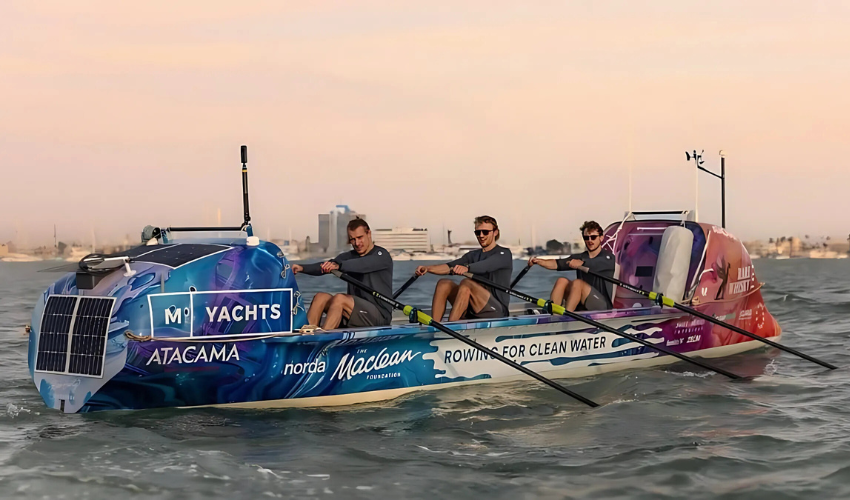
Three brothers from Scotland are taking on a monumental challenge that shows how 3D printing is not just for the workshop but for the open ocean! Ewan, Jamie, and Lachlan Maclean are currently nearing the end of their 9,000-mile (approximately 14500km) journey to row across the Pacific Ocean on a carbon fiber boat. The boat itself is outfitted with more than 40 customized parts made using a Formlabs Form 4 3D printer. Their current target is to set a world record for the fastest unsupported three-man Pacific crossing while simultaneously attempting to raise £1 million for clean water projects in Madagascar.
The boat is named Emily-Rose, and it was designed with additive manufacturing at its core. Co-designed with the Ocean Rowing Company, the team utilized Formula One-grade carbon fiber for the shell of the boat. The Macleans produced 3D printed parts, including performance-critical ergonomic rowing seats that were created using 3D body scans of each rower. Additionally, sleeping platforms and weather-resistant mounts for the boat’s navigation and communications systems were also 3D printed. Ewan Maclean noted that, “Ocean rowing is a sport of marginal gains. If we can make the rowing position slightly more efficient or keep equipment more stable, it saves us time and energy every single day.”
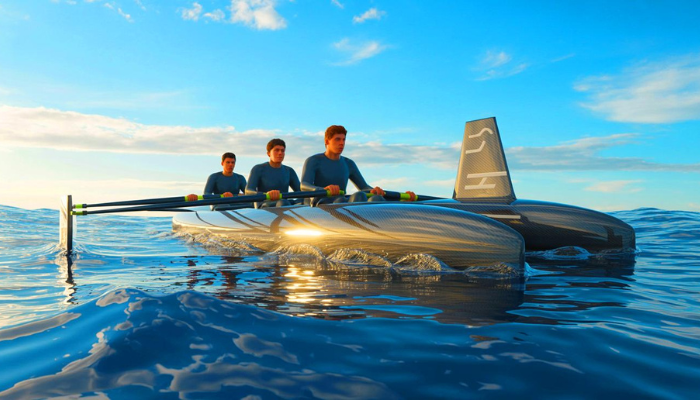
A 3D mockup design of the boat to be used. (Credit: Maclean Foundation)
The team used Formlabs’ latest engineering resins to create parts that would have the strength of traditional production materials. Many of the last adjustments made to the boat were thanks to the adaptability of additive manufacturing. They were able to design a gimbal for their Jetboil stove and a UV and salt-resistant fixture for their satellite dish. These pieces are designed to survive prolonged exposure to the sun, mechanical stress, and saltwater. Ewan had said that, “Ocean conditions are one of the harshest environments for any material. The fact we can print, fit and rely on these parts at sea is a big shift in how we think about outfitting boats.“
More from the desk
Six other notes from the rest of the bench.
 MaterialsContinuous Composites opens 7,500 sq-foot demonstration facility for composite 3D printingFounded in 2015, Continuous Composites is opening a 7,500 square foot facility for research, development, and additive manufacturing in Idaho. The new building demonstrates their patented Continuous Fiber 3D Printing (CF3D) technology at the largest scale to date, increasing thei
 NewsTop 5 Videos: What It Takes to 3D Print an Adaptive Bike SaddleIn this week’s Top 5, the focus seems to be on applications. First, we feature an in-depth video on an adaptive 3D printed bike saddle from Fizik, distributed by New Era Cycle. The video dives into every stage of production…
 PrintersItalian National Cycling Team Improves Aerodynamics Using Calibry 3D ScannerIn their quest for Olympic Gold ahead of Tokyo 2021, the Italian National Cycling team enlisted the expertise of Russian manufacturer, Thor3D’s Italy-based partner, 3DiTALY, with the goal of reducing aerodynamic drag, which optimizes a cyclist’s efficiency. Thor3D’s C
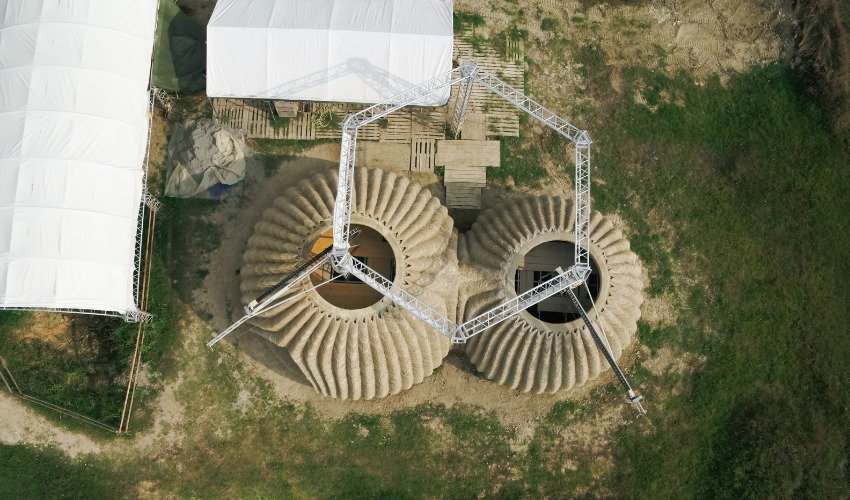 NewsWASP completes the structure of its 3D printed eco-habitatWASP (World’s Advanced Saving Project), an Italian 3D printing company working especially in the realm of sustainable construction, has completed the printing phase of the TECLA supporting structure, the first 3D printed eco-habitat. The TECLA project was launched in 2019…
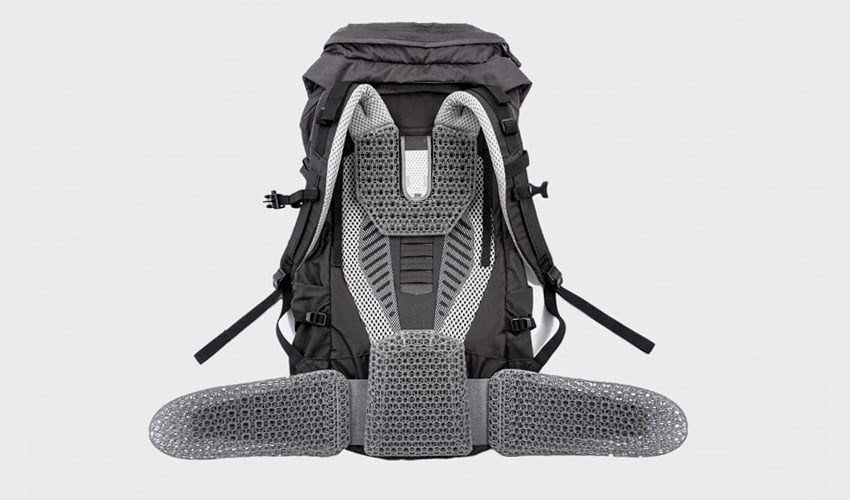 NewsOECHSLER Has Made a Backpack With 3D Printed, Shock-Absorbing FabricGerman company OECHSLER is behind a new innovation that aims to take the additive manufacturing sector into new dimensions. Specifically, they have developed a hiking backpack that incorporates 3D-printed, shock-absorbing mesh material for the first time. OECHSLER’s proposa
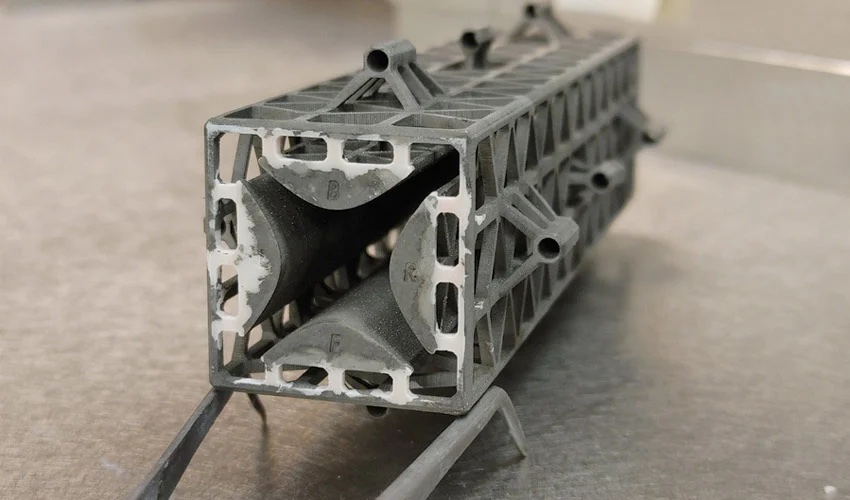 NewsThe Mass Spectrometer Filter 3D Printed in Just a Few HoursAt MIT, a team of researchers led by Fernando Velásquez-García has developed a 3D printed filter for a mass spectrometer. This device, designed to detect molecular structures by measuring their mass, has traditionally been bulky, fragile and, because of its…