News
The Mass Spectrometer Filter 3D Printed in Just a Few Hours
At MIT, a team of researchers led by Fernando Velásquez-García has developed a 3D printed filter for a mass spectrometer. This device, designed to detect molecular structures by measuring their mass, has traditionally been bulky, fragile and, because of its…
- 3 min read
- News
- Six more stories
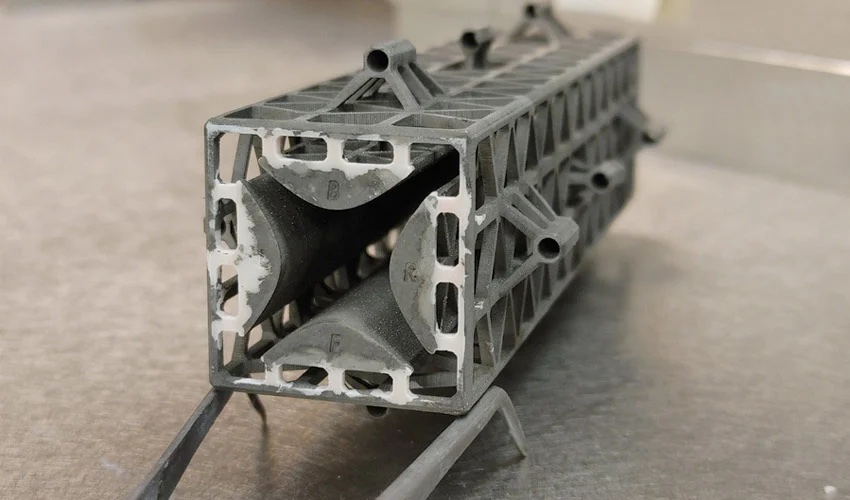
At MIT, a team of researchers led by Fernando Velásquez-García has developed a 3D printed filter for a mass spectrometer. This device, designed to detect molecular structures by measuring their mass, has traditionally been bulky, fragile and, because of its size, difficult to deploy in certain areas. Using photopolymerization and a heat-resistant glass-ceramic resin, they succeeded in producing the device’s filter, more commonly known as a quadrupole. Thanks to additive manufacturing, the team were able to considerably reduce the filter’s production time, cost and weight.
Mass spectrometry was developed in the 1900s and was originally used to identify and separate the isotopes of a chemical element. Since then, the technique has been perfected and is now used in many scientific fields, including chemistry, physics, biology and geology. A spectrometer is made up of four parts, including the analyzer capable of separating the ions, either with a high-resolution or low-resolution analyzer. In the latter case, a quadrupole is used, i.e. a component that enables energy transfer. This is the component designed by additive manufacturing in just a few hours and for just a few dollars, compared with the traditional weeks and thousands of dollars.
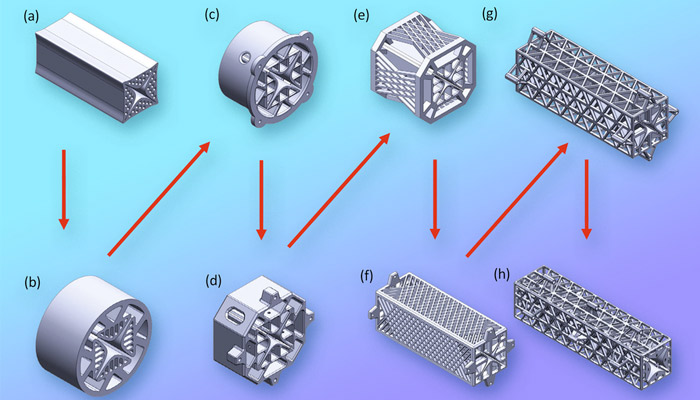
Additive manufacturing makes it possible to imagine a wide range of shapes and iterations
A 3D Printed Spectrometer Filter
The component is said to have been 3D printed using a resin machine: the team explains that they used a glass-ceramic resin cured layer by layer by several LEDs. The 3D printer produces the miniaturized quadrupole in a single operation, eliminating the assembly steps that can lead to defects and thus reduce the quality of the component.
More from the desk
Six other notes from the rest of the bench.
 PrintersCrane WASP; a modular 3D printer for the construction industryThe Italian 3D printer manufacturer WASP quickly specialised in the Fused deposition modeling and now offers a wide range of machines of any size. We remember their 3D delta printer measuring 12 meters in hight and was 7 meters wide, the BigDelta,…
 News3D Hubs predicts 2020 additive manufacturing trendsThe leading online manufacturing service, 3D Hubs, has recently released its 3D printing trends report for 2020, giving its insights on the evolution of additive manufacturing, and where the AM market is headed. Looking back at the last decade, it’s…
 NewsTop 5 Videos of the Week: Improving performance with additive manufacturingThis week we found the top 5 videos about 3D printing and the way additive manufacturing is shaping our society. The technology has infiltrated many sectors, from medical to automotive! Check out our selection of the week to keep up with the innovations! This week we…
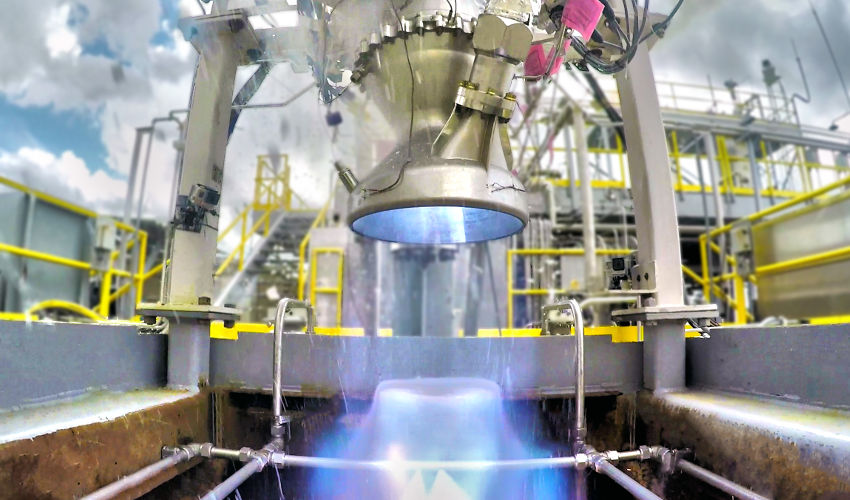 Guides#3DStartup: Relativity Space, Creating 3D Printed Rockets for MarsAdditive manufacturing pushes the earth’s limits and invades space : Relativity Space is a perfect example! This American startup has invented a 3D printing method to create whole rockets that could well take off in a few years. Their Stargate process would indeed be&hellip
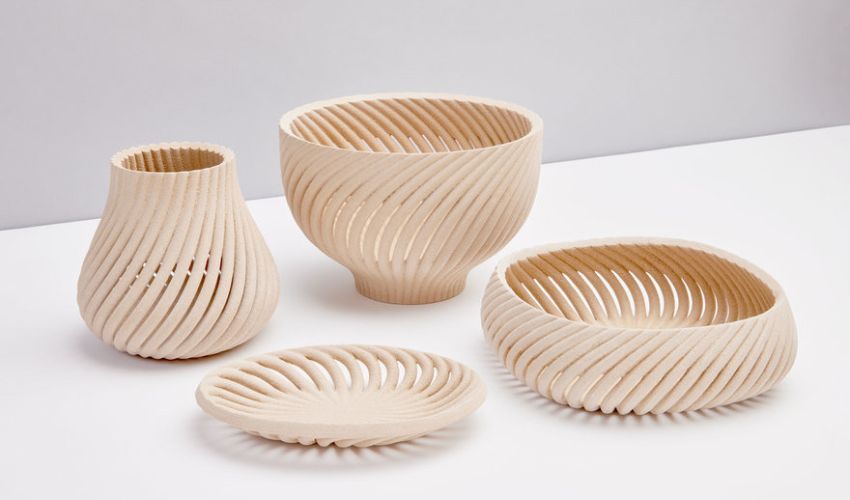 NewsForust 3D’s Accessory Line Gives New Life to Wood WasteUS-based Forust 3D was founded with a mission to make high-volume wood 3D printing affordable, reliable and sustainable. To do this, it leverages the speed, precision and quality of the binder jetting process to produce strong, lightweight wood components. Two…
 NewsTop 5 Videos of the Week: the 3D printing trends for 2020 and much more!This week we found the top 5 videos about 3D printing and the way additive manufacturing is shaping our society. The technology has infiltrated many sectors, from medical to automotive! Check out our selection of the week to keep up with the innovations! This week we…