News
Sciperio aims to bioprint human blood
What if we could bioprint human blood? This is the project of Sciperio, the research segment of micro 3D printing equipment manufacturer nScrypt. Together with partners such as Safi Biosolutions and the Geneva Foundation, the American company hopes to facilitate…
- 3 min read
- News
- Six more stories
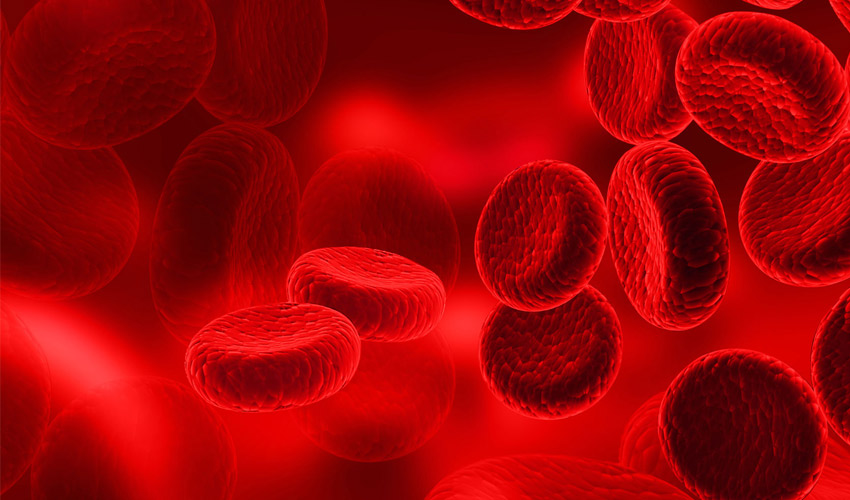
What if we could bioprint human blood? This is the project of Sciperio, the research segment of micro 3D printing equipment manufacturer nScrypt. Together with partners such as Safi Biosolutions and the Geneva Foundation, the American company hopes to facilitate blood supply worldwide. In the United States, it’s estimated that 111 million citizens are eligible blood donors, representing more or less 37% of the population. However, less than 10% of the eligible blood donors donate annually. The project is only just starting however – Sciperio announced that it will use nScrypt’s SmartPump technology, a process that allows materials to be deposited very precisely on a microscopic scale, and a bioreactor to produce the blood. Over time, the hope is that their technology can be scaled up to bioprint blood on a larger scale.
The aim of bioprinting is to design cell structures capable of performing the same functions as those we have today, and for these structures to survive inside our bodies. Many projects are aimed at creating functional and viable human organs, be it a liver or a kidney, or even a heart. Little by little, 3D technologies are advancing, showing a future full of promise for the medical sector. Sciperio is part of this dynamic by focusing on bioprinted blood. The project will undoubtedly take many years – we already know that the first step will be devoted to defining a precise roadmap with already 8.8 million dollars invested.
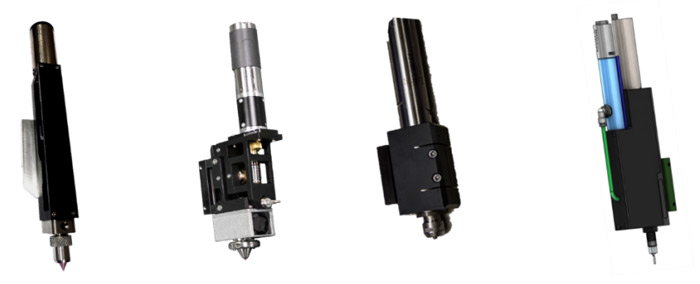
The various extruders from nScrypt
Sciperio explains that it first envisioned an automated bioreactor filled with sensors for accurate feedback and real-time monitoring. This is the machine that will be used to make the blood. Next, the company will use nScrypt’s SmartPump to microscopically dispense ingredients in very precise quantities into the bioreactor, mainly growth promoters. This will allow cells to grow and differentiate. It is this step that calls for additive manufacturing technology: the SmartPump is in fact a microprinting head with picoliter volume control. Its nozzle measures barely 10 microns in diameter.
More from the desk
Six other notes from the rest of the bench.
 GuidesHow 10 US startups are innovating with 3D printing?On 3Dnatives, we regularly talk about the giants of additive manufacturing, from machine manufacturers to 3D printing services or material suppliers. However, there are a growing number of startups that see this technology as the future of their industry. AM…
 MaterialsCleaning: A Key Step in 3D Printing Post-ProcessingAfter a quick overview of post-processing in 3D printing, it’s time go even deeper into the topic, starting with one of the first steps that takes place immediately after printing. This is the cleaning of the part, which involves both…
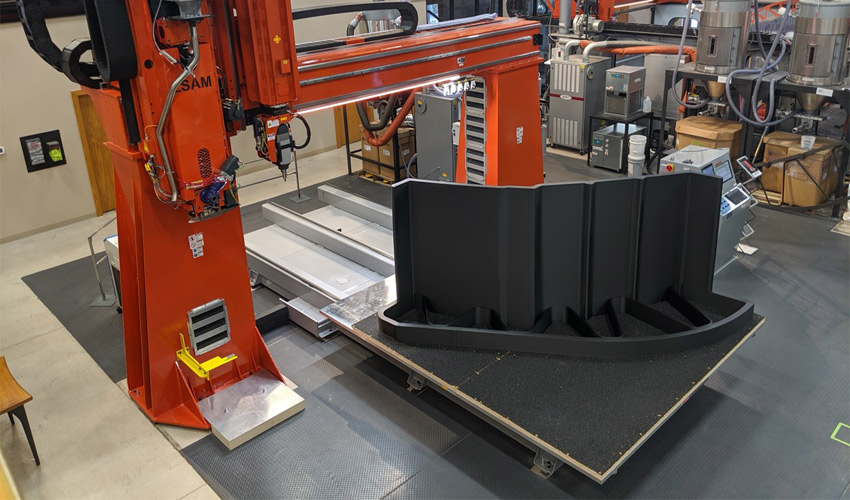 NewsThermwood 3D prints a hull mold for a 51-foot long yachtThe manufacturer of large-format additive manufacturing solutions, Thermwood, has recently 3D printed several sections of a mold of the hull for a 51-foot long yacht. Using carbon fiber reinforced ABS, the company developed a part that was strong enough, demonstrating that additi
 NewsGulf Wind Technology Is Optimizing Wind Turbine Design With 3D PrintingGulf Wind Technology (GWT) is an American company dedicated to developing wind turbine rotors. On November 20th, the company announced that it uses Stratasys additive manufacturing solutions to enhance its ability to test and improve wind turbine models. Specifically, they&hellip
 NewsTop 5 Videos: 3D Printing Takes Gold at the Repair Center at the ParalympicsWe have come to the end of another week! Now that September is starting to ramp up, the additive manufacturing industry is also waking up after the summer vacation with new stories coming out every day, including videos. So let’s…
 News3D Printed Violins Could Help Bring Music to AllMusic has been a part of humanity for as long as we have been recording history. And though it has changed much over the years, some things have stayed constant. For example the types of instruments and how they are…