News
Thermwood 3D prints a hull mold for a 51-foot long yacht
The manufacturer of large-format additive manufacturing solutions, Thermwood, has recently 3D printed several sections of a mold of the hull for a 51-foot long yacht. Using carbon fiber reinforced ABS, the company developed a part that was strong enough, demonstrating that additi
- 3 min read
- News
- Six more stories
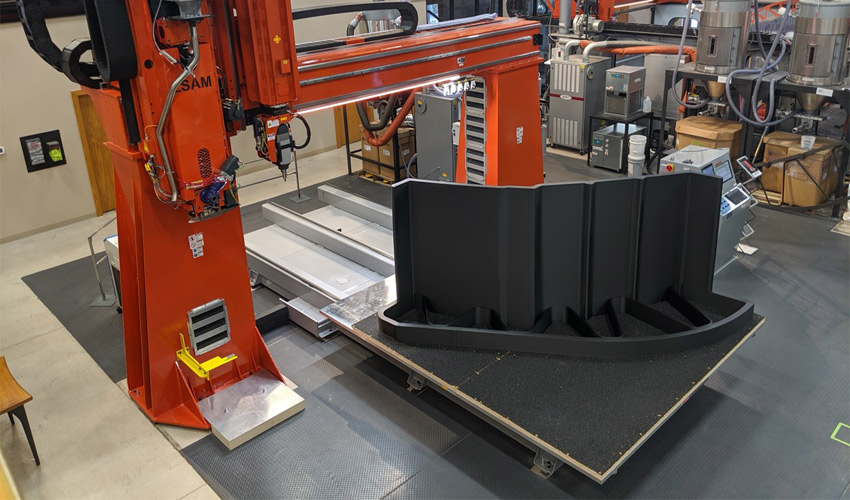
The manufacturer of large-format additive manufacturing solutions, Thermwood, has recently 3D printed several sections of a mold of the hull for a 51-foot long yacht. Using carbon fiber reinforced ABS, the company developed a part that was strong enough, demonstrating that additive manufacturing has a card to play in the marine industry. It’s not the first time they’ve been involved in this sector – in 2017, they printed a master mold that was used to produce several smaller boat hull molds. This application case shows how a single mold can be used for the fabrication of larger vessels, such as yachts.
Today, there are many ways to design large format parts: some companies invest in 3D printers with large plates, others in robotic arms capable of covering a larger surface area, while the majority of users go through a more or less long assembly phase. Despite the constraints that this technique can represent, it remains efficient for manufacturing larger parts – if we come back to the marine sector, you probably remember MAMBO, the boat that was 3D printed with fiberglass. As for Thermwood, it combines the XXL machine with the assembly phase, allowing it to create up to 51-foot long parts .
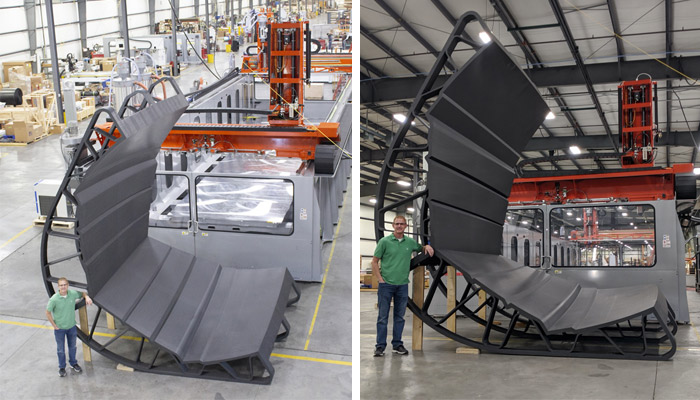
One of the 3D printed sections of the mold of the yacht’s hull (Image credits: Thermwood)
Thermwood explained that they used their smallest 3D printer, the LSAM MT, which offers a print volume of 10×10 feet, to design sections up to 5 feet high. They are then chemically and mechanically bonded using high-strength polymer cables to form two mold halves. These are then bolted together to form the complete mold for the yacht hull. These four 3D printed parts weigh over 4,012 pounds and require 65.5 hours of printing! The manufacturer chose carbon fiber-reinforced ABS for the whole assembly, a material that has a sufficiently high strength while being relatively affordable in terms of price compared to other composites on the market.
More from the desk
Six other notes from the rest of the bench.
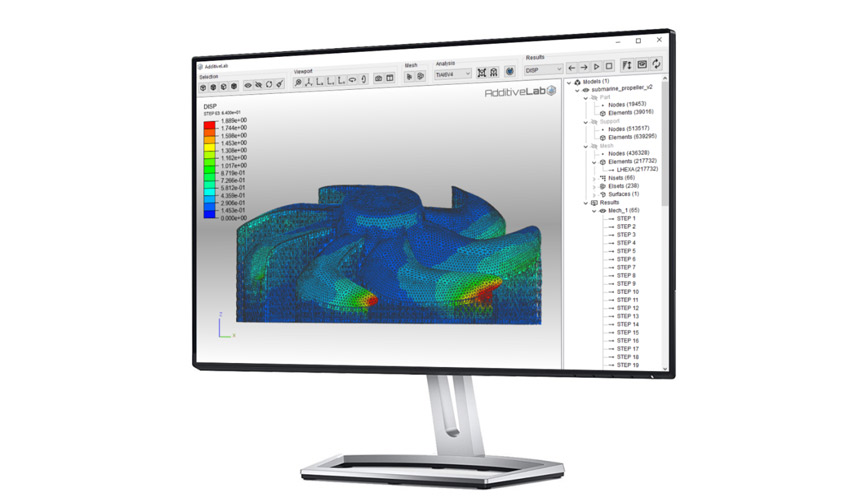 Software#3Dstartup: AdditiveLab and its simulation software for metal additive manufacturingTo start the year off right, we take you to Belgium to meet AdditiveLab, our first #3Dstartup this year. Winner of the Start-Up Challenge 2019 organized by Formnext, the company has developed software solutions to simulate the entire additive manufacturing…
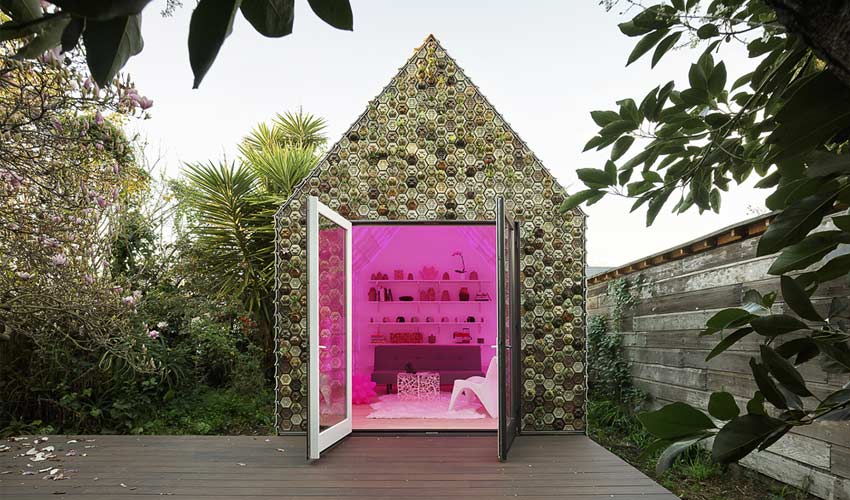 NewsThe Cabin of Curiosities – 3D Printed Hub !The American company Emerging Objects has recently revealed a 3D printed cabin, The Cabin of Curiosities, which is a building project that is a little out of the ordinary, with an exterior that looks more like a garden. At a time when…
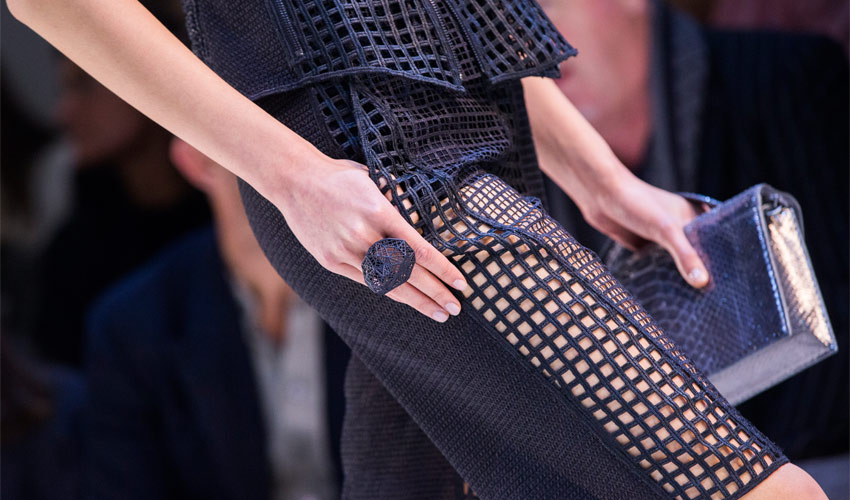 GuidesVOJD Studios combines 3D printing & craftsmanship of fashion & luxuryAdditive manufacturing allows for a high level of customisation, which is harder to achieve with traditional design methods. Some interesting advantages have especially show up in the medical sector. However also in jewellery and fashion, where end consumers are looking for tailo
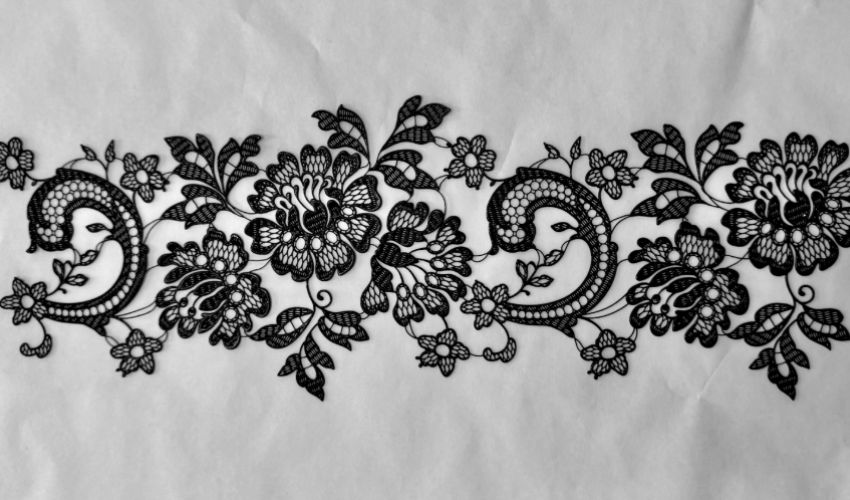 NewsWhy The New York Embroidery Studio is Leveraging 3D PrintingA flash of sequins, elegant pleats, fastidious embroidery—this kind of detail, used deftly, will always make a difference in fashion. Why? Because thoughtful design should always elevate a piece. The New York Embroidery Studio (NYES) has been elevating clothing in…
 NewsThe 3D Printing Innovations at CES 2020!CES, the largest electronics trade show dedicated to consumers brings thousands of participants to Las Vegas every year, eager to discover the latest high-tech products, connected objects and all kinds of technologies. In 2019, the event attracted more than 175,000…
 Guides#Working3D: Six Questions for a Pre-Sales EngineerIn the additive manufacturing market, the jobs and profiles are varied: CAD designers, 3D printing technicians, sales representatives, after-sales managers, etc. The 3D printing value chain includes many different links and each one requires specific skills and knowledge. That