Materials
SAMOROST Reveals Visionary Mycelium-Based 3D Printed Furniture at Designblok
SAMOROST, a visionary project led by the Czech 3D printed construction company Buřinka, unveiled an extraordinary collection of sustainable furniture crafted from mycelium at the international Designblok festival. This innovative reveal combines the forces of mycelium, additive m
- 3 min read
- Materials
- Six more stories
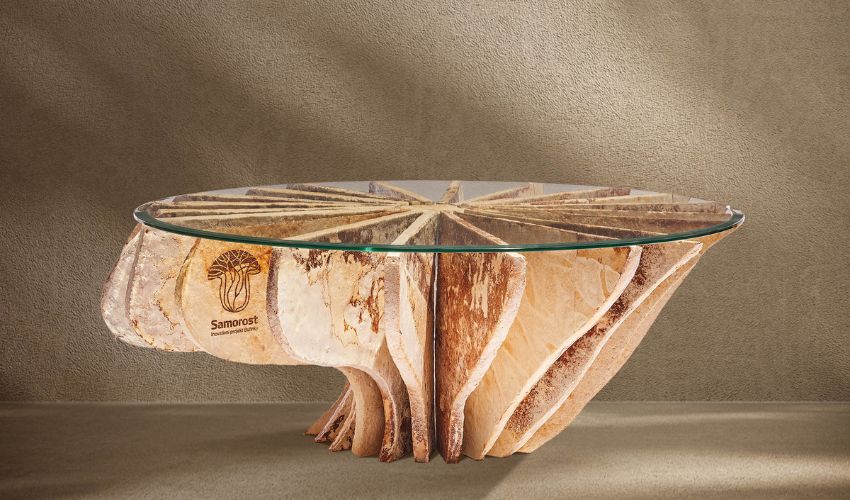
SAMOROST, a visionary project led by the Czech 3D printed construction company Buřinka, unveiled an extraordinary collection of sustainable furniture crafted from mycelium at the international Designblok festival. This innovative reveal combines the forces of mycelium, additive manufacturing, and a commitment to sustainability to challenge how we perceive and create eco-conscious design. Though mycelium has been used alongside 3D printing in the past, SAMOROST distinguishes itself as the pioneer in using this material as the main component in furniture.
The creation of this furniture involves the use of mycelium-based substrates. Within these, the mycelium’s hyphae grow, weaving dense networks as they feed on cellulose. Mycelium displays its adaptability by thriving in a variety of materials, such as sawdust, paper, cardboard, and others deemed non-recyclable or no longer usable. Infusing these materials with mycelium gives rise to a unique new substrate known as mycocomposite. The mycocomposite, the fundamental building material, is the critical component in the furniture creation.

Preparation of mycelium substrate.
Once the new mycocomposite is formed, the substrate is crushed and placed in a reusable 3D printed mold made from recycled plastic. This allows the hyphae within the mycelium to re-link and grow, resulting in an even stronger mycocomposite fitted in the shape of the mold. The substrate is then allowed to dry, where the mycelium dies. Once this process is complete, the final mycocomposite substrate can be processed to build furniture.
More from the desk
Six other notes from the rest of the bench.
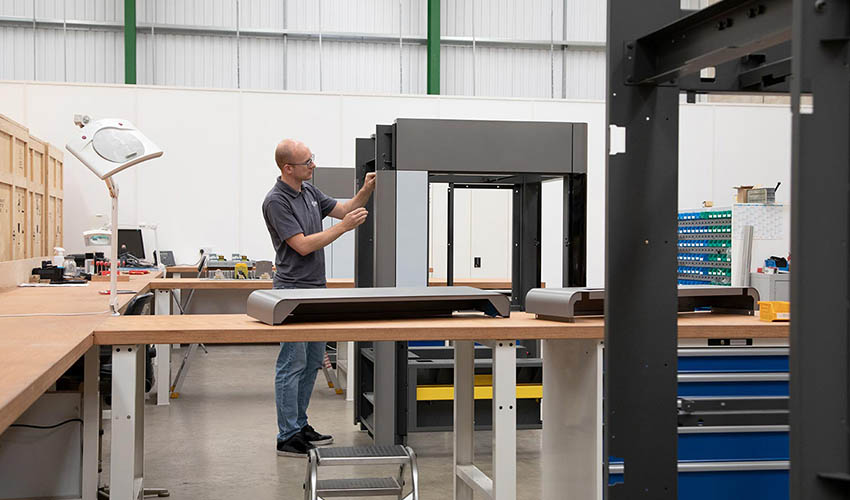 PrintersRPS expands Neo SLA 3D printer range with industrial machinesNot too long ago, the British manufacturer, RPS launched the latest of the Neo stereolithography range, the Neo450 series. Based on the Neo800, the compact Neo450 series has a 450 × 450 × 400 mm platform and builds prototypes, rapid tooling, and master patterns…
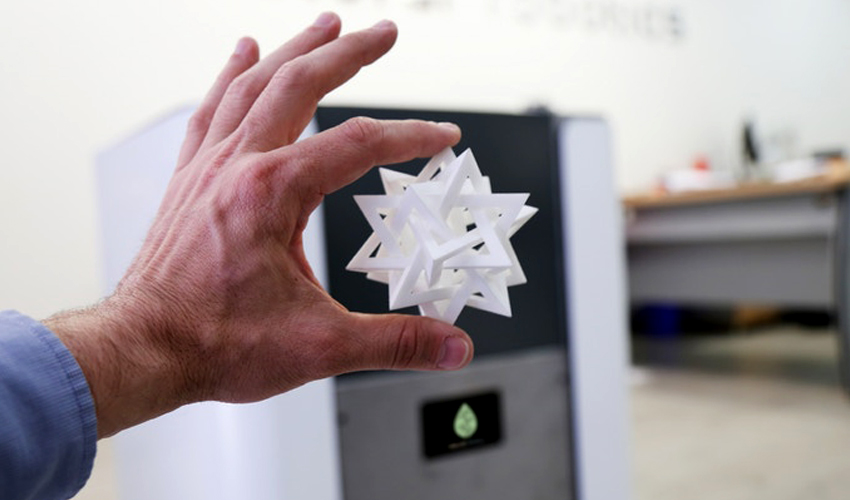 PrintersBenefits of an SLS 3D Printer: with Natural RoboticsThe technology of selective laser sintering involves creating objects via a powder material. It was developed in the 80s, but in its early years it was inaccessible to most because of its high price. In 2014 the patent expired, opening…
 MaterialsGravity Industries & Ricoh 3D Partner On Human Flight ProjectRicoh 3D has announced they are partnering once again with Gravity Industries, this time with the goal of producing Gravity’s latest human flight project, the Electric Jet Suit. Having experienced great success with Gravity’s Jet Suit over the past four…
 ApplicationsGeneral Motors Uses 3D Printing for New Concept Chevrolet CorvetteAdditive manufacturing is widely used in the automotive industry, from the exterior and interior design of a vehicle to improvements in production processes. This is because complex components can often be produced more easily with additive technologies than with conventional&hel
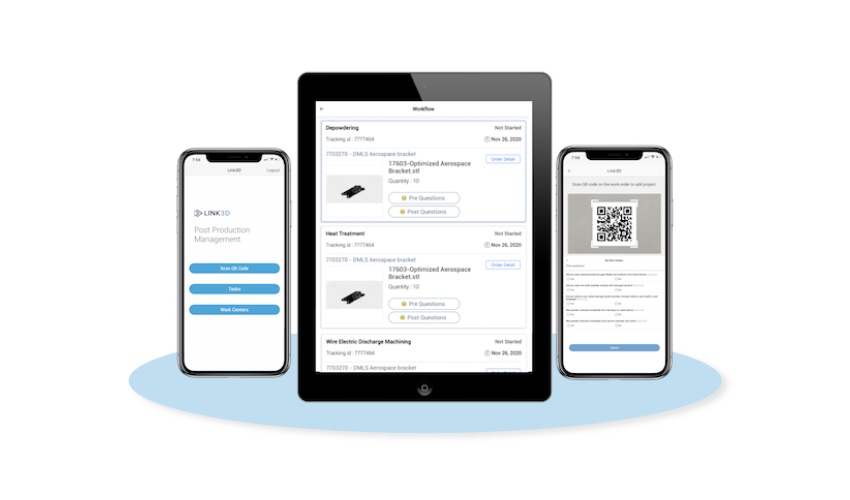 SoftwareLink3D releases 3D printing post-production management appLink3D, one of the leading additive manufacturing workflow software providers, has recently announced the launch of a mobile application designed to help manufacturers manage post-production workflow. Aiming to give companies more control over their manufacturing processes, the n
 NewsAustralia’s First 3D Printed Amenities Block Is Underway3D printing construction is making its mark Down Under! In Dubbo, a city in New South Wales, Australia, the regional council has announced that 3D printing will be used to build a new amenities block in Macquarie Lions Park West.…