Applications
RIT Professor’s 3D Printing Initiative Offers Hope to Amputees
Fueled by 3D printing’s potential to create customized and complex structures, the field of prosthetics has undergone a major transformation in recent years, offering life-changing solutions to individuals with limb differences and amputations. One of the leading figures at
- 3 min read
- Applications
- Six more stories
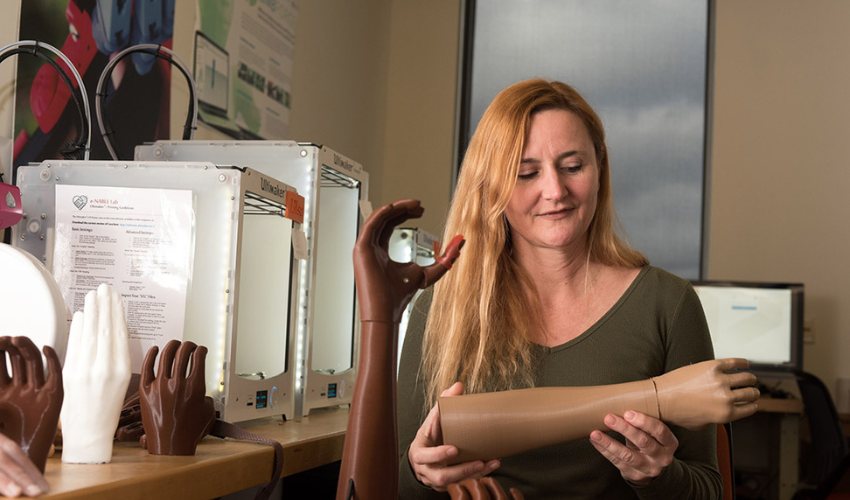
Fueled by 3D printing’s potential to create customized and complex structures, the field of prosthetics has undergone a major transformation in recent years, offering life-changing solutions to individuals with limb differences and amputations. One of the leading figures at the forefront of this movement is Professor Jade Myers at the Rochester Institute of Technology (RIT). Through her pioneering work, which has leveraged the precision and adaptability of 3D printing, she has brought renewed hope and mobility to those facing limb loss worldwide, particularly in conflict zones and areas struck by natural disasters.
Myers, whose journey into 3D printed prosthetics began in 2015, has been leading efforts to adopt this cutting-edge technology for the benefit of amputees worldwide. Through her involvement with RIT 3D printing initiatives, Myers soon recognized the immense potential of using 3D printing to produce high-quality prosthetic limbs.
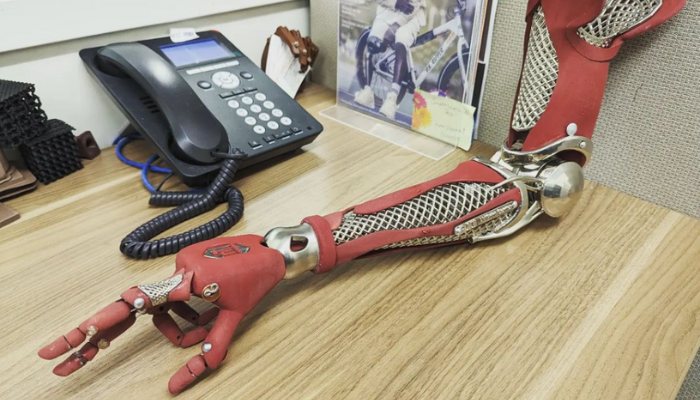
3D printed “Designer Bodies I” prosthetic by Professor Jade Myers. (Photo Credit: Jade Myers)
By employing computer-aided design, 3D printing enables unparalleled customization, ensuring prosthetics are uniquely tailored to the needs and preferences of each individual. Moreover, the use of lightweight materials not only facilitates a personalized fit but also enhances comfort at significantly reduced costs. Another crucial advantage lies in the technology’s mobility, as these printers can be easily transported to reach patients in remote or inaccessible areas, allowing for on-demand production of prosthetics within a matter of hours.
More from the desk
Six other notes from the rest of the bench.
 MaterialsThe Most Innovative Materials at Formnext 20223D printing materials are undoubtedly one of the main elements in the value chain, giving the final part all its mechanical and chemical properties. Today, there are more and more advancements in the field of 3D materials, from polymers to…
 NewsHow Can 3D Printing Help in the Fight Against Counterfeit Goods?Over the years, the trade in counterfeit goods, mostly of luxury brands, has spread rapidly all over the world. Data from the OECD in 2019 already showed that the trade in fake goods amounted to about 3.3% of all world…
 NewsAre 3D printed helmets becoming the norm?In the world of sports, additive manufacturing technologies can offer many benefits to athletes. Sporting equipment can be custom-made, geometrically more complex and made from smarter materials. Over time, manufacturers have understood the benefits of integrating 3D printing pie
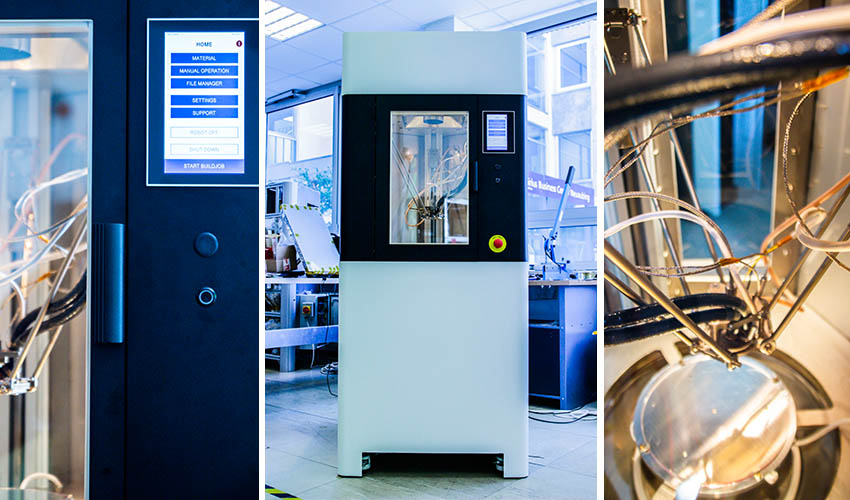 PrintersNew Kumovis R1 3D printer for medical and industrial applicationsKumovis is the German startup focused on delivering 3D printing systems for medical applications. They manufacture solutions for a variety of medical products, you can use their system for prototyping or to create personalised human implants. Recently, the company unveiled&hellip
 NewsUltimaker partners with America Makes to increase female representation in STEMUltimaker has announced a donation of more than twenty 3D printers on International Women’s Day in partnership with a leading American organization for additive manufacturing and 3D printing technology research, discovery, creation and innovation, America Makes. As the market lea
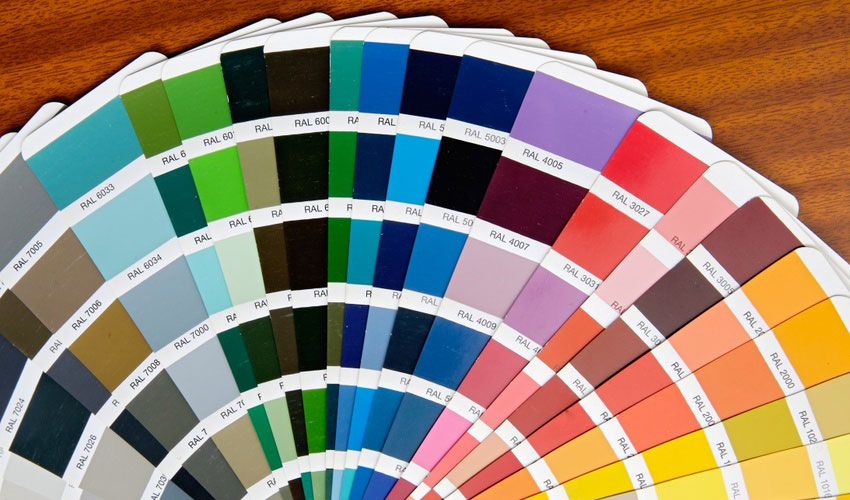 NewsFiberForce launches the first filaments based on Pantone’s colour standardsFiberForce have announced the launch of the world’s first Pantone Matching System (PMS) based 3D printing filament line. They have partnered with Pantone, provider of professional colour standards for the design industry. In fact, Pantone has provided a universal language…