News
Researchers Develop 3D Printed Biomimetic ‘Faive Hand’
The synergy between additive manufacturing and the medical field is significantly growing. From crafting 3D printed blood vessels and implants to fabricating medication in pill form, these applications are expanding and causing a transformative shift in the medical sector. Throug
- 3 min read
- News
- Six more stories
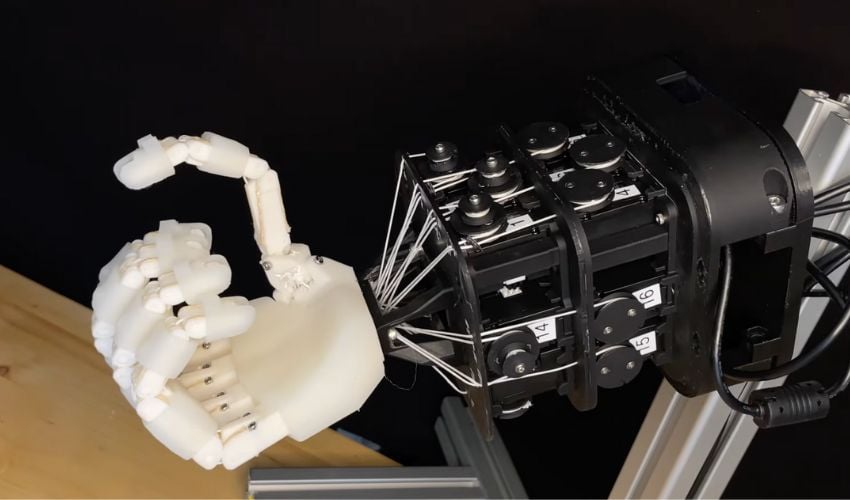
The synergy between additive manufacturing and the medical field is significantly growing. From crafting 3D printed blood vessels and implants to fabricating medication in pill form, these applications are expanding and causing a transformative shift in the medical sector. Throughout this journey, noteworthy innovations have often emerged from ETH Zurich. For instance, their researchers have previously introduced skin created through 3D printing using fungi and crafted insoles with real-time monitoring capabilities.
In a recent breakthrough, these researchers are progressing in the realm of robotics by introducing the “Faive Hand,” a tendon-controlled robotic hand produced through 3D printing. In partnership with the Max Planck ETH Center for Learning Systems, they aimed to develop a robotic hand that closely mimics human attributes. Consequently, the Faive Hand exhibits a remarkable likeness to human hands, enabling it to perform daily tasks for us, including household chores.
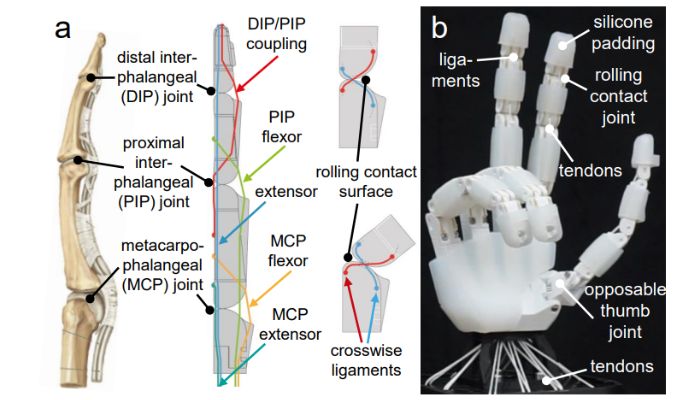
3D printed Faive hand with tendons and a thumb joint (photo credit: ETH Zürich)
This human-like hand stands out due to its fluid and unrestricted motions, enabling it to execute intricate and skillful activities with precision. In contrast to traditional control approaches based on models, the scientists opted for reinforcement learning (RL) in this instance. RL is especially well-suited for intricate and lifelike robotic configurations such as this one, which demands meticulous and delicate actions and attributes. The Faive Hand, conceived within the Soft Robotics Lab, was fabricated through 3D printing and is propelled by servo motors.
More from the desk
Six other notes from the rest of the bench.
 ApplicationsLockheed Martin Announces Partnership With Sintavia For Metal Additive ManufacturingMetal additive manufacturing finds its place in aerospace and defense in the creation of spare parts and prototypes in a short time, which can be useful for the management of supply chains. Companies all over the world are recognizing the…
 NewsFormnext 2025 Finalists Highlight Cutting-Edge 3D Printing InnovationsThe shortlist for the Formnext Awards 2025 has been unveiled, showcasing some of the most innovative applications and technologies in additive manufacturing. This year’s finalists reflect the industry’s growing emphasis on speed, sustainability, and education, with new 3D printin
 NewsYouGov Study Shows the Majority of UAE Residents Think Government Should Invest in 3D PrintingFor the past few years, it has been clear that 3D printing is growing more mainstream as a technology. Now, that acceptance in the United Arab Emirates (UAE) has become clear thanks to a recent YouGov survey. It found that…
 NewsHow Can NFTs Be Used in 3D Printing?NFT, blockchain, Ethereum, Ether, cryptocurrency, eWallet, Metaverse…You’ve probably come across these terms often in recent months. After all, they can be found in numerous headlines and fuel the debate on whether digital asset trading is just another investment bubb
 News3DBGPRINT Is Looking to Go Even Further for 3D Printing in BulgariaWhen it comes to adoption of additive manufacturing, it goes without saying that 3D printing service providers are truly the unsung heroes of our industry. Service bureaus are exceptional because in additional to often selling AM solutions, they are also…
 SoftwareFree Float, SLM Solutions’ Software to Reduce Metal 3D Printing Support StructuresSLM Solutions, a leader in the field of metal additive manufacturing, recently unveiled its latest innovation: Free Float. This software reduces the amount of 3D printing support materials needed to build a part. As a result, users will be able…