News
How Can NFTs Be Used in 3D Printing?
NFT, blockchain, Ethereum, Ether, cryptocurrency, eWallet, Metaverse…You’ve probably come across these terms often in recent months. After all, they can be found in numerous headlines and fuel the debate on whether digital asset trading is just another investment bubb
- 3 min read
- News
- Six more stories
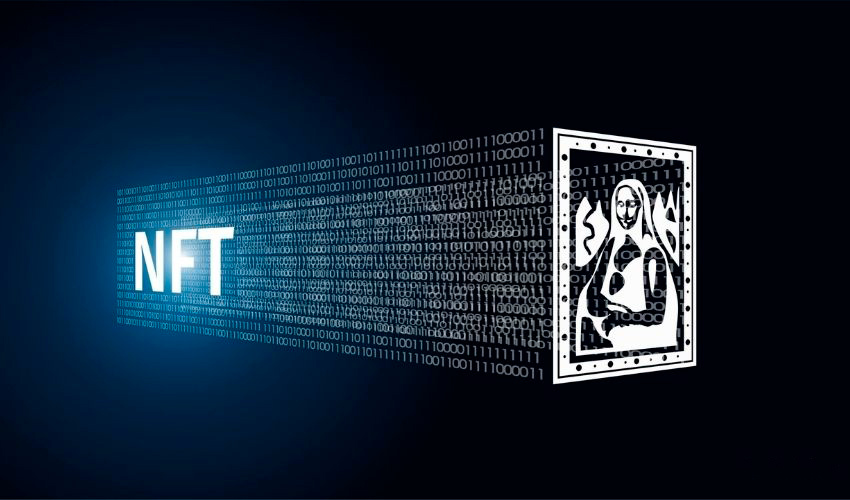
NFT, blockchain, Ethereum, Ether, cryptocurrency, eWallet, Metaverse…You’ve probably come across these terms often in recent months. After all, they can be found in numerous headlines and fuel the debate on whether digital asset trading is just another investment bubble or whether the hype has the potential to usher in a new era after all. For artists and investors in particular, this question seems to be of great importance. But what are the buzzwords all about? What is the definition of NFT and why is it important? And how might a digital market be of interest to additive manufacturing? We spoke with Danit Peleg, fashion designer known for her 3D printed garments and Ioan Florea, creator of the first 3D printed art collection, to find out what art creators hope to gain from cryptocurrency, especially artists within the 3D printing community. In addition, blockchain expert Jerome de Tichey, Global Head of Client Success at Ledger and President at Ethereum France, gave us insights into the legal challenges surrounding NFTs.
What are NFTs?
Although it may seem that NFTs are still a fairly recent phenomenon, they actually emerged back in 2014/2015. But first, let’s clarify what NFTs are in the first place: NFT stands for non-fungible token, which means that they are not interchangeable. However, in order for this uniqueness of tokens to make sense, it is first important to understand that a Non-Fungible Token has a certain value similar to other well-known forms of currency such as the Euro or Bitcoin. However, compared to Bitcoin, an NFT is not interchangeable with another NFT, they have an individual identification code and cannot be exchanged one-to-one with each other (as would be the case with Bitcoin or Euro). Due to this, it is possible to mine digital goods of any kind (such as illustrations, video clips, social media posts) and assign them a certain value.
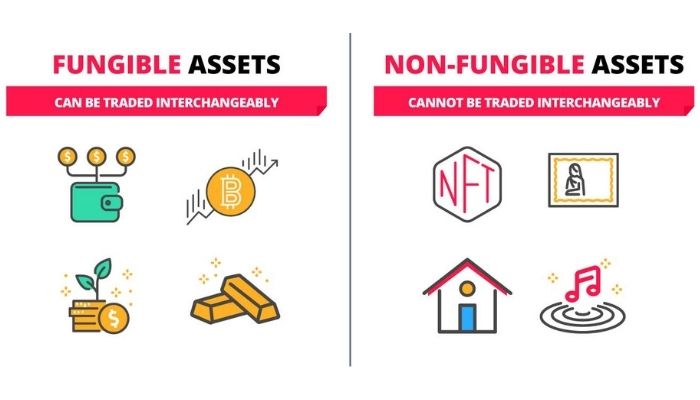
The difference between fungible and non-fungible assets
Let’s take a look at some of the works that have already been successfully sold as NFTs. The most expensive work is a JPEG file with the name “Everyday: The First 5000 Days” which was auctioned off by Christie’s at the beginning of the year for an incredible $69 million USD. It is a collage of 5,000 individual artworks by the artist Beeple (Michael Joseph Winkelmann), making the American one of the three most valuable living artists. Another well-known example includes the first Twitter post by Twitter co-founder Jack Dorsey, which sold for $3 million USD.
More from the desk
Six other notes from the rest of the bench.
 News#3DOpinion | What Is the State of the AM Market in the Beginning of 2024?We’ve all seen the headlines. Coming to the end of 2023 and the beginning of 2024, the 3D printing market has been inundated with thought pieces with titles claiming that 3D printing was dying, or that it failed to live…
 Guides#Working3D: Six Questions for a Footwear EngineerWe have seen in numerous projects how 3D printing is being used to make shoes. This is especially the case for the consumer goods sector, where we are seeing particularly fashionable examples, but also sports shoes, which enable greater performance…
 Printers#3DExpress: Sintratec Announces Closure Following BankruptcyWe are back with #3DEXPRESS to show you all the highlights of the news from the additive manufacturing sector this week! First, after a decade of business, Sintratec has begun to cease operations as of May 7th, 2024. Next, Massivit takes…
 GuidesSoliquid is the startup doing large-scale 3D printing in suspensionSoliquid is a French startup that has developed a unique 3D printing technology. Instead of depositing the material layer by layer on a tray, it extrudes it into a durable and reusable gel matrix using a 6-axis robot. The young…
 NewsVolkswagen continues to produce 3D printed parts with HP Metal JetIn September 2018, the American manufacturer HP announced the arrival of its metal 3D printer, the HP Metal Jet. Among the first users of the technology is the car manufacturer Volkswagen. For the past year, the German company has been…
 NewsTop 5: Markforged’s 3D Printed Movie PropsHello and welcome to our first Top 5 videos of 2023. We have a selection of exciting videos for you this week, from Markforged’s parts made for film, to Shining 3D and their scanning settings. There is also a video…