Applications
Researchers 3D Print Networks of Living Nerve Cells
The world of 3D printing continues to serve as a means of advancement in the medical and scientific worlds. This time, it’s in the field of neuroscience that the technology has taken a giant step forward. Researchers at Melbourne’s Monash…
- 3 min read
- Applications
- Six more stories
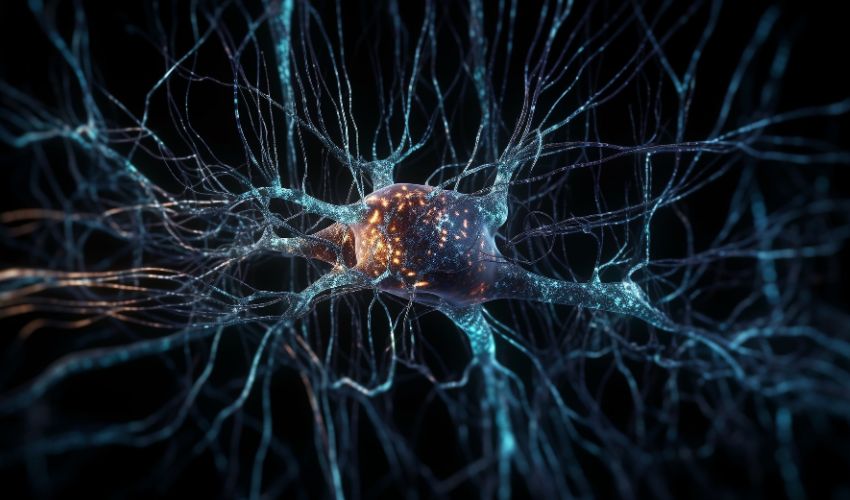
The world of 3D printing continues to serve as a means of advancement in the medical and scientific worlds. This time, it’s in the field of neuroscience that the technology has taken a giant step forward. Researchers at Melbourne’s Monash University have developed a 3D printing technique for creating three-dimensional nerve networks using bioink with living nerve cells, specifically brain cells in rats for the time being. These three-dimensional structures can mimic the complex connections found in the human brain in an exceptional way.
This breakthrough opens up new opportunities to explore neurological disorders, evaluate drug efficacy, and deepen our understanding of how our nervous system functions. By opting for a tissue engineering methodology combined with bioprinting, scientists have succeeded in reproducing the configuration of the ‘grey-‘ and ‘white matter’ seen in the brain. This approach involves the use of two distinct types of bioink, one containing living cells and the other composed of non-cellular materials. The 3D printer begins its work by superimposing layers containing living cells with cell-free layers. This process mimics the way the brain alternates between white and grey matter. Special electrodes are also inserted at regular intervals to stimulate the growth of the neural network and record its activity.

As a promising avenue for research, bioprinting could eventually put an end to animal testing (photo Credits: Freepik)
According to Professor John Forsythe, who led the study in the Department of Materials Science and Engineering, 2D nerve cell cultures have previously been used to explore nerve network formation and pathological mechanisms. However, these relatively flat structures failed to reproduce the three-dimensional complexity that truly characterizes nerve tissue.
More from the desk
Six other notes from the rest of the bench.
 NewsTop 5 Videos: 3D Printing “Soft Motors” for RobotsThis week, we have a great lineup of thought-provoking videos related to 3D printing. First up, watch a video from Oregon State University on how their research teams are working on printing reactive material for robots. Second, learn from Professor…
 NewsWhat to see at Formnext 2019!Formnext is undoubtedly the largest fair dedicated to additive manufacturing: for 5 consecutive years, it has brought together thousands of international players and helps strengthen the position of 3D printing technologies in the industry. This year, it opens its doors…
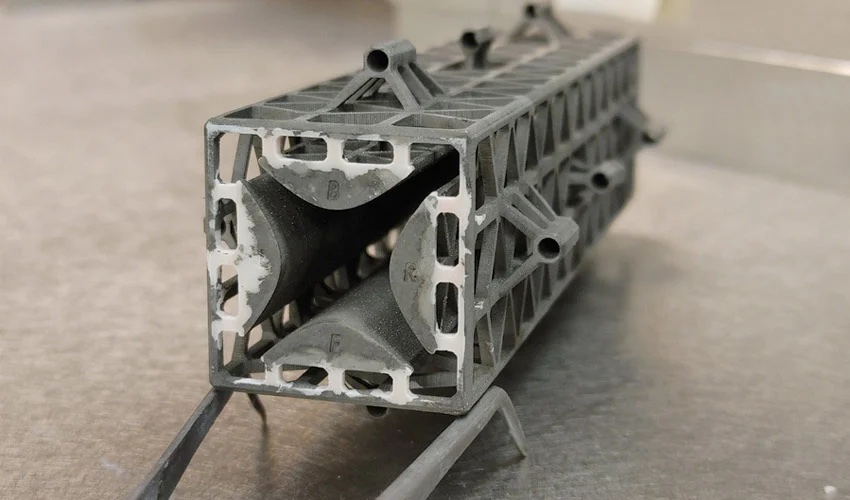 NewsThe Mass Spectrometer Filter 3D Printed in Just a Few HoursAt MIT, a team of researchers led by Fernando Velásquez-García has developed a 3D printed filter for a mass spectrometer. This device, designed to detect molecular structures by measuring their mass, has traditionally been bulky, fragile and, because of its…
 NewsEBM vs L-PBF: Which Metal Powder Fusion Process to Choose?Metal additive manufacturing has grown by leaps and bounds in recent years, making it possible to create complex shapes with enhanced performance and quality. The processes that offer these possibilities are numerous: powder bed fusion, directed energy deposition, binder jetting,
 NewsSelf Repairing Cities: 3D printing repair dronesBroken roads, potholes and lengthy construction work in connection with road closures or traffic jams is probably something everyone knows too well. Using 3D printing in combination with drones and robotics could soon make this problem a thing of the…
 NewsTOP 5 videos of the week: Stratasys, SHRMP and more!A new selection of the best 3D printing videos of the week, just for you! Find our TOP 5 videos of the week below and tell us what your favorite video is in a comment or on our Facebook and Twitter page.…