News
Recent Report Highlights Sustainability Within Metal Additive Manufacturing
We have known for a while that sustainability is a key benefit of additive manufacturing. There are already many examples of this: for example, in architecture, all kinds of consumer goods, and even lithium batteries. A recently published report now…
- 3 min read
- News
- Six more stories
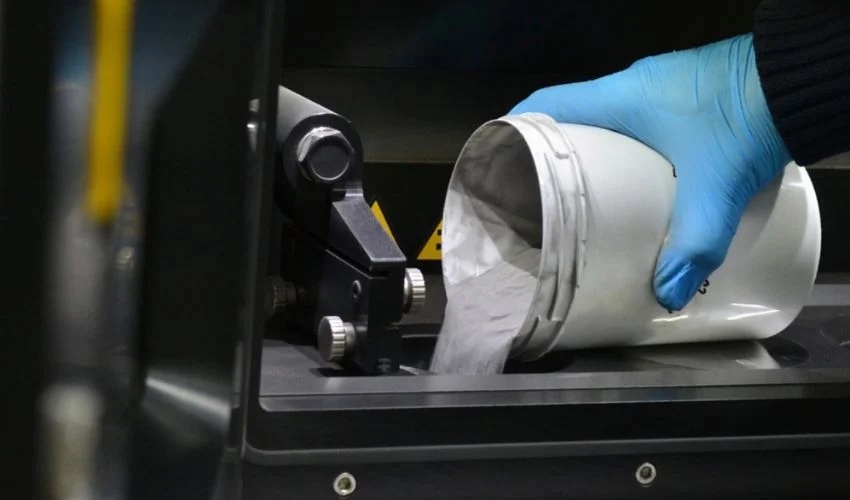
We have known for a while that sustainability is a key benefit of additive manufacturing. There are already many examples of this: for example, in architecture, all kinds of consumer goods, and even lithium batteries. A recently published report now provides specific information on sustainability when it comes to metal additive manufacturing along the entire value chain. Specifically, this analysis addresses key questions of sustainability in additive manufacturing compared to traditional methods, such as the factors which ensure a lower carbon footprint and how users can achieve their personal or corporate CO2 goals thanks to additive manufacturing. We have taken a closer look at the results of the report here.
Looking back over the past decades, the ever-increasing CO2 in our atmosphere and the underlying consequences for people, nature and the planet are truly worrying. To help companies directly reduce their carbon footprint, additive manufacturing has increasingly been coming into play throughout the production cycle. To assess sustainability, AMPOWER has designed a calculator to evaluate the CO2 footprint of different technologies. This has produced quantitative evidence that the CO2 emissions of Powder Bed Fusion are significantly lower than those of milling. The reason for this is that weight-optimized constructions can be produced by the former method and therefore the material and energy input are lower. Binder jetting, which has low emissions throughout its process from 3D printing to debinding, performed surprisingly well.
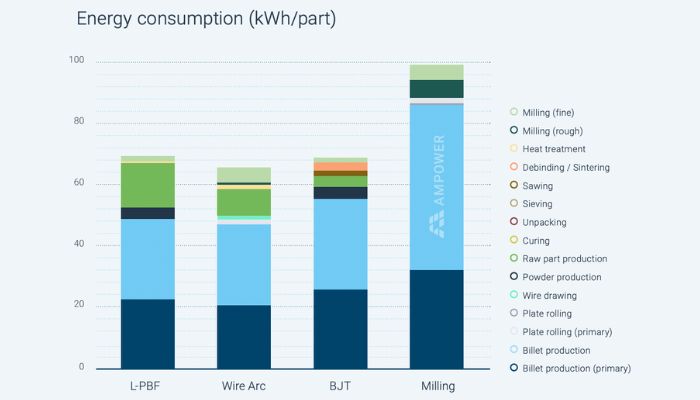
The detailed energy consumption for each step of several methods.
Achieving Sustainability Through Additive Manufacturing
An important point to consider when it comes to sustainability is the different types of energy used in production. For example, other industrial processes and manufacturing technologies – casting for example – generate heat and therefore direct CO2 emissions by burning fossil fuels. In contrast, additive manufacturing of metals uses only electrical energy, which means that this required energy results in a different amount of carbon emissions.
More from the desk
Six other notes from the rest of the bench.
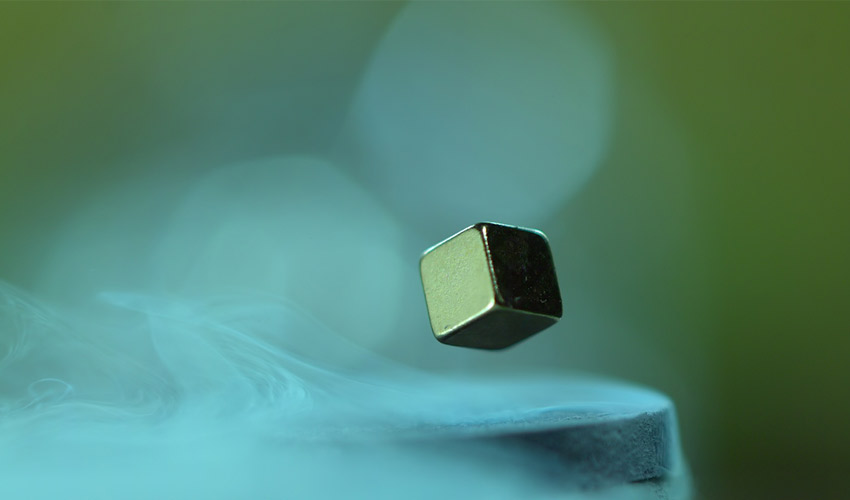 MaterialsResearchers Develop New Method to 3D Print MagnetsTeams from the Jean Lamour Institute (IJL), the Materials Science research laboratory of the University of Lorraine, have developed a method for producing magnets with a desktop FDM 3D printer. The researchers claim to have succeeded in integrating magnetic properties…
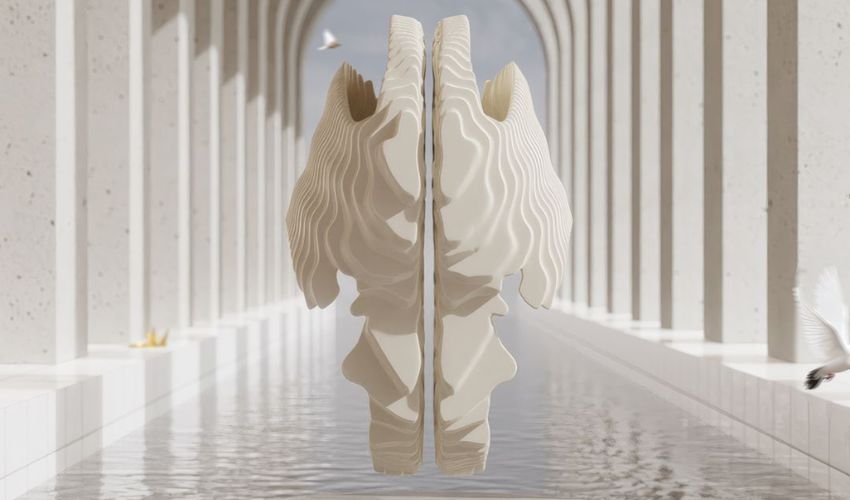 NewsChris Brown Launches Limited Edition 3D Printed Slides by ZellerfeldZellerfeld, a leading company in the 3D printed footwear industry, has just announced the early release of the NAMI Slide, a collaboration with global superstar Chris Brown, Nos Ailes, and The Auracles, a streetwear and culture company. These limited edition…
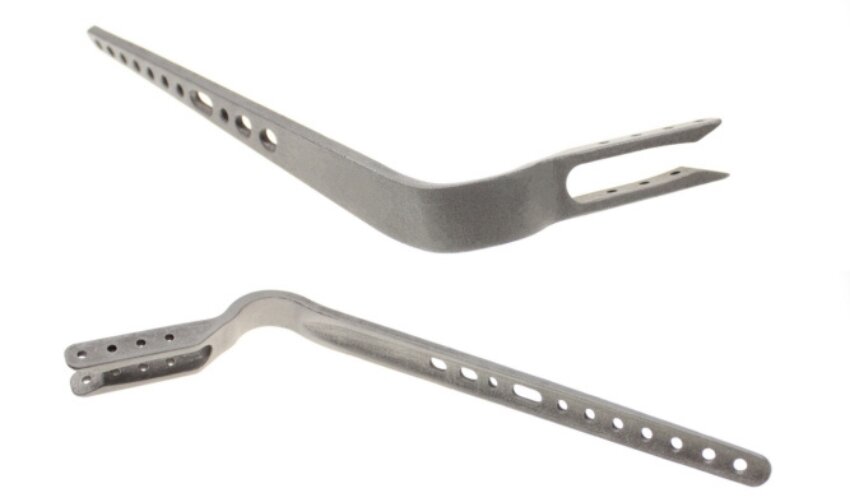 ApplicationsApplication of the Month: Customized 3D-Printed Titanium Shoulder Arthrodesis PlatesIn recent years, the rapid development of additive manufacturing technology in healthcare has led to significant advances in research, drug development and the production of prostheses, implants and medical devices. In the latter case, metal 3D printing in particular has…
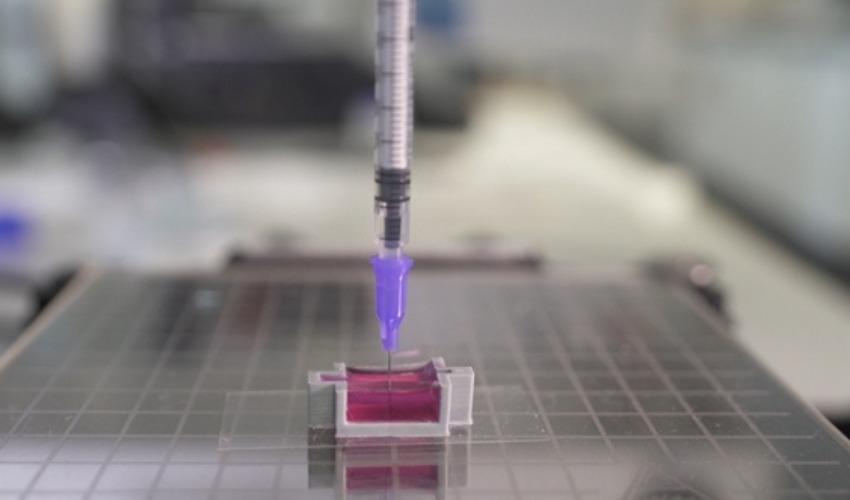 MaterialsUNSW Scientists use new bioink to create 3D printed boneScientists from the University of New South Wales (UNSW Sydney), a leading research and teaching university in Australia, have developed a ceramic-based ink that could allow surgeons to create 3D printed bone parts with actual living cells. We’ve seen recently…
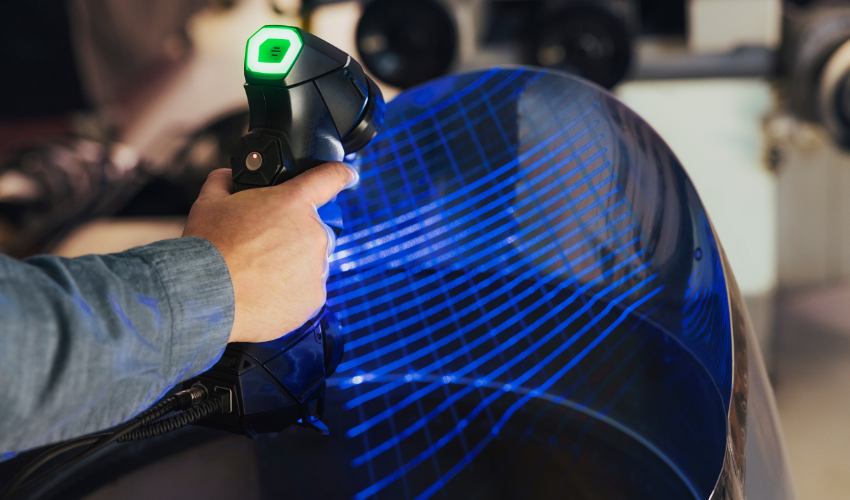 PrintersCreaform’s 3D Scanning and Software Solutions for Reverse Engineering in Additive ManufacturingMany industries have recognized the potential of 3D printing for efficient and sustainable production. Additive manufacturing allows individual parts or small batches to be produced relatively inexpensively, on demand and on site, guaranteeing a ready supply of spare parts, among
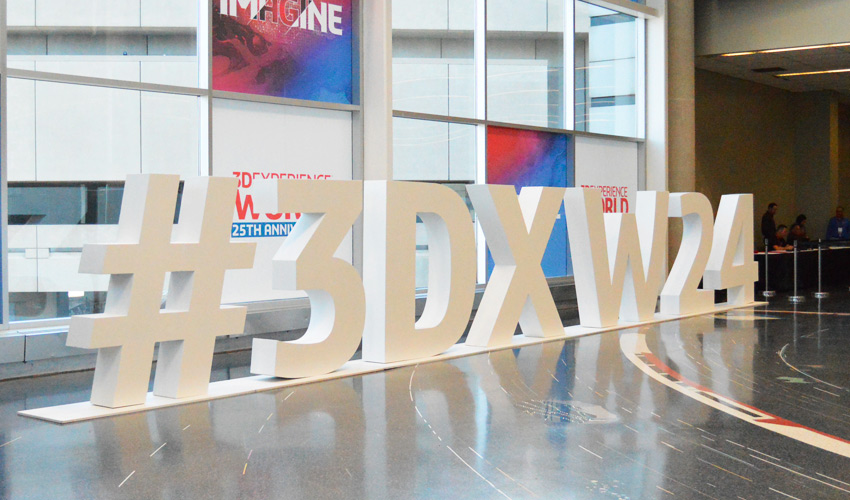 Software3DEXPERIENCE World 2024: Design, Technology and Innovation in the Spotlight3DEXPERIENCE World 2024 has come to an end. The 25th anniversary of the event organized by Dassault Systèmes took place in Dallas, Texas, from February 11-14, with the aim to bring together a community of engineers, entrepreneurs, manufacturers and industry…