Applications
Redwire to Explore the Feasibility of 3D Printing With Lunar Dust on the ISS
On August 10th, Northrop Grumman plans to launch its 16th commerical resupply service mission. As the name suggests, the Cygnus spacecraft will be carrying crew supplies, scientific research, and hardware to the orbiting laboratory. As part of this mission, supplies…
- 3 min read
- Applications
- Six more stories
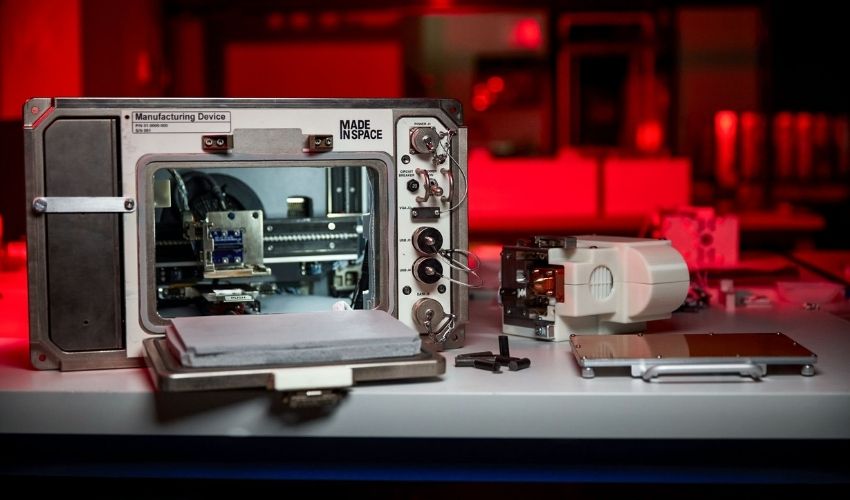
On August 10th, Northrop Grumman plans to launch its 16th commerical resupply service mission. As the name suggests, the Cygnus spacecraft will be carrying crew supplies, scientific research, and hardware to the orbiting laboratory. As part of this mission, supplies will be sent will be scientific experiments to add to the various studies conducted in the past 20 years at the orbiting lab. One of these will be the Redwire Regolith Print (RRP) study, which will involve 3D printing loose rock and soil (regolith) on the international space station (ISS) to determine whether it can be used for on-demand construction of habitats.
According to Michael Snyder, chief technology officer at Redwire, this will be the first time that the Additive Manufacturing Facilitiy (AMF) in the ISS will be used to test a manufacturing technique itself and not just a part. As part of the experiment, a new build plate and extrusion will be installed in the manufacturing facility and researchers will be printing specimens, notably plates, which will be ultimately be brought down to Earth for testing. The goal is to ultimately figure out if there is a difference between 0g and 1g, helping them to understand if it will be necessary to incorporate design tolerances.
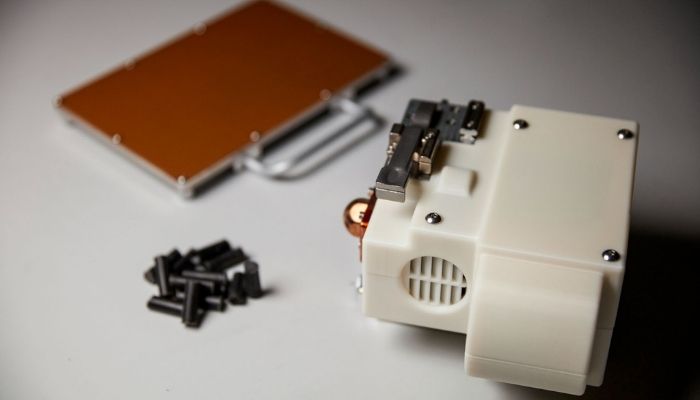
The Redwire Regolith Print (RRP) facility suite including the RRP print heads, plates and lunar regolith simulant feedstock. (Photo Credits: Redwire Space)
Testing for the RRP study is the culmination of years of work including the centennial 3D printed habitat challenge to try to find a solution to create habitats on the Moon and Mars. Focus has been on using soil or regolith (loose unconsolidated rock and dust that you can find on Earth, the Moon and Mars) not just because it is more sustainable but also because it will cut down on the amount of supplies needed to bring to the Moon or Mars, important as it could reduce both waste and costs on future space missions. If the experiments are successful, then scientists can consider using resources already available on planetary bodies as the raw materials for on-demand construction of housing and other structures.
More from the desk
Six other notes from the rest of the bench.
 NewsDo Shapeways and voxeljet’s Announcements Indicate Growing Momentum in AM?2024 has not been the most straightforward one for additive manufacturing. While we have seen incredible applications and innovations throughout the year, there have also been a number of economic difficulties. Notably, we have seen companies like KIMYA closing and…
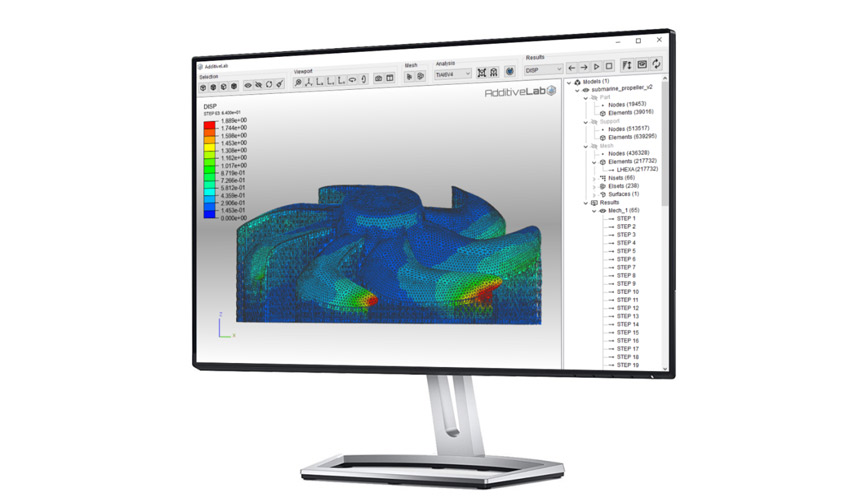 Software#3Dstartup: AdditiveLab and its simulation software for metal additive manufacturingTo start the year off right, we take you to Belgium to meet AdditiveLab, our first #3Dstartup this year. Winner of the Start-Up Challenge 2019 organized by Formnext, the company has developed software solutions to simulate the entire additive manufacturing…
 GuidesOur Guide to Intellectual Property in 3D PrintingIntellectual Property is a controversial and sometimes confusing issue. The moniker covers such a broad spectrum, that it requires years of experience to master. This is bad for designers who want to create 3D-printed models and share them for both…
 NewsMcDonald’s Is Turning to 3D Printing in Its RestaurantsIt seems that fast-food chain McDonald’s recently turned to 3D printing not to design new hamburgers, but to imagine the lighting fixtures for its restaurants around the world. For this, the multinational turned to Philips and additive manufacturing, after having…
 Guides#3DStartup: Fluent Metal and its Powder- and Laser-Free Metal 3D Printing TechnologyMetal additive manufacturing brings its share of benefits to the industry, with several processes, all of which are suited for different needs and constraints, falling under its umbrella. While powder-based processes are mainly favored by professionals, others are gaining ground.
 NewsNano Dimension Announces Acquisition of Machine Learning Leader DeepCubeNano Dimension announced yesterday that it has signed a definitive agreement to acquire DeepCube Ltd. for approximately $40 million in cash and $30 million in American Depositary Shares (ADSs) of Nano Dimension. Nano Dimension is a key player in the…