Applications
RAF Squadron Opens AM Center For Innovation
The RAF’s 71 (IR) Squadron has opened a new additive manufacturing hub with which they hope to use metal 3D printing for the repairs of metal aircraft parts. The creation, named the Hilda B Hewlett Centre for Innovation, promises to…
- 3 min read
- Applications
- Six more stories
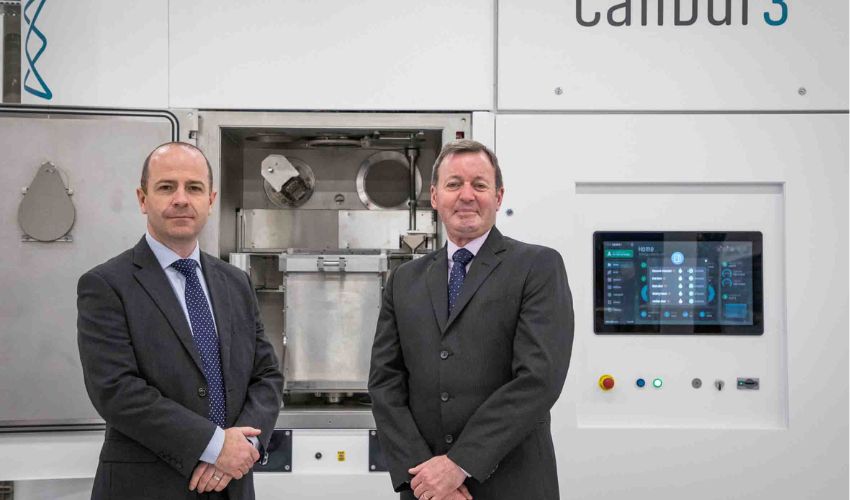
The RAF’s 71 (IR) Squadron has opened a new additive manufacturing hub with which they hope to use metal 3D printing for the repairs of metal aircraft parts. The creation, named the Hilda B Hewlett Centre for Innovation, promises to kickstart the RAF’s use of additive manufacturing to increase capabilities. In the ceremony, the opener Air Chief Marshal Sir Mike Wigston thanked the squadron, the RAF Rapid Capabilities Office and Project Astra (which aims to build the ‘Next Generation RAF’) for their work in making the project a reality.
The project has been two years in the making, having been started by Squadron Leader Hayward in 2020 (then commanding officer of No. 71 Squadron). In 2021, a £3million contract was offered by the RAF High Wycombe, and eventually awarded to Wayland Additive. The company will now supply their Additive Calibur3 3D printer for its very first use. They are the only supplier on the market which uses Neubeam technology, a patented method which neutralizes the electron charge associated with the electron beam powder bed fusion process. In this way, it claims to overcome many of the disadvantages of electron beam and laser PBF processes. Furthermore, the RAF will have at their disposal the Nikon HTX 540 CT scanner, which can examine objects in minute detail, as well as a Stratasys Fortus 450 polymer printer and RenAM 500 metal printer from Renishaw.
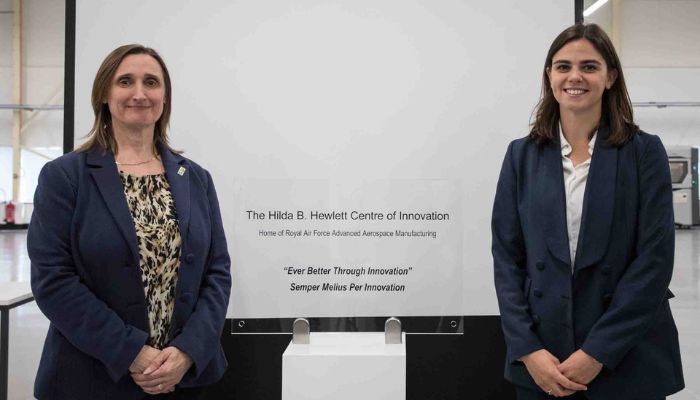
Personnel in the new Hilda B Hewlett Centre for Innovation
The importance of the center was made clear by the RAF. They pointed out that in 2020 alone, they could have achieved 25 days of extra aircraft availability using 3D printing solutions. Furthermore, the quality, speed, and cost of low-volume, high-value parts can be improved by 10 times through use of this technology. The RAF also point out that success could lead to endorsement and adoption of additive manufacturing throughout the defense industry. Indeed, some parts of certain sectors have already begun use of the technology. The Ministry of Defence has recently awarded a £3-5 million contract for 3D printed metal parts with the possibility of further future investment. As for the US, the Navy has opened an AM Center of Excellence which promises to promote and endorse additive manufacturing for needed parts, such as submarine components.
More from the desk
Six other notes from the rest of the bench.
 NewsEssentium Survey shows that investments in AM are paying offIn early February, Essentium, Inc announced the results of the second in a series of findings from independent global research on the current and future use of industrial 3D printing. We previously covered the first survey published in 2019, which…
 MaterialsWhy is the global filament material market expected to grow significantly?The research firm Ameco Research has just released a report on the global 3D printing filament market – they have predicted that from 2017 to 2024, the market will grow from $ 255 million to $ 1,189 million, which represents…
 NewsTop 5 Videos: The 3D Printers That Make SpaceX RocketsThis week, we present to you the different 3D printers and technologies that have been helping SpaceX automate rocket production. Then, we take you to Lyon, where Dr. Marquette and his team are leading the BLOC-PRINT project, which aims to…
 MaterialsBridging in 3D Printing: Everything You Need to KnowUsing a 3D printer, whether for professional or hobbyist purposes, can be an exciting journey filled with surprises. However, not all surprises are positive; some may present challenges. We have previously discussed common printing issues like stringing, ghosting, and warping,&he
 PrintersThis Made in the USA SLS 3D Printer Is Under $3000As 3D printing technology matures, we have seen a sharp increase in demand for industrial technologies. However, price remains a significant obstacle for many, especially when it comes to technologies with lasers, unlike FDM which has more cheap solutions available.…
 GuidesBeamler facilitates the integration of additive manufacturing in the industryBeamler is a startup based in Amsterdam and present in Germany that wants to facilitate the integration of 3D printing technologies in companies in 4 steps. It is aimed at different sectors such as aerospace, the automobile or the maritime…