Materials
Are powders a barrier to the development of metal additive manufacturing?
Equispheres is a Canadian company that specialises in the development of metal powders, particularly for additive manufacturing technologies such as laser powder bed fusion or cold spray. Drawing on its experience on the market, Equispheres recently conducted a study investigatin
- 3 min read
- Materials
- Six more stories
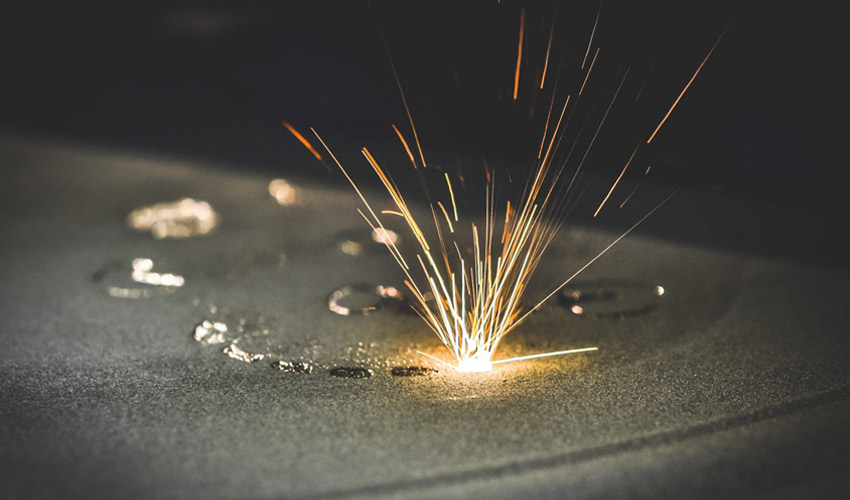
Equispheres is a Canadian company that specialises in the development of metal powders, particularly for additive manufacturing technologies such as laser powder bed fusion or cold spray. Drawing on its experience on the market, Equispheres recently conducted a study investigating the main problems confronting metal 3D printing and printers and more particularly the powder bed fusion process. According to the company, the choice of metal powder can result in more or less significant problems such as irregular mechanical properties for the final part, a reduced production speed and therefore reduced efficiency, etc. For Equispheres, this technology needs metal powders designed specifically for additive manufacturing, taking a number of factors into account. If raw material does not meet specific criteria, then laser powder bed fusion processes will not be satisfactory: this is where the main problem in 3D metal printing lies.
Much has been said about the growth of metal 3D printing in recent years, with studies highlighting the increased number of manufacturers on the market. The Wohlers 2018 report indicated around thirty players, offering more than 125 machines geared towards increased productivity to reduce a production cost that is still too expensive. In the end, the real issue is not the printers, but rather the lack of developments of adapted and innovative materials: while the polymer market sees new solutions appearing every day – many specially designed for additive manufacturing – the metal materials market is stagnant. Currently, the metal powders used in 3D printing are mainly made using gas atomization, a method not suitable for the production of materials with properties that are sufficiently constant from one production to another.
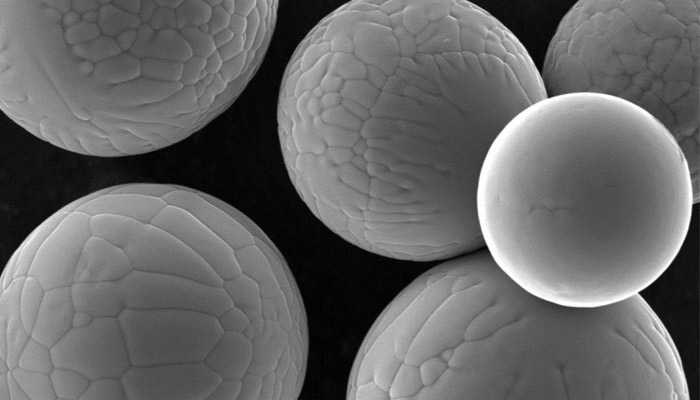
Powder is one of the principle obstacles to the development of metal additive manufacturing
Metal powders’ properties, Metal AM’s problem
Equispheres notes in its study that metal additive manufacturing often faces issues with process reliability and productivity, both challenges directly related to the material itself. According to the company, metal powders must possess 4 essential qualities : high fluidity, high distribution density, low moisture absorption and high chemical stability for when the laser heats up.
More from the desk
Six other notes from the rest of the bench.
 ApplicationsTaking AM to The Streets: How BASF Forward AM Enables Automotive SolutionsThe automotive industry is undoubtedly one of the sectors that has most adopted additive manufacturing technologies, for the development of prototypes at first, and for the creation of end-use parts currently. According to the study published by SmarTech Publishing, this…
 NewsTOP 5 VIDEOS: 3D printed product line for gamers…This week we found the top 5 videos about 3D printing and the way additive manufacturing is shaping our society. The technology has infiltrated many sectors, from medical to space! Check out our selection of the week to keep up…
 News3DExpress: 3D Models of “Pillars of Creation” and Announcements at RAPID + TCTWe are back with #3DEXPRESS to show you all the highlights of the news from the additive manufacturing sector this week! First up, Colibrium Additive, a subsidiary of GE Aerospace, unveiled several innovations, including the latest model of the Spectra printer…
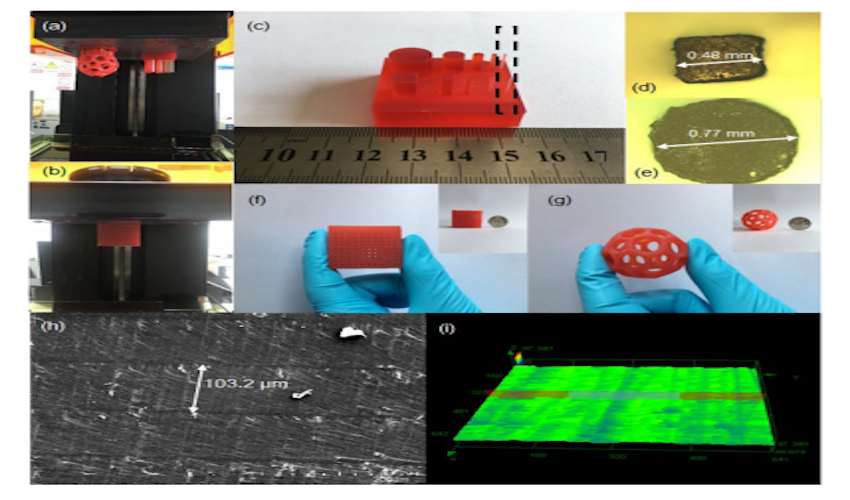 MaterialsResearchers develop 3D printing resin from vegetable oilWith global concern for fast depleting natural resources and environmental pollution growing, sustainable economy has been a hot topic in recent years. More and more companies are starting to feel the need to invest in circular economy development, and the…
 NewsTop 5: 3D Printed Custom GlassesHello everybody, and happy Sunday! We hope you had a good week and are enjoying our content (in the run up to Formnext, you might particularly like our news coverage of the event). This week, we have an exciting collection…
 ApplicationsDynamic Interface Printing: The New, Faster and More Accurate 3D Bioprinting Technique3D printing has transformed manufacturing in a variety of industries, enabling everything from the production of prototypes to the creation of complex biomedical structures. Among current technologies, digital light processing (DLP) has become especially popular for its speed and