Applications
Dynamic Interface Printing: The New, Faster and More Accurate 3D Bioprinting Technique
3D printing has transformed manufacturing in a variety of industries, enabling everything from the production of prototypes to the creation of complex biomedical structures. Among current technologies, digital light processing (DLP) has become especially popular for its speed and
- 3 min read
- Applications
- Six more stories
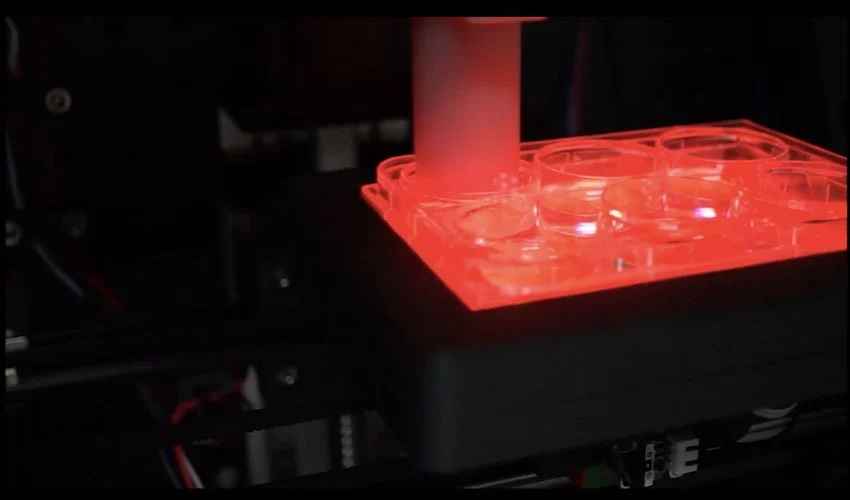
3D printing has transformed manufacturing in a variety of industries, enabling everything from the production of prototypes to the creation of complex biomedical structures. Among current technologies, digital light processing (DLP) has become especially popular for its speed and accuracy. However, this approach faced limitations in terms of material uniformity and heat dissipation – until now! Researchers at the University of Melbourne have come up with an innovative solution: Dynamic Interface Printing (DIP), a technique that promises to revolutionize bioprinting.
The new DIP process was presented in the journal Nature and introduces a disruptive approach that shifts the printing point to the meniscus, i.e. the surface curve of the precursor liquid. This strategic shift enables greater control over material flow and optimizes heat dissipation, two crucial elements for high-precision, high-speed 3D printing.
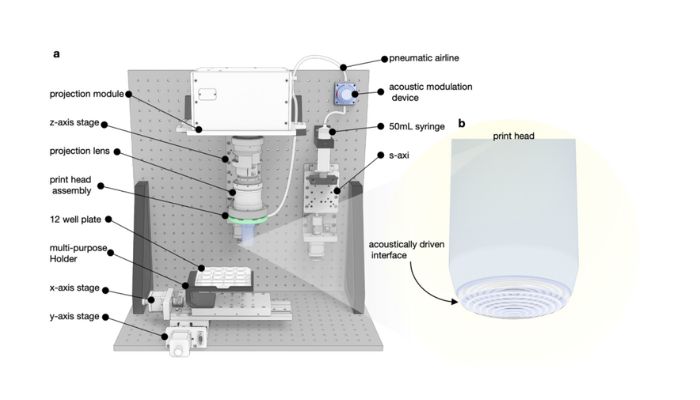
CAD model of the DIP printing system and its mechanical components.
What Makes This New Process Special?
The Dynamic Interface Printing process uses a pressurized tubular printhead that sits above a tank of liquid. This head is designed to project light patterns onto the meniscus, i.e. the surface of the liquid, through controlled acoustic vibrations. This step allows the printing surface to be shaped and stabilized. This process allows the material to build up uniformly and continuously, avoiding heating problems and printing errors. The printing speed with DIP can reach 0.7 millimeters per second, a considerable advance over what we knew until now.
More from the desk
Six other notes from the rest of the bench.
 PrintersThe Dental Resin 3D Printers Currently on the MarketThe dental industry is one of the sectors that makes the most use of additive manufacturing to provide customized devices tailored to each patient. Using 3D scans or medical imaging data, dental professionals can create precise 3D models and print…
 NewsTop 5 Videos of the Week: Stratasys, HP, & More!This week’s Top 5 Videos contain a variety of videos, including videos from Stratasys, HP, Michelin, and more. They display how 3D printing is being used to advance in healthcare, safety, in addition to food. Remember, a new Top 5…
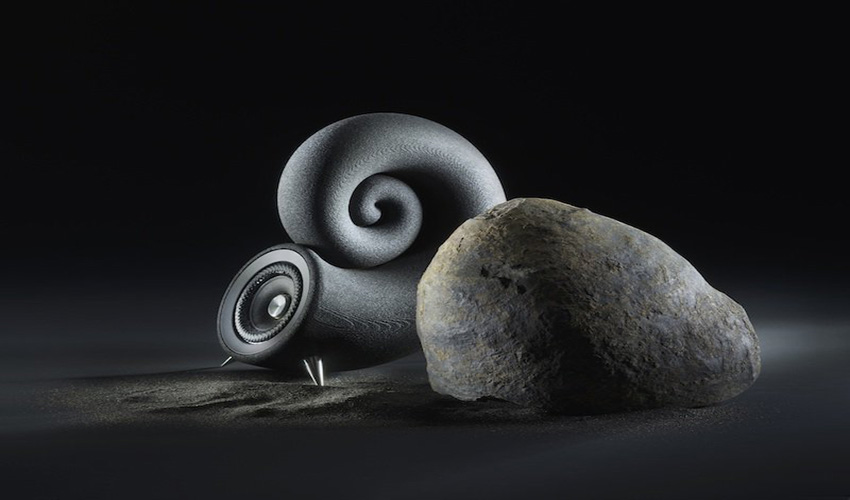 NewsWorld’s first 3D printed speakers from sandDEEPTIME Limited is a relatively new speakers’ manufacturer based in the Czech Republic. They previously revealed the world’s first speakers 3D printed from wooden composite. Still innovating in terms of design and technology, they have just revealed their new audio…
 NewsTop 5 Videos: Hollywood’s Top 3D Printed CharactersWelcome to our compilation of this week’s most compelling 3D printing highlights. We begin with our very own video featuring Jason Lopes, CTO at Gentle Giants, as he takes the 3Dnatives team on an exclusive tour of the Hollywood Showcase…
 MaterialsThe BARBARA project develops new bio-based materials for functional prototypingIn the EU, the BARBARA project, part of Horizon 2020, aims to develop new bio-based materials with innovative functionalities. These materials are designed to be used during material extrusion, otherwise known as Fused Filament Fabrication, to create parts. This project,…
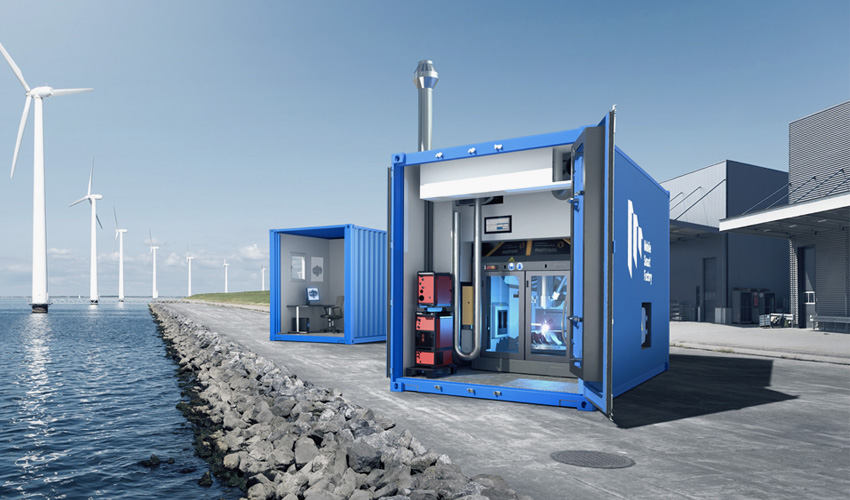 PrintersAn intelligent production module to 3D print parts on siteCan you imagine a parts factory inside a container? The so-called Mobile Smart Factory is a practical solution to bring the production process with 3D printing closer to anyone, anywhere. It is a factory inside modular containers equipped with devices…