News
PrintFoam Announces the Development of New 3D Foam Printer
PrintFoam, a start-up company founded by Alumni of MIT in Cambridge, Massachusetts, recently announced the development of the first printer hardware specializing in the industrial-scale printing of resin foams. Of all the additive manufacturing materials on the market, 3D printin
- 3 min read
- News
- Six more stories
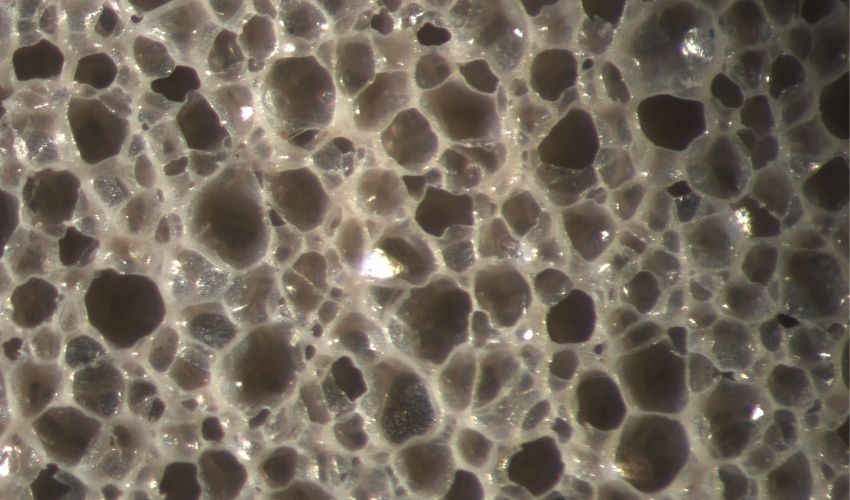
PrintFoam, a start-up company founded by Alumni of MIT in Cambridge, Massachusetts, recently announced the development of the first printer hardware specializing in the industrial-scale printing of resin foams. Of all the additive manufacturing materials on the market, 3D printing foams yet remain rather unknown to most 3D printing manufacturers. However, in today’s world, the need for lightweight structured materials is greater than ever before. In branches, such as the aerospace sector or in the creation of 3D printed homes and furniture, having a material that weighs less than any of the traditional ones is widely sought after. By focusing on finding a way to supply that demand, Mathew Pearlson, principal and co-founder of Print Foam, now announced the development of the first printing device that specializes in the industrial-scale printing of foams.
PrintFoam has come a long way since its founding a few years ago. Mathew Pearlson originally came up with the idea of creating the 3D printing foams after his time at MIT’s Laboratory for Aviation and the Environment, where he conducted research on the renewal of jet fuels. He soon discovered that environmental success would rather depend on the light weight of the entire industry than the changing of the fuel source. While keeping that in mind, Pearlson then began to look at modifying the stereolithography (SLA) process to print with foam. Not long after, Pearlson tested the concept for the foam printing project over a holiday vacation and then perfected it on an industrial desktop SLA machine. “By using a combination of novel optical patterning techniques, along with ditching a standard vat printing process, we realized it would be possible to produce plywood-sized sheets of 3D printed foam in a matter of minutes”, Matthew Pearlson explained.
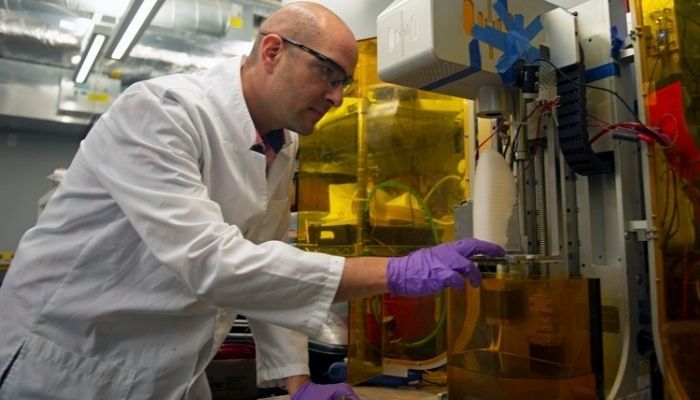
Mathew Pearlson, principal and co-founder of Print Foam (photo credits: MIT)
Introducing the Technology to Bigger Markets
PrintFoams unique resins have been around for a few years now, and have demonstrated amazing performance improvements as well as increased production speed in many applications. Although after a while, other 3D printing companies started to take notice of its benefits, larger printing platforms have not been able to introduce this unique resin technology into exciting new markets. Dr. David Walker, co-founder of Azul 3D and the executive chairman of the Photopolymer Additive Manufacturing Alliance, said about the matter that “It really is remarkable, and I haven’t seen anything like it. Everyone in the field is attempting to mimic the behavior of traditional foams using plastic lattices produced by computational models. These models keep telling engineers to generate lattices with smaller struts and smaller unit-cell. In essence, the computer is screaming at the engineer to stop what they’re doing and use a foam for the application. As a community, we haven’t been listening and acting on this.”
More from the desk
Six other notes from the rest of the bench.
 NewsWill 3D Printing Wages Increase in the Future?A 2014 study by the Employment Orientation Board was commissioned to determine the future of jobs in certain industries, concluding over 50% of jobs we know of today are likely to disappear within our lifetime. However, there are new industries…
 GuidesOur Top 10 Halloween 3D Prints For Your Spooky CelebrationsThe spookiest day of the year is finally here: it is Halloween! To help you prepare, we’ve compiled a list of our favorite STL files so you can print your own little creations at home. Best of all…they’re all free…
 PrintersNew extruder transforms METHOD 3D printer into an open materials platformThe METHOD is a professional desktop 3D printer that enables the creation of parts for industrial applications. Launched by MakerBot and based on Fused Deposition Modeling technology, the METHOD enables users to work with technical materials. Back in November 2019,…
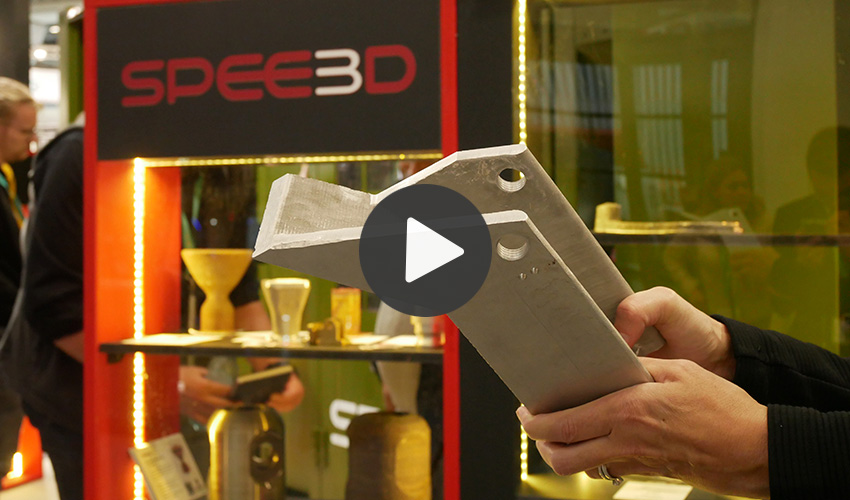 NewsSPEE3D’s Cold Spray Additive Manufacturing Technology & EMU for On-Demand ManufacturingSPEE3D is an innovative provider of metal-based additive manufacturing technologies. The Australian company focuses on the development and distribution of machines and integrated system solutions using its patented Cold Spray Additive Manufacturing technology. The products enable
 ApplicationsWorld’s First 3D Printed Trachea Successfully Transplanted in South KoreaThe continuous innovations in 3D printing within the medical field never fail to astonish, offering possibilities previously unattainable through traditional methods. Additive manufacturing, primarily valued for its capacity to tailor medical solutions, presents numerous advantag
 News3D Printed Wheel System Makes Life Easier for Shelly the TurtleStudents of the third to sixth grade at Prairie Queen Elementary School in Papillion, USA, conducted a community science project that used additive manufacturing to help a physically challenged turtle. The students, who are all members of the school’s 3D…