Materials
How 3D Printing and Polysaccharides are Building “Active” Cancer Immunotherapy Patches
In late December 2025, a research group in China published a comprehensive review on an emerging material in the microneedle landscape: natural polysaccharides. While these “complex carbs” are derived from simple plant, animal, and microbial sources, their potential f
- 3 min read
- Materials
- Six more stories
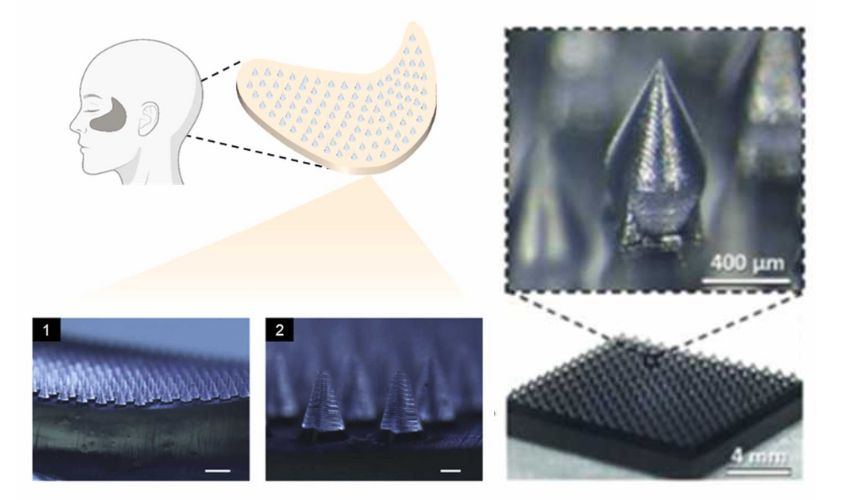
In late December 2025, a research group in China published a comprehensive review on an emerging material in the microneedle landscape: natural polysaccharides. While these “complex carbs” are derived from simple plant, animal, and microbial sources, their potential for 3D fabrication is anything but basic. Unlike traditional silicon or synthetic polymer microneedles that act as passive “envelopes,” polysaccharide microneedles (PMNs) function as active therapeutic platforms. Because they are inherently biocompatible, biodegradable, and capable of priming the immune system, they are being reimagined as a tool for cancer immunotherapy. The review, published in Glycoscience & Therapy, in part explored how micro molding and 3D printing are being used to fabricate such tools. After explaining why polysaccharides are a desirable material, we’ll get into how AM technologies specifically are unlocking their potential.
Why Polysaccharide Microneedles?
Natural polysaccharides offer a “living” alternative to the inert or brittle materials traditionally used in 3D printing. While inorganic substances like silicon and glass carry a high risk of fracturing and leaving hazardous shards in the skin, polysaccharides are bioresorbable, safely dissolving into harmless metabolites after delivery. More importantly for oncology, these complex carbohydrates are bioactive. They act as natural adjuvants that “prime” the immune system to recognize tumor cells more effectively.
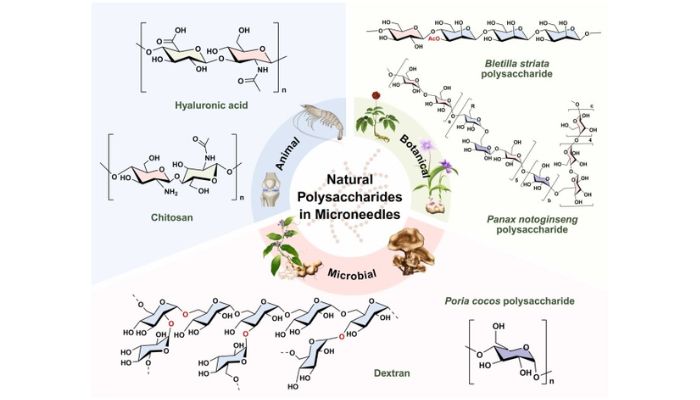
3D Printing: Addressing Polysaccharides’ Rheology
For engineers, the challenge with natural polysaccharides is their rheology and mechanical properties. While they are biological powerhouses, they often lack the structural integrity required to penetrate the skin’s tough outer barrier without buckling. To bridge this gap, the research group identified three fabrication strategies that leverage 3D printing’s precision to reinforce these soft materials.
1. Indirect Fabrication
The most common hurdle is that many polysaccharides are too viscous or structurally “soft” for high-resolution direct printing via stereolithography (SLA). To solve this, researchers use indirect additive manufacturing. In this workflow, high-resolution digital light processing (DLP) or SLA is used to print a “master” microneedle array with sub-micron accuracy. This master serves as a template to create a negative silicone mold.
More from the desk
Six other notes from the rest of the bench.
 NewsThe Printed Origami That Can Form 3D Objects in Mere Moments3D printing can be a process that requires patience. Large, complex builds often take a number of hours before completion while industrial 3D printing may take even longer still. That said, the convenience and automation of 3D printing often make…
 Applications3D Printing Optimizes Surgical Planning at a Hospital in MexicoThe Hospital Regional de Alta Especialidad “Ciudad Salud”, in Mexico, is using 3D printing as a tool to improve surgical planning in patients. This adoption by the health center, in addition to making interventions more efficient, also is expected to…
 ApplicationsRelativity Space raises $500M and is one step closer to launching Terran 1 to orbitRelativity Space, the first company to 3D print an entire rocket, has announced that it closed a $500 million Series D equity funding round led by Tiger Global Management. The funding validates Relativity’s sector-leading momentum across commercial execution, technical milestones
 NewsDanit Peleg unveils her fully 3D printed, customizable jacketCoco Chanel once said: “In order to be irreplaceable, one must always be different”. If there is a designer who has built their work around this saying it is Danit Peleg. Daring to be different, this young Israeli designer has just unveiled…
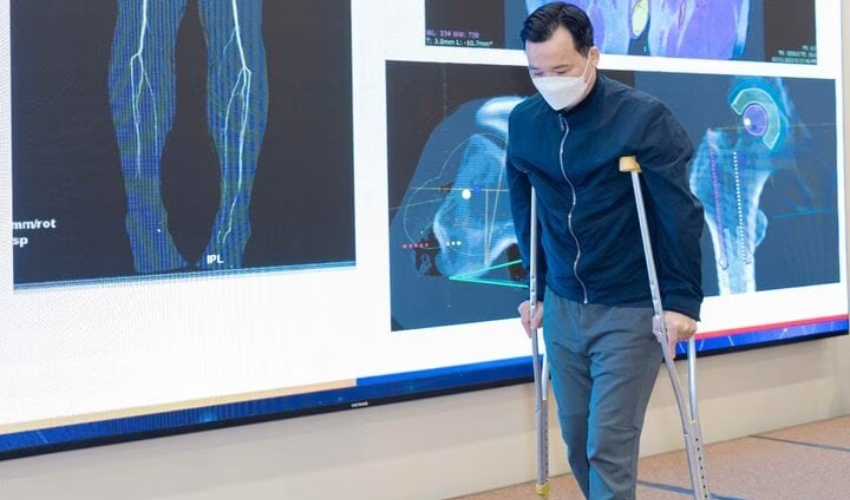 ApplicationsVietnam’s First 3D Printed Pelvis and Femur Implants Set New Standard in Bone Cancer TreatmentSurgeons at the Vinmec General Hospital in Vietnam achieved a medical milestone when they turned to advanced 3D printing. How so? By making 3D printed artificial bones that were able to replace the pelvis and part of the femur of…
 MaterialsArchiREEF’s 3D-Printed Terracotta Tiles Restoring Coral in Hong KongIn 2020, a team of scientists from The University of Hong Kong (HKU) launched ArchiREEF, a startup on a mission to restore marine life in the coral reefs near Hong Kong. We previously covered ArchiREEF’s 3D-Printed terracotta tiles but there…