Materials
PLA vs ABS: Which Material Should You Choose?
When it comes to 3D printing polymers, it can be hard to decide which one to use. This is the case for pretty much any 3D printing technology, but especially for beginners or hobbyists using FDM/FFF 3D printing for whom…
- 3 min read
- Materials
- Six more stories
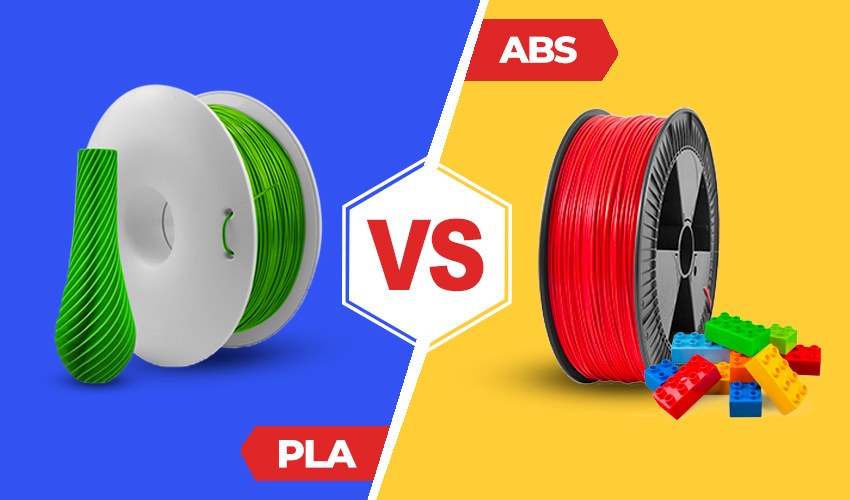
When it comes to 3D printing polymers, it can be hard to decide which one to use. This is the case for pretty much any 3D printing technology, but especially for beginners or hobbyists using FDM/FFF 3D printing for whom it can seem impossible to know which filament is most appropriate. Previously, we have broken down the differences between two 3D printing filaments, PLA and PETG. Now, we want to go even further, comparing two of the most popular and widely used filaments, PLA vs. ABS. From properties to printing requirements and more, we took a closer look at the similarities and differences of PLA and ABS to help you better understand which to use depending on your needs.
Characteristics and Properties of PLA vs ABS
Of course, when talking about the characteristics of PLA vs ABS, the first thing to consider is what they are made of. Though both are what would be considered thermoplastics, polymers that can be softened through heating before cooling and hardening, that is where the similarities end. Famously, PLA is made out of organic sources such as corn or sugar cane, meanwhile ABS, like most standard plastics, is made out from petroleum. More specifically, PLA is made from fermented plant starch from sources like corn, cassava, maize, sugarcane or sugar beet pulp. The sugar from these sources are transformed into lactic acid which is then polymerized into polylactic acid. In contrast, ABS is made up of three monomers: acrylonitrile, butadiene and styrene. Acrylonitrile is a synthetic (man-made) monomer that comes from propylene and ammonia, butadiene is a petroleum hydrocarbon and styrene is made from the dehydrogenation (the removal of hydrogen by chemical reaction) of ethyl benzene. Understandably, the makeup of these materials has an impact in terms of “sustainability” of the materials.
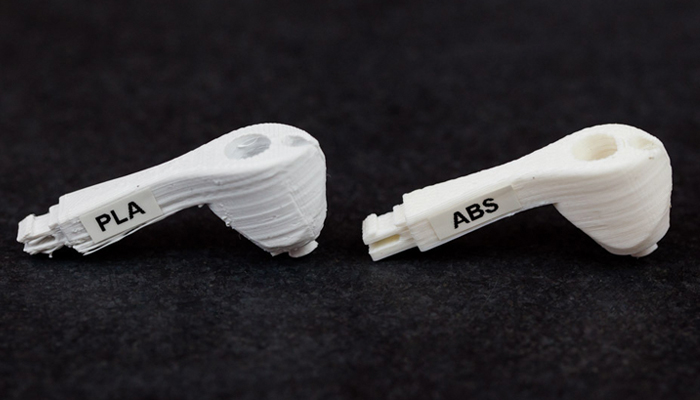
Parts 3D printed with PLA vs ABS have differences in both their appearance and properties, as can be seen above (photo credits: Fictiv).
PLA is often lauded as a more environmentally friendly material because it is in fact biodegradable. However, it is important to note however that it is only truly biodegradable under the right conditions and many towns do not have the right tools to properly degrade the material. This means that though it is possible, in actuality it would only truly be able to be done through industrial composting. Therefore, though PLA is of course more “green” than many materials, especially since it is made out of renewable resources, it is perhaps not as environmentally friendly as it is often purported to be when it comes to disposal.
More from the desk
Six other notes from the rest of the bench.
 News3D Printed Inserts That Maximize Comfort for CyclistsBased in Treviso, Italy, Elastic Interface has used additive manufacturing for the first time to design chamois for cyclists, i.e. inserts that are placed inside the shorts to maximize rider comfort. Called NX3, these inserts have a unique design and…
 NewsTop 5 Videos: 3D Printing on an Offshore PlatformHello and welcome back to the top 5 videos of the week in the world of 3D printing! While you may rest assured we’ve got a whole range of interesting stories and takes from the industry. Join us as we…
 ApplicationsDEFEND3D Talks Increasing the Security of Additive Manufacturing in the Defense SectorOne of the sectors where where we have seen rapid growth of additive manufacturing is defense. From defined additive manufacturing strategies in both the UK and the US as well as a number of applications from trainings to active warfare,…
 ApplicationsNASA’s 3D Printed Circuits Reach New Heights in Space ExplorationIn recent years, the field of additive manufacturing, also known as 3D printing, has been rapidly gaining popularity across various industries. Its ability to offer customization, innovative design, and improved performance has led to its widespread adoption in diverse fields. Am
 NewsLubrizol Strengthens its Position in the 3D Printing Sector With its Comprehensive Industrial Manufacturing SolutionOhio-based chemical company, Lubrizol, was founded in 1928 and has a strong international presence thanks to its industrial, transportation and life science solutions. The company also has launched a 3D printing division, called Lubrizol 3D Printing Solutions, where the company&h
 NewsTPM3D to Unveil New Professional SLS 3D Printer at Formnext 2025While selective laser sintering (SLS) is becoming an increasingly popular additive manufacturing process, there are still obstacles to overcome, particularly in terms of powder management, safety, repeatability, and the final quality of parts. Powder is often handled manually, an