News
A Hidden Painting by Picasso Was Reconstructed Using 3D Technologies
A few weeks ago, we brought the 3D printed replication of Michelangelo’s Statue of David at the Dubai World Expo to your attention. However it does not stop there, additive manufacturing is continuing to make news in the art world.…
- 3 min read
- News
- Six more stories
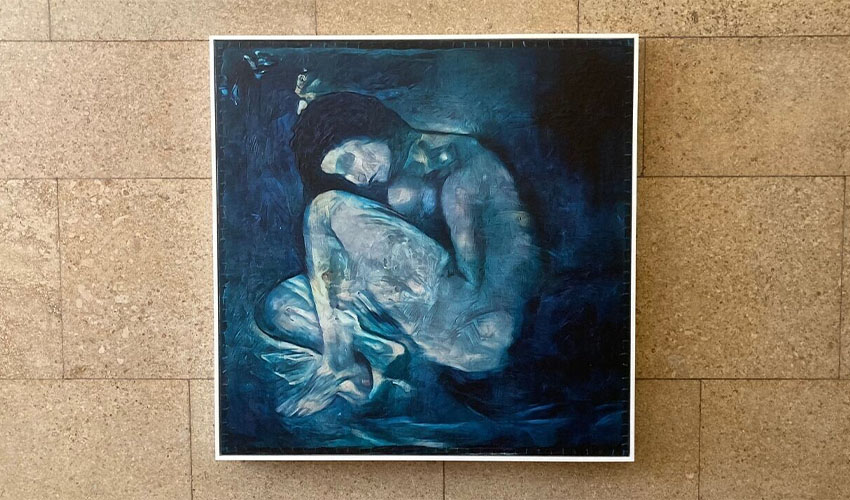
A few weeks ago, we brought the 3D printed replication of Michelangelo’s Statue of David at the Dubai World Expo to your attention. However it does not stop there, additive manufacturing is continuing to make news in the art world. Specifically, scientists have succeeded in reproducing a work of art used by 3D printing from the famous painter Pablo Picasso, which had been hidden from the world for 118 years. Entitled “The Lonesome Crouching Nude”, the painting was reconstructed by the company Oxia Palus. The company was founded by University College London (UCL) PhD researchers Anthony Bourached and George Cann and specializes in new technologies, including artificial intelligence and 3D printing.
The work has been hidden for so many years because the Spanish artist literally painted over it. He created a second work called “The Blind Man’s Meal” in 1903, a work that is well known to art lovers. In order to reconstruct the painting, Oxia Palus used spectroscopic imaging and image processing. Once the work was visible again, they used artificial intelligence to texture the work. Finally, although the additive manufacturing process used was not revealed, they used 3D printing to realize the work on canvas.
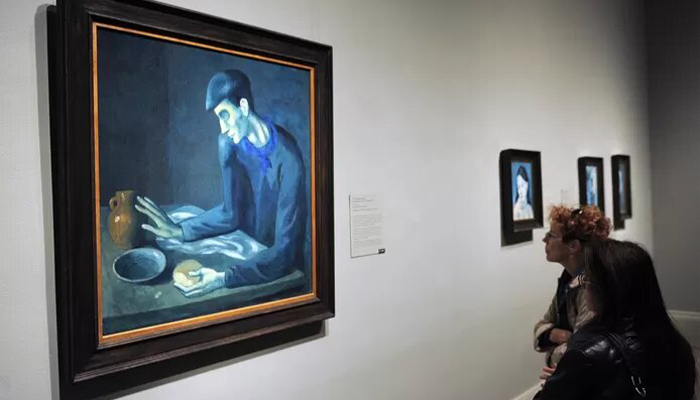
“The Blind Man’s Meal” by Picasso (photo credits: BELGAIMAGE)
Using 3D technologies to restore art
While Pablo Picasso experts say there are some details that differentiate the original canvas from the 3D printed one, the result is still remarkable. When asked about this, Ty Murphy, a British art expert, explained, “The AI-produced painting looks like a Picasso Blue Period, but under close scrutiny an expert would probably be able to recognize that it wasn’t an original.” Before adding, “Give it time. As soon as those technologies emerge they’re going to be very convincing.” This is good news for the future of 3D printing in the art world, a sector where projects are growing in number over the years.
More from the desk
Six other notes from the rest of the bench.
 NewsHempla Presents 3D-Printed Meditation Accessories Made From HempAt a time when the trend is to use more environmentally-friendly raw materials in the production of everyday objects, SofiaHagen x Studio Marmi have worked together to create 3D-printed furniture from hemp. Called Hempla, this is a collection of seats…
 ApplicationsLockheed Martin Announces Partnership With Sintavia For Metal Additive ManufacturingMetal additive manufacturing finds its place in aerospace and defense in the creation of spare parts and prototypes in a short time, which can be useful for the management of supply chains. Companies all over the world are recognizing the…
 PrintersMELTIO launches 3D printing toolhead to enable hybrid manufacturingMELTIO officially presented the new version of the MELTIO Engine, a fabrication module which enables 3D printing of full density metal parts when integrated with CNC machines, robots and gantry systems. The result is the first affordable hybrid manufacturing solution,…
 GuidesWhat Are the 3D Printing Applications in the Oil & Gas Sector?The oil & gas sector is one of the largest industries in the world as it is a critical part of the energy sector with about 4.2 billion metric tons of oil produced globally in 2021. Though due to climate…
 NewsIntroducing the Forward AM Innovation Award’s 4 Finalist Start-UpsAt the end of January, Forward AM, the brand of BASF 3D Printing Solutions, launched an international contest for start-ups using 3D printing for innovative concepts A total of 145 applications were submitted from 36 different countries. A few months…
 NewsThe best 2019 videos about 3D printing!2019 has been a year full of exciting developments for the additive manufacturing industry across all sectors. New machines have been introduced to the market, many applications have broken records, better performing materials have been developed, etc. Fortunately, most of&hellip