Materials
All You Need to Know About PETG for 3D Printing
PETG, or polyethylene terephthalate glycol, is a thermoplastic that is one of the most widely used polymers in additive manufacturing. Notably, it is a popular choice for filaments and fused deposition modeling because it combines both the simplicity of PLA…
- 3 min read
- Materials
- Six more stories
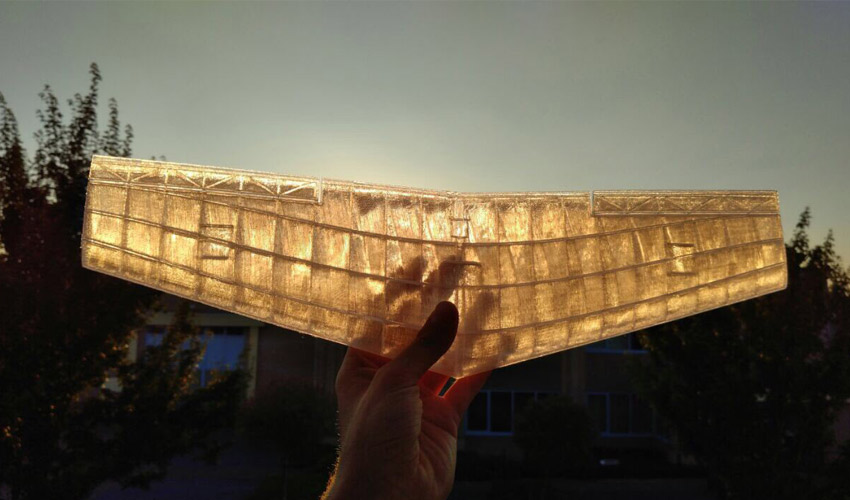
PETG, or polyethylene terephthalate glycol, is a thermoplastic that is one of the most widely used polymers in additive manufacturing. Notably, it is a popular choice for filaments and fused deposition modeling because it combines both the simplicity of PLA 3D printing and the strength of ABS. It is an amorphous plastic, which can be 100% recyclable, with the same chemical composition as polyethylene terephthalate, better known by its acronym PET. To better under the material, the following guide outlines the characteristics of PETG, what you need to know for 3D printing with it, its main applications and manufacturers.
Production and Characteristics of PETG
To understand PETG, it’s important first to look at PET itself. PET is a well-known material in the industry, estimated to grow from USD 52.94 billion in 2024 to USD 109.63 billion by 2032, because it has been used in bottle manufacturing and packaging since the 1990s, replacing PVC. It also allows the production of synthetic fibers for clothing. However, it is not common to use pure PET in 3D printing. Rather, glycol (G) is added to PET at a molecular level, allowing the material to have greater strength and durability while making it more flexible.

Photo Credits: Thad Zajdowicz, CC0, via Wikimedia Commons
PETG is therefore a copolymer, combining the properties of PET and glycol. The addition of glycol reduces overheating issues with PET (which prevents it from being used for additive manufacturing as it is) as well as reduces its brittleness. Its hardness, impact and chemical resistance, transparency and ductility are among the main characteristics of PETG. It is an easily extruded material with good thermal stability, particularly appreciated for its compatibility with food.
More from the desk
Six other notes from the rest of the bench.
 NewsTop 5 Videos: 3D Printing Concrete SimulatorHello and welcome back to another top 5 videos of the week, where we’ve been burning the midnight oil in an effort to bring you the latest and greatest, most interesting and unique, and sometimes just unexplainable, you-just-have-to-watch-it content there…
 NewsThe Sunflower Village: Using 3D Printing to Move Towards More Sustainable CommunitiesAs the construction industry reinvents itself to address growing global environmental issues, 3D printed buildings have been gaining momentum. Whether in the United States, the Netherlands or China, where the first 3D printed retractable bridge was installed, the use of…
 GuidesSimpath 3D Prints Highly Realistic Trachea ModelsAs we know, 3D printing has profoundly transformed the medical field, making it possible to produce customized models ranging from anatomical replicas to fully patient-specific implants. This is where the young startup Simpath comes in. Since its founding in 2023,…
 SoftwarePhotogrammetry: What is it and How is it Used in 3D Printing?Photogrammetry is a technique for obtaining reliable data from real-world objects in the their natural state by creating 3D models from photographs. 2D and 3D data is extracted from an image and, thanks to overlapping photos of the object, building…
 NewsA futuristic reality: 3D printed SpaceX helmetsSpace travel and additive manufacturing are synonymous to innovation, and this time we are combining the two to take a closer look at the 3D printed SpaceX helmets. Elon Musk is well known for his inventions that seem to be straight…
 NewsAON-M2 2020, a high-temperature machine compatible with hundreds of materialsCanadian manufacturer AON3D has just launched a new industrial machine, AON-M2 2020, compatible with a wide range of thermoplastics including high performance materials such as PEEK, PEKK and ULTEM. Equipped with a fairly generous build volume of 454 x 454…