Materials
How Pereira 3D Is Making Clarinets More Affordable
While many wish to explore their musicality by taking up a skill like playing an instrument, oftentimes the prohibitive costs of acquiring and maintaining instruments, such as the clarinet with its different accessories and variations, can keep many from taking…
- 3 min read
- Materials
- Six more stories
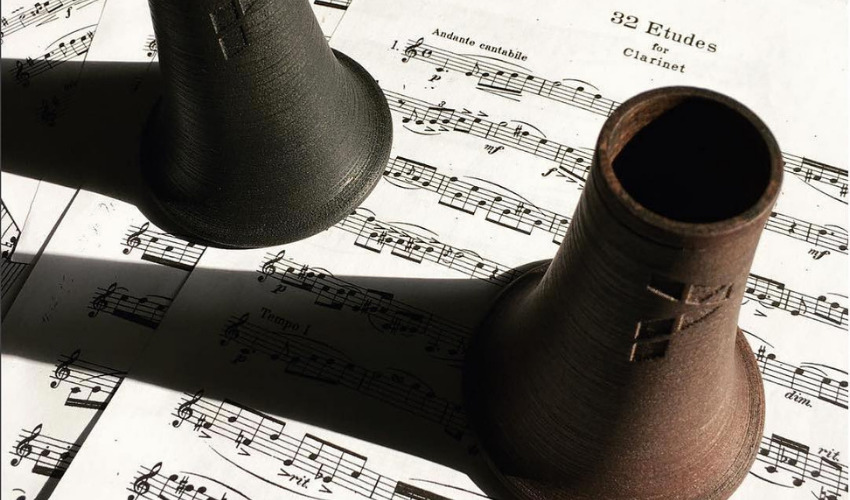
While many wish to explore their musicality by taking up a skill like playing an instrument, oftentimes the prohibitive costs of acquiring and maintaining instruments, such as the clarinet with its different accessories and variations, can keep many from taking it up. Applying the benefits of 3D printing to his clarinet expertise, Ryan Pereira launched Pereira 3D in 2014 with the creation of his first after-market clarinet barrel. Using 3D printing in their clarinet products allowed for lower manufacturing costs, resulting in significantly more affordable products, including Pietera 3D’s Balance Barrels which are designed for students and cost only $50 relative to comparable barrels which cost upwards of $200-$300.
In general, when one plays the clarinet, different barrels can produce different sounds that have their advantages and disadvantages — barrels can create sounds that are somber or whimsical, more or less focused, or change the blowing resistance of your clarinet. Furthermore, with usage, clarinet accessories become worn and require frequent replacement to produce optimal sounds. Using biocompatible 3D Wood materials, such as Blackwood and Mahogany that are currently available in abundance, Pereira 3D makes the case for sustainability in producing clarinet replacement parts and repairs. In addition to 3D-printed clarinet barrels, the company produces clarinet bells, mouthpieces, and ligatures.
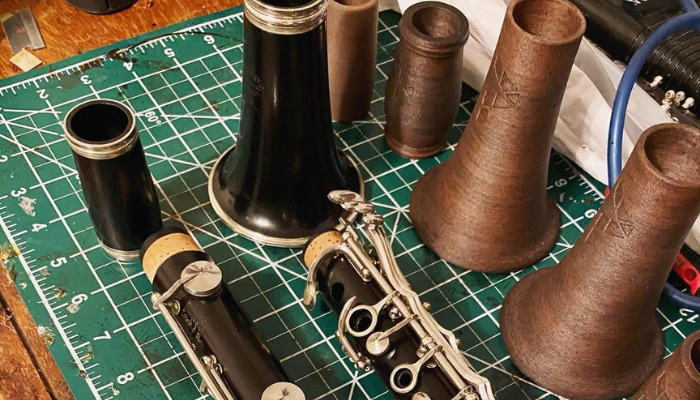
Clarinet repair services by Pereira 3D in Philadelphia, PA USA (Photo Credit: Pereira3D)
Pereira 3D Clarinet Accessories
Growing up in a household of engineers, Ryan Pereira found himself constantly learning about the latest technologies, which led him down the path of discovering a clarinet barrel that produces a clear, centered, and smooth sound. He later turned to 3D printing in order to enhance barrel precision and customization. Pereira, a classically-trained clarinet player, deepened his expertise after spending four years as a clarinet repair apprentice, where he experimented with the different aspects of clarinet performance including testing clarinet bumper materials, barrel tapers, and beveling clarinet cork pads.
More from the desk
Six other notes from the rest of the bench.
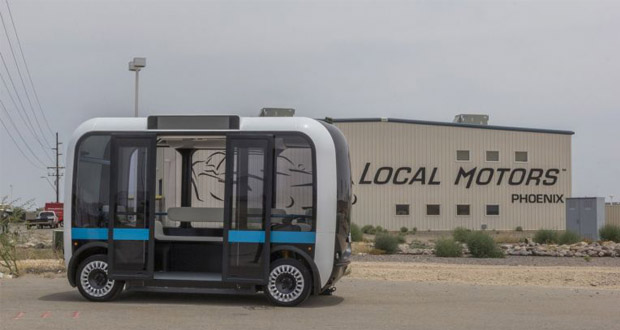 ApplicationsLocal Motors creates the first 3D printed shuttle in Knoxville, TennesseeManufacturing company Local Motors is creating quite the buzz in the additive manufacturing world, after successfully producing the first autonomous shuttle bus ‘Ollie’ in their micro-factory located in Knoxville, Tennessee. In 2016, Local Motors began manufacturing t
 ApplicationsBentley Combines 3D Printing With Sustainable Rose Gold With “The Black Rose”Bentley is known for designing and building exceptional vehicles using the finest materials. As early as 2022, the company showcased its applications of 3D printing precious metals with a range of 18-karat yellow gold parts for the Batur, which was…
 NewsThe best 2019 videos about 3D printing!2019 has been a year full of exciting developments for the additive manufacturing industry across all sectors. New machines have been introduced to the market, many applications have broken records, better performing materials have been developed, etc. Fortunately, most of&hellip
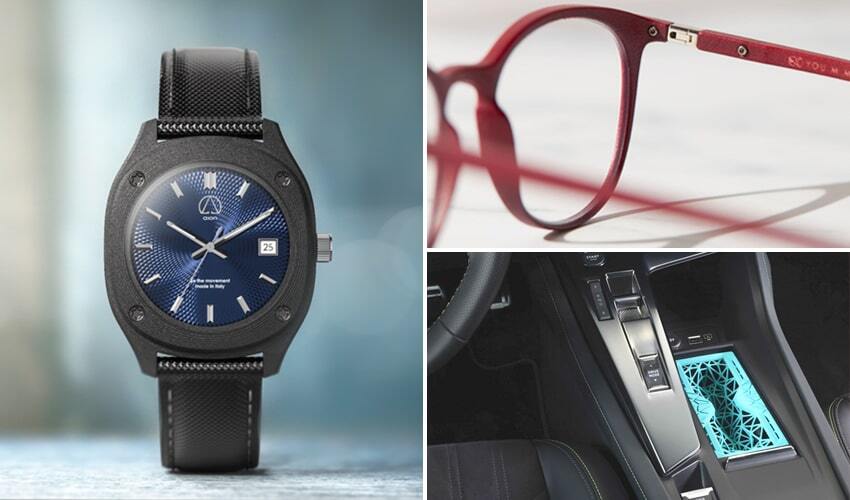 GuidesHow 3D Printing Allows for Customizable Consumer GoodsIt is not easy today to provide a universal definition of a consumer good: from basic necessities such as food that we purchase more regularly, to durable products such as cars or electronic devices, the list is long. One thing…
 ApplicationsBacteria Could Play a Role in 3D Printed Construction on MarsAs NASA puts it, “no other planet has captured our collective imagination quite like Mars.” In recent years focus has turned from travel to the Moon to the space race to Mars. The more ambitious among us aims to colonize…
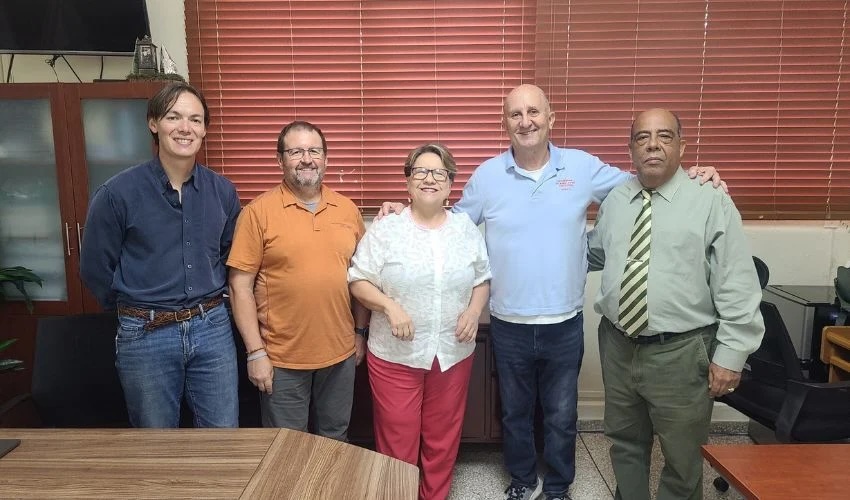 NewsDominican Republic to Install 3D Printed Weather StationsThe Dominican Institute of Meteorology (Indomet), in collaboration with the University Corporation for Atmospheric Research (UCAR) and the United States National Hurricane Center (NHC), is developing a project for low-cost, 3D-printed, automatic weather stations. The initiative,