Guides
How 3D Printing Allows for Customizable Consumer Goods
It is not easy today to provide a universal definition of a consumer good: from basic necessities such as food that we purchase more regularly, to durable products such as cars or electronic devices, the list is long. One thing…
- 3 min read
- Guides
- Six more stories
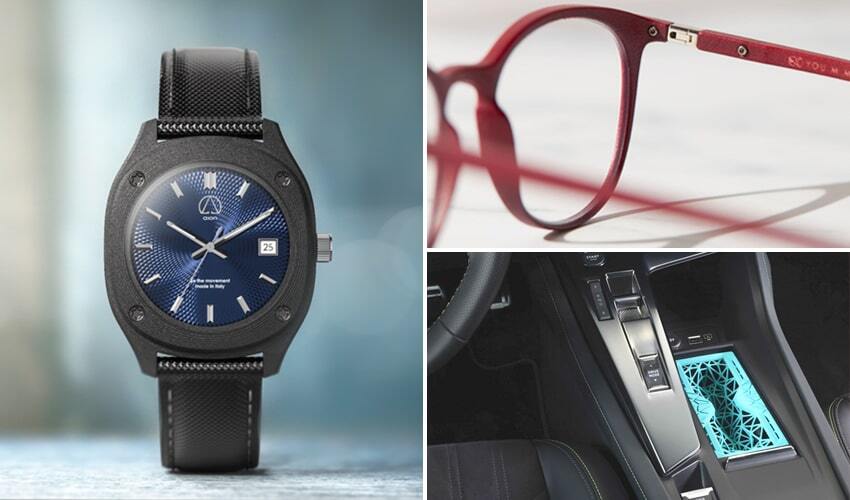
It is not easy today to provide a universal definition of a consumer good: from basic necessities such as food that we purchase more regularly, to durable products such as cars or electronic devices, the list is long. One thing is for sure, these products are sold to the final consumer who is on the hunt for a product that suits them and fits their desires. And if there is a manufacturing method that offers customization options for consumer goods, it is 3D printing. In some cases, it even allows the consumer to participate in the creation of the final object – for example, in the shoe industry, a sneaker is created after the wearer scans his or her feet.
Thanks to additive manufacturing, the consumer goods sector can offer custom-made products that are also more efficient, comfortable, aesthetic and practical. This is where the added value of 3D printing lies: it improves the functionality of a product while respecting the needs of the end consumer. But how can it be used in practice? Let’s take a look at some examples in key industries such as textiles, footwear, eyewear, cosmetics, sports and automotive. The list is not exhaustive, there are indeed many applications on the market!
Glasses Customized to Your Face and Tastes
One of the most exciting customizations that 3D printing allows when it comes to consumer goods is being able to tailor a product to one’s body. In the eyewear industry, customizing your own eyeglasses or sunglasses with 3D printing means that, with a scan of your face, you can create a custom, one-of-a-kind frame. Eyewear manufacturers offering this technology are, for example, the Spanish company Horizons Optical or the German company Youmawo. The process is simple. Both manufacturers scan the customer’s face in 3D to collect biometric data. Then, using software, the customer can virtually try on the glasses and choose from a range of color and design options for the frames. The chosen glasses are then 3D printed, in the case of Horizons Optical using HP’s MJF technology, while Youmawo relies on EOS’s SLS technology. The advantage of using additive manufacturing in this area is to obtain a product in a short time, with more complex designs and lighter, stronger materials.
More from the desk
Six other notes from the rest of the bench.
 Guides3D Treats Talks 3D Printing Original DessertsAs we know, food 3D printing is growing rapidly. This manufacturing method involves creating models by extruding food and stacking them layer by layer. Many solutions have been developed based on this technology, the most common being chocolate 3D printers.…
 NewsORNL designs the first 3D printed nuclear reactorAt Oak Ridge National Laboratory (ORNL), a team of researchers is continuing its research to build a 3D printed nuclear reactor: they have designed the reactor core and intensified the entire additive manufacturing process to validate the reliability of the…
 NewsBOFA, Air Extractors Compatible With All 3D Printing TechnologiesWhether it is FDM, SLA, DLP, MJF, SLS or any other printing process, fine particles are emitted during the additive manufacturing process. Studies conducted by the Georgia Institute of Technology and Fraunhofer WKI have shown that more than 200 types…
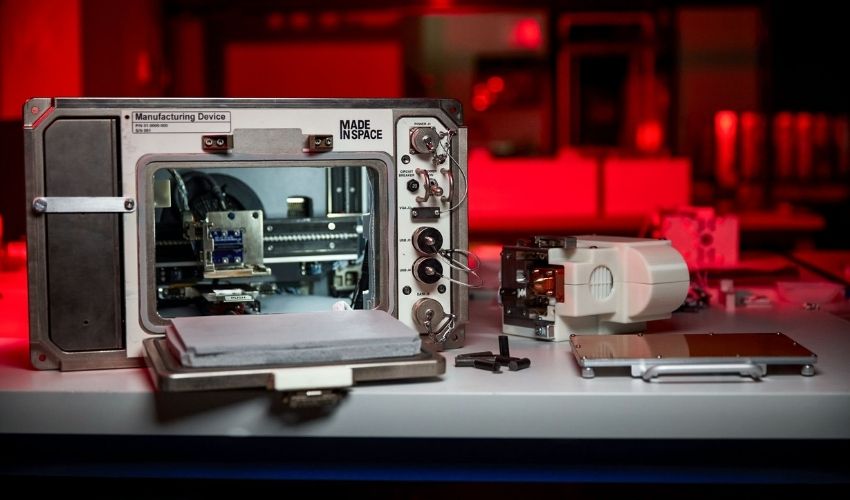 ApplicationsRedwire to Explore the Feasibility of 3D Printing With Lunar Dust on the ISSOn August 10th, Northrop Grumman plans to launch its 16th commerical resupply service mission. As the name suggests, the Cygnus spacecraft will be carrying crew supplies, scientific research, and hardware to the orbiting laboratory. As part of this mission, supplies…
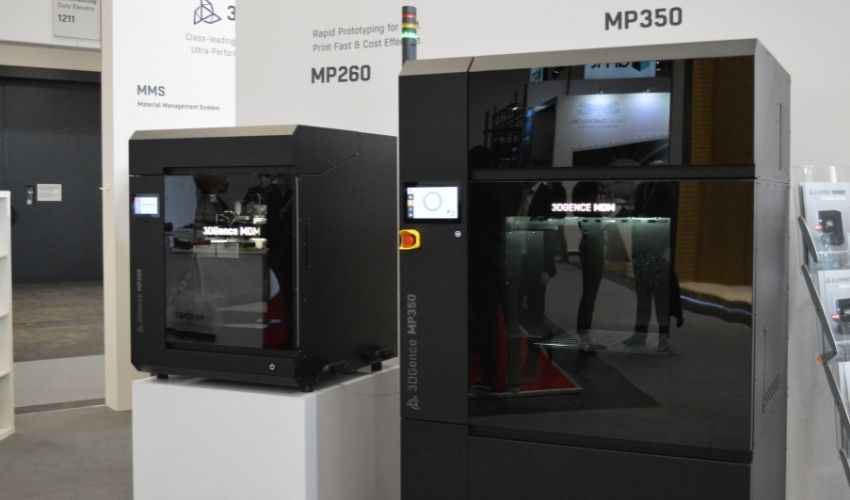 Printers3DGence Premieres Series of Metal FFF 3D PrintersDespite the continued dominance of polymers in additive manufacturing, metal 3D printing has also increased significantly in recent years with a faster growth rate than many other AM product segments. This is especially the case when it comes to desktop…
 GuidesWho shaped the additive manufacturing market in 2019?The year 2019 is coming to an end, with good results for the additive manufacturing market. This market is becoming increasingly industrialized because the technology is becoming a production-ready process, less reliant on rapid prototyping activity like it was 3…