Applications
A Patient Has Successfully Received a 3D Printed Ear Transplant Made From Human Cells
In the United States, a surgeon has transplanted an ear implant made from human cells! The company 3DBio Therapeutics was responsible for the manufacturing of this implant for a 20-year-old young woman. She suffered from microtia in her right ear,…
- 3 min read
- Applications
- Six more stories
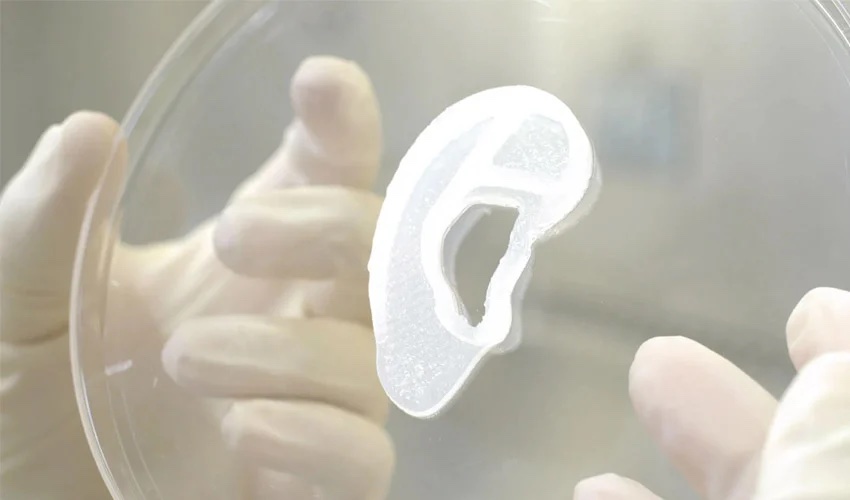
In the United States, a surgeon has transplanted an ear implant made from human cells! The company 3DBio Therapeutics was responsible for the manufacturing of this implant for a 20-year-old young woman. She suffered from microtia in her right ear, a congenital anomaly that prevents the development of the external ear. Named AuriNovo, the ear transplant was 3D printed from the patient’s own collagen hydrogel and cartilage cells. This is the first time the device has been clinically tested – trials will still need to be conducted on a total of 11 patients in California and Texas.
One of the biggest challenges in the bioprinting industry is the clinical trial phase. It is critical that the safety, efficacy and durability of implants and organs designed by 3D printing is guaranteed. In fact, even if you have certainly heard about bioprinted hearts, 3D printed kidneys, etc, this stage is the biggest obstacle to long-term production. Indeed, there is still a long way to go before these solutions are implanted in a patient, but this ear transplant is a more than encouraging start! In fact, the FDA has even granted the implant AuriNovo™ Orphan Drug and Rare Pediatric Disease Designations, essentially naming it as safe for use in individuals with microtia.
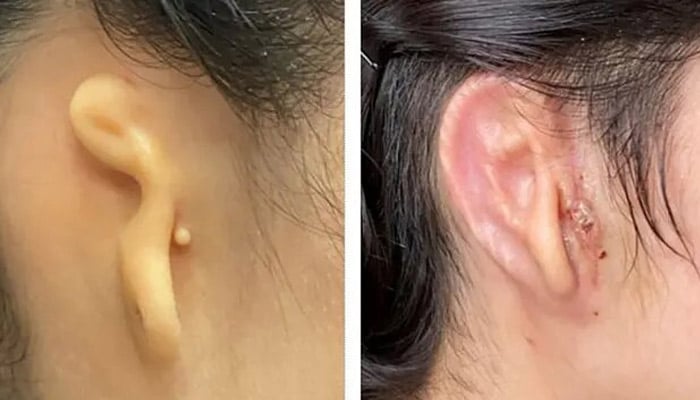
On the left, the patient before her operation; on the right, the patient 30 days after the operation (photo credits: Dr. Arturo Bonilla, Microtia-Congenital Ear Institute)
Existing treatments to correct microtia involve designing a prosthesis from cartilage taken from the patient’s ribs – a very cumbersome operation. This prosthesis can also be made from porous polyethylene, a less flexible substance. This is where 3D printing has a card to play. Dr. Arturo Bonilla is the surgeon who performed the surgery on the young woman commented: “As a physician who has treated thousands of children with microtia from across the country and around the world, I am inspired by what this technology may mean for microtia patients and their families. This study will allow us to investigate the safety and aesthetic properties of this new procedure for ear reconstruction using the patient’s own cartilage cells..”
More from the desk
Six other notes from the rest of the bench.
 NewsA 3D Printed Aerospike Nozzle Rocket Engine Ready to Take FlightSpanish startup Pangea Aerospace and the company Aenium have signed a partnership to develop and industrialize advanced 3D printed combustion devices made from innovative materials. Together, they have designed a 3D printed aerospike nozzle rocket engine that should be 15%&hellip
 ApplicationsHow is Additive Manufacturing Being Adopted in Defense?When it comes to the military, flexibility and innovation are key in ensuring the success of operations in all corners of the globe. Indeed, when we think of military personnel one of the underlying characteristics of their actions is rapidity,…
 PrintersApple Granted Full-Color 3D Printer PatentApple were recently granted 44 new US patents. One of these included a patent for a “method and apparatus for three-dimensional printing of colored objects”, AKA a full-color Apple 3D printer. This follows Apple being granted a patent back in 2015…
 ApplicationsCornell Revolutionizes Realistic Ear Grafts With 3D Printed Ear3D printing has rapidly conquered the medical field, opening up a host of new possibilities. The technology enables the creation of complex structures with unrivaled precision, paving the way for new approaches in surgery, prosthetics, and tissue engineering. In this…
 NewsTop 5 Videos: 3D printed orthopaedic implantsThis week we found the top 5 videos about 3D printing and the way additive manufacturing is changing production. The technology has infiltrated many sectors, from medical to automotive – check our selection of the week to keep up with the innovations! If you enjoy these, you&hell
 NewsTop 5 Videos of the Week: 3D Print Ribcage, Bridges, & more!This week’s Top 5 Videos of the week contains videos from a very wide variety of sectors. From the medical sector, to engineering and architecture, to food, we have covered all the bases this week. A new Top 5 videos…