Materials
PA11 vs PA12: Which Nylon Should You Choose for 3D Printing?
Nylon, also known as polyamide (PA), is a group of thermoplastic polymers or plastics frequently used in 3D printing. Nylon is particularly appreciated for its ability to withstand high mechanical stress, and its resistance to heat, tearing and abrasion. This…
- 3 min read
- Materials
- Six more stories
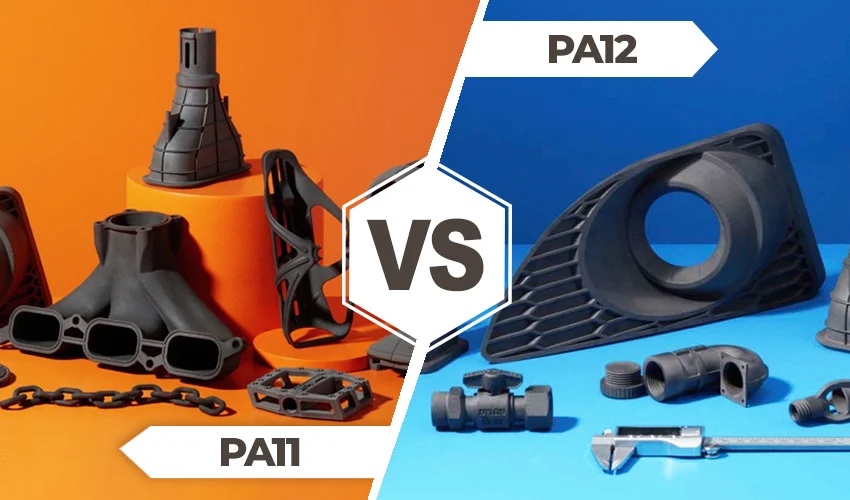
Nylon, also known as polyamide (PA), is a group of thermoplastic polymers or plastics frequently used in 3D printing. Nylon is particularly appreciated for its ability to withstand high mechanical stress, and its resistance to heat, tearing and abrasion. This is why the material is often used in the manufacture of heavy-duty parts, for example in the automotive and aerospace industries, as well as in the medical sector.
3D printing uses many types of nylon, whose names vary according to the number of carbon atoms they contain. PA6 is most often used in FDM printing, while PA11 and PA12 are used in powder-based processes. Although PA11 and PA12 overlap in their areas of application, there are a number of differences between the two plastics. We therefore sought to compare the two materials and examine their respective properties, origins, printing requirements and, finally, applications and price categories.
Origin and Mechanical Properties
Polyamides are differentiated by nomenclature, and the number following the common code PA is a function of the number of carbon atoms. PA11 and PA12 therefore appear to be quite similar. Yet the two types of nylon differ in many respects, starting with their origin and manufacture.
More from the desk
Six other notes from the rest of the bench.
 ApplicationsBugatti Unveils Tourbillon: The Next-Gen Hypercar with 3D Printed ChassisBugatti has just unveiled the latest generation of its hypercars: the Tourbillon. This new model blends cutting-edge technology, immense power, luxury, and advanced aerodynamics. As the successor to the Chiron, the Tourbillon boasts an impressive 1,800 hp engine and features&hell
 GuidesMoodbytes Talks Integrating 3D Printing Into RestaurantsFood 3D printing is an emerging technology that enables chefs and restaurants to create unique, personalized dishes. It is already being used in some avant-garde and fine-dining restaurants to create intricately shaped, visually stunning dishes that would be difficult to…
 ApplicationsThe world’s lightest electric bike features 3D printed partsThere is a new record in the Guinness World Records book: Dennis Freiburg designed the world’s lightest electrically assisted bike (EAB). Weighing only 6.872 kilos (15.15 lb), it’s a real mechanical and technical feat that this German engineer managed to…
 NewsBMW accelerates the integration of additive manufacturing into its production cycleGerman automaker BMW has announced the launch of a new additive manufacturing plant to accelerate the implementation of the technology in its manufacturing process. The construction of this additive manufacturing campus will cost 10 million euros and is expected to…
 NewsTitomic 3D prints the largest titanium droneTitomic is an Australian manufacturer of 3D metal printers that recently unveiled a 3D printed titanium drone, the largest on the market according to the company. And for good reason, this one is 1.8 metres in diameter! It was designed…
 News3DExpress: Etsy Tightens Rules on Selling 3D Printed GoodsDo you consider a 3D printed object handmade? The online global marketplace Etsy sells unique items that are “unique items made, designed, handpicked or sourced,” but the website hosts many 3D print shops selling mass-produced, unoriginal designs. To address this, the