Applications
Oxford Performance Materials Aids Ukraine War Victims with 3D Printed Orthopedic Implants
American additive manufacturing company Oxford Performance Materials (OPM) recently announced an agreement to assist the non-profit organization Orthopedic Help for Ukraine (OHFU). Through this, the company will be aiding victims of the Russian invasion of Ukraine, by supplying 3
- 3 min read
- Applications
- Six more stories
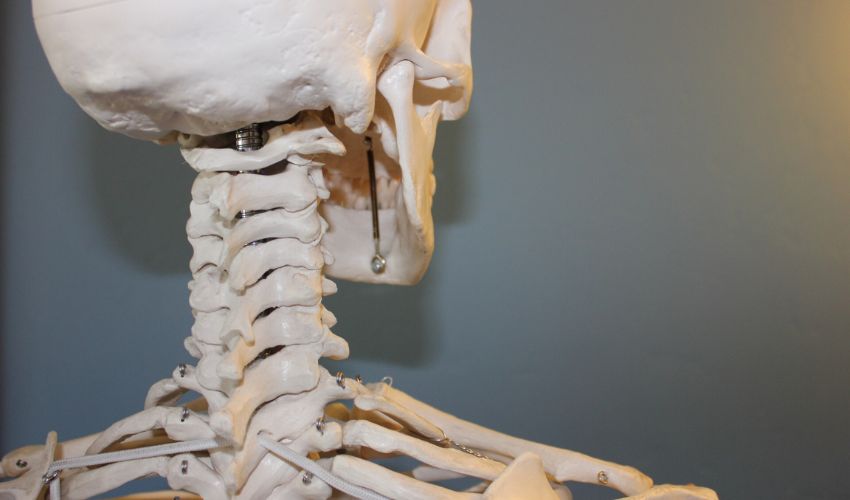
American additive manufacturing company Oxford Performance Materials (OPM) recently announced an agreement to assist the non-profit organization Orthopedic Help for Ukraine (OHFU). Through this, the company will be aiding victims of the Russian invasion of Ukraine, by supplying 3D-printed custom implants to Ukrainian hospitals. These are expected to help address the increased needs of orthopedic and surgery departments in Ukraine as they are dealing with an influx of patients due to war-related injuries and trauma.
The sudden and unpredicted attacks by Russian forces on Ukraine, that started on the 24th of February this year shocked the entire world. The invasion, which has been ongoing ever since caused an almost inconceivable amount of suffering and devastation among the Ukrainian people. Aside from the growing number of human casualties and the damage done to the country’s infrastructure, the number of patients in need of special medical treatment has become unbearable for Ukraine’s hospitals.
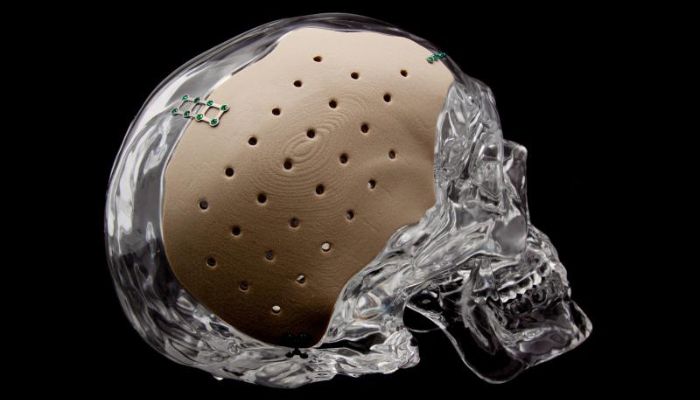
A cranial implant 3D-printed by OPM
In order to aid those in need of medical help for injuries caused by the war, many western companies have pledged their support for the many victims. One of those companies is OPM. The company, which is based in South Windsor, Connecticut, is known to be an industry leader in advanced polymer science, that specializes in the creation of 3D-printed orthopedic devices. In collaboration with the OHFU, OPM will use its experience and innovative technologies to supply front-line hospitals with prosthetics, which will be used to treat patients with critical bone defects from war-related trauma.
More from the desk
Six other notes from the rest of the bench.
 NewsRAPID + TCT 2024: What Were the Key Takeaways From the Event?Rapid + TCT 2024 has officially closed its doors. Taking place this year in sunny Los Angeles, California, the event was held between June 25th and 27th, and included many new and interesting features. For example, the Executive Perspective keynote…
 Materials#3DStartup: Kupros’ Cu29: A Conductive Copper Filament for FDM Electronics an Expert Said Would “Never Be 3D Printed”When Ian Ramsdell, founder of Kupros, started asking electronics specialists about 3D printing copper, he faced plenty of skepticism. One expert, in Ramsdell’s recollection, insisted it could not be done and never would be: “Copper can’t be 3D printed, it’ll…
 NewsTop 5 Videos: 3D Technology Used in Food Production PlantsIn this weekly compilation of videos on 3D printing, we will focus on several industries that have adopted additive manufacturing methods. We will start with the food and beverage sector, as 3D technology is increasingly being implemented in food production…
 NewsResearchers From Stanford University Introduce New 3D Printed Solar PanelsScientists from Stanford University in California recently developed a new, 3D-printed optical concentrator for solar panels. This pyramid-shaped lens device called Axially Graded Index Lens (AGILE) was designed by engineering researcher Nina Vaidya and is able to increase the ca
 NewsThe Complete Guide to Directed Energy Deposition (DED) in 3D PrintingDirected Energy Deposition (DED) is a more complex 3D printing process, typically used to repair or add additional material to existing components. It is completely possible to fabricate parts from scratch using this technology, but it is often used for…
 ApplicationsBioprinted Nose Graft Used For Reconstructive Surgery3D printing has been applied to reconstructive surgery to create a nose graft for a patient who underwent intense cancer treatment. This amazing feat happened occured at IUCT Oncopole (University Cancer Institute of Toulouse), a cancer care, research, and training…