Materials
#3DStartup: Kupros’ Cu29: A Conductive Copper Filament for FDM Electronics an Expert Said Would “Never Be 3D Printed”
When Ian Ramsdell, founder of Kupros, started asking electronics specialists about 3D printing copper, he faced plenty of skepticism. One expert, in Ramsdell’s recollection, insisted it could not be done and never would be: “Copper can’t be 3D printed, it’ll…
- 3 min read
- Materials
- Six more stories
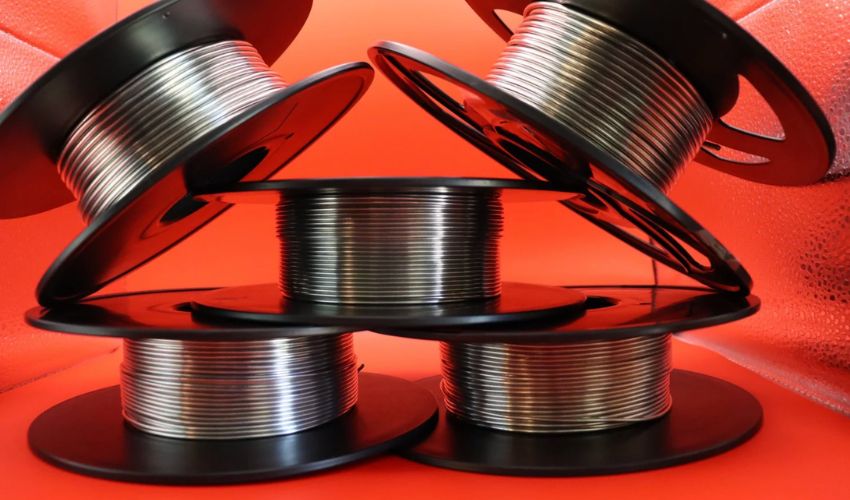
When Ian Ramsdell, founder of Kupros, started asking electronics specialists about 3D printing copper, he faced plenty of skepticism. One expert, in Ramsdell’s recollection, insisted it could not be done and never would be: “Copper can’t be 3D printed, it’ll never be 3D printed.” What that expert did not know was that Ramsdell was already working from a confirmed laboratory experiment, one the US military had run and validated years earlier.
That distance between “impossible” and “already proven in a lab” is the founding story of Kupros and its flagship product, Cu29: a fully metallic, conductive filament engineered to print on standard fused deposition modeling (FDM) machines. Cu29 is not solid copper, but an all-metal, conductive filament that uses copper as part of the formulation. Because the conductor is extruded alongside structural plastic in the same build, Cu29 is aimed at integrated sensors, embedded signal routing, and conformal antennas and conductive paths that follow a part’s geometry rather than sitting on a flat board.
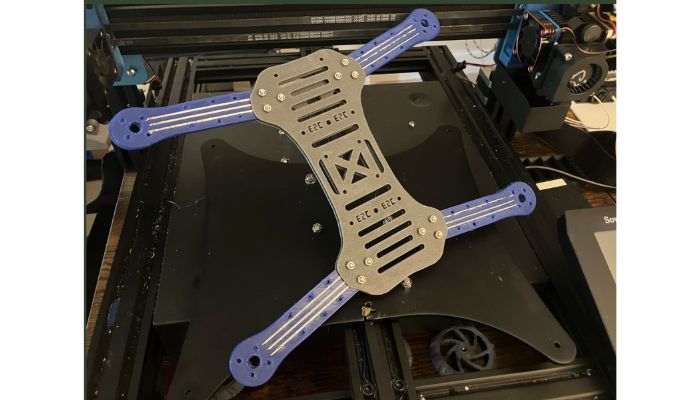
Cu29 can be used to develop embedded electronics.
In aerospace and defense, where Kupros sees its strongest early demand, the pitch is concrete: fewer wiring harnesses, connectors and interconnects, structural-health sensing built into load-bearing parts, and faster iteration as electrical and mechanical design evolve together. “Just because somebody has been told that something is impossible, doesn’t mean it can’t be done,” Ramsdell said.
More from the desk
Six other notes from the rest of the bench.
 NewsRelativity Space win NASA multi-planetary exploration contractRelativity Space have just received $3 million from NASA to launch small lightweight satellites into orbit with its fully 3D printed Terran 1 rocket. NASA’s Launch Service Program (LSP) issued the Venture Class Launch Services Demonstration 2 (VCLS Demo 2)…
 NewsTOP 5 VIDEOS: 3D printed food ingredients, middle ear prosthesis and much more!We found the TOP 5 VIDEOS of the week about 3D printing and the way additive manufacturing is shaping and changing our society. This week we touch on 3D printed food ingredients, middle ear prosthesis and much more! If you enjoy…
 NewsTop 5 Videos of the Week: How XYZbag is Designing the Future of FashionGet ready for the top 5 videos of the week that will take you on an exhilarating journey through the world of 3D printing! First up, we have an impactful interview with Annalisa Nicola, founder of XYZbag, as she shares…
 NewsEurope’s First 3D Printed School Opens in UkraineAdditive manufacturing, also known as 3D printing, is playing an increasingly significant role in the field of construction. The construction industry has recognized the numerous benefits offered by this technology, including the ability to create intricate designs, as well as&he
 ApplicationsBerria Bike and Mausa 3D Unveil 3D-Printed E-Bike PrototypeThe use of additive manufacturing as a tool for developing and testing new products has become increasingly more popular within high-demand and well-established industrial sectors. Recently, much of this new testing has been used within the bicycle sector. More specifically,&hell
 ApplicationsDEFEND3D Talks Increasing the Security of Additive Manufacturing in the Defense SectorOne of the sectors where where we have seen rapid growth of additive manufacturing is defense. From defined additive manufacturing strategies in both the UK and the US as well as a number of applications from trainings to active warfare,…