News
Inverted SLS process to 3D print with multiple materials at once
Selective laser sintering technology is one of the most widely used processes in additive manufacturing, where plastic particles heated by a heat source, usually a laser, are bonded together. One of the limitations of this technology today is the impossibility…
- 3 min read
- News
- Six more stories
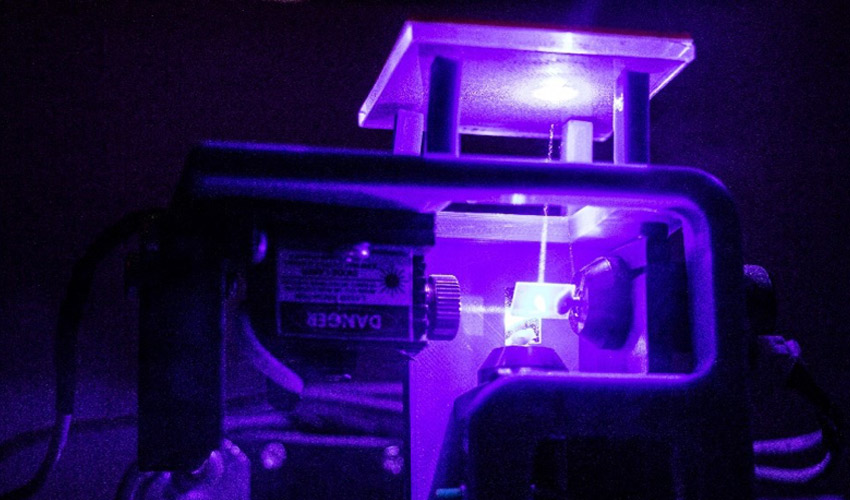
Selective laser sintering technology is one of the most widely used processes in additive manufacturing, where plastic particles heated by a heat source, usually a laser, are bonded together. One of the limitations of this technology today is the impossibility of combining several materials in a single print, thus reducing the range of possibilities. However, it seems that researchers at Columbia University have managed to overcome this obstacle by developing an inverted SLS process: instead of having a laser pointing downwards, they have placed it so that it points upwards. They also eliminated the powder bed itself by replacing it with transparent glass plates covered with a layer of the printing material(s). The part is 3D printed from top to bottom and could combine several plastics.
Convinced of the potential of additive manufacturing, a team of mechanical engineering innovation professors investigated selective laser sintering technology. According to them, one of the biggest drawbacks of this process is the fact that it cannot mix different materials, but also that the part cannot be seen during printing, making it impossible to detect an error or anomaly as on a fused deposition machine, for example. One of the researchers, Hod Lipson, says: “How many products are made of just one material? The limitations of printing in only one material has been haunting the industry and blocking its expansion, preventing it from reaching its full potential.” The SLS process deposits a layer of powder that the laser selectively fuses at very precise points. Once it’s finished, the machine deposits another layer of powder, and so on, layer by layer. The problem today is that it’s impossible to deposit a different powder than the first one – you can’t have nylon and then TPU for example.
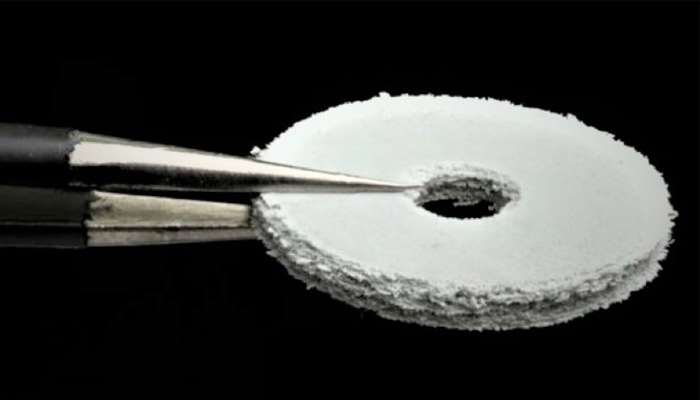
One of the samples 3D printed with TPU (Image credits: Columbia University)
John Whitehead, the lead author of the study, continues: “Moreover, in a standard 3D printer, because each of the successive layers placed down are homogeneous, the unfused material obscures your view of the object being printed, until you remove the finished part at the end of the cycle. This means that a print failure won’t necessarily be found until the print is completed, wasting time and money.” In order to solve these two main obstacles, the researchers therefore reversed the process.
More from the desk
Six other notes from the rest of the bench.
 News3D Printing and Agriculture: New Frontiers in FarmingAgriculture is constantly evolving. Throughout history, the sector has taken advantage of technological advances that have mainly increased productivity and improved food quality. However, agriculture is facing new challenges, such as climate change and strong demand for products
 NewsNew Moving Platform 3D Printer Saves Time and MoneyResearchers from the University of Southern California Viterbi School of Engineering have created a novel method of reducing the material waste, and consequently, the cost of 3D printing using Fused Deposition Modeling, or FDM, technology. Together the team, led by…
 NewsTOP 5 videos of the week: Football, dresses and more!A new selection of the best 3D printing videos of the week, just for you! Find our TOP 5 videos of the week below and tell us what your favorite video is in a comment or on our Facebook and Twitter page. Don’t hesitate to…
 PrintersEverything You Need To Know About Cold Metal FusionToday, the manufacturing industry is increasingly moving towards metal additive manufacturing solutions. However, these machines are often expensive for companies entering this field. Consequently, the cost of metal 3D printers can be a major barrier to market entry. Luckily, the
 News3D printed floating house to be built in the Czech RepublicIt’s already unusual to live in a house that floats, so imagine how it would be if it were 3D printed. This is the new concept developed in the Czech Republic: called Prvok, this small structure will not only have…
 NewsXometry announces it has raised $50 million in equity fundingXometry, one of the largest on-demand manufacturing marketplaces announced it has just raised $50 million in equity funding – to date the marketplace has raised a total of $113 million. The platform connects customers with optimal manufacturing solutions through proprietary&helli